California Restaurant Liability Insurance: Coverage You Can Trust
Running a restaurant in California means facing real liability risks every single day. From customer injuries to food safety issues, one incident can threaten your business financially and legally.
At Beach Break Insurance Agency, we’ve seen how the right California restaurant liability insurance protects owners when accidents happen. This guide walks you through the coverage types that matter most and the gaps you need to fill.
Why Liability Insurance Protects Your Restaurant’s Future
California restaurants operate in one of the most litigious states in the country, and the financial exposure is substantial. A single customer injury or foodborne illness claim costs between $50,000 and $500,000 in legal fees, settlements, and medical expenses before your insurance activates. California’s comparative negligence laws allow customers to recover damages even if they’re partially at fault, which shifts significant risk onto restaurant owners who lack proper coverage.
State Regulations Create Immediate Financial Pressure
State health code violations carry fines up to $1,000 per violation, but the real damage emerges when those violations lead to customer claims. Without liability insurance, one incident depletes your operating capital and potentially forces closure. Your general business insurance typically excludes food contamination, which is why specialized liquor and food liability coverage exists.
Foodborne Illness Outbreaks Hit Hard in California
Foodborne illness creates immediate financial and reputational damage. The CDC reports that roughly one in six Americans contract food poisoning annually, and California’s high population density means restaurants here face proportionally more claims. A single norovirus outbreak in a 100-seat restaurant affects 30 to 50 customers, each with grounds for a claim.
Medical costs, lost wages, and pain-and-suffering damages accumulate quickly. Many customers hire attorneys on contingency, which multiplies your legal costs substantially. Without specialized coverage, you remain personally liable for the entire amount.
Slip-and-Fall Claims Happen Regularly and Cost Significantly
Customer injuries from wet floors, loose carpeting, or inadequate lighting occur regularly in restaurants, and California courts consistently award damages for preventable hazards. The National Safety Council reports that falls cost businesses over $50 billion annually in direct costs, with restaurants ranking among the top industries for slip-and-fall frequency.
A customer with a broken hip or serious back injury claims $100,000 to $300,000 depending on age and permanent disability. Your premises liability coverage protects you here, but only if you maintain it actively. Many restaurant owners underestimate how quickly these claims accumulate when serving hundreds of customers weekly across multiple shifts.

These three liability categories represent your most pressing exposures, yet most restaurant owners carry insufficient coverage limits or miss entire categories altogether. The next section examines which specific coverage types actually protect your operation and where most restaurants fall short.
Coverage That Actually Protects Your Restaurant
General Liability Forms Your Foundation
General liability coverage protects against third-party bodily injury and property damage claims. When a customer slips on your floor and breaks their arm, or when your kitchen equipment damages their personal belongings, general liability responds. California restaurants typically need minimum limits of $1 million per occurrence and $2 million aggregate, though many underestimate their actual exposure.

A serious injury claim easily exceeds $500,000, and California juries award damages generously for preventable accidents. Your general liability policy should include products liability coverage specifically, since food-related claims often involve what you served rather than just your premises conditions. Many restaurant owners purchase $1 million coverage thinking it’s sufficient, then face a single claim that consumes their entire limit, leaving them exposed for future incidents that year.
Liquor Liability Requires Separate, Dedicated Protection
Liquor liability deserves separate coverage because standard general liability explicitly excludes alcohol-related incidents. If a customer becomes intoxicated at your restaurant and subsequently injures themselves or others, your general policy won’t cover the resulting claims. California’s dram shop laws hold restaurant owners liable for serving alcohol to visibly intoxicated patrons or underage customers, and settlements in these cases routinely reach $300,000 to $1 million depending on the severity of injuries caused.
This coverage also protects you against third-party claims where someone injured by an intoxicated customer sues your establishment. Most California restaurants serving alcohol need minimum liquor liability limits of $1 million, and busy establishments should strongly consider $2 million given the frequency of alcohol-related incidents and the substantial damages awarded.
Property Insurance Covers Your Physical Assets
Property insurance protects your physical assets, including kitchen equipment, furniture, inventory, and the building itself if you own rather than lease. A kitchen fire destroys your equipment and forces closure for repairs, costing $100,000 to $400,000 depending on your setup. Property insurance covers replacement costs and loss of income during closure.
Many restaurant owners underinsure their equipment inventory, assuming they remember every item, then face significant gaps when claims occur. Document your current equipment with photos and replacement cost estimates annually, then work with your agent to adjust coverage limits accordingly. These three coverage types work together to address the major liability and property exposures your restaurant faces daily, but gaps still exist in most restaurant policies.
Where Most Restaurants Fall Short
Standard policies often miss critical exposures that hit restaurants hard. Your workers’ compensation coverage protects employees injured on the job, yet many owners carry minimum limits that don’t reflect their actual payroll and injury frequency. Employment practices liability covers wrongful termination and discrimination claims, which restaurants face regularly given high staff turnover and complex labor laws.
Cyber liability protects against data breaches involving customer payment information and personal details, a growing threat as restaurants adopt digital ordering and payment systems. These gaps leave owners personally liable for claims that proper coverage would handle. The next section examines the real-world scenarios that trigger these claims and shows you exactly which coverage responds to each situation.
What Claims Actually Cost California Restaurants
Slip-and-Fall Injuries Drain Your Finances Fast
A customer slips on a wet floor near your hostess stand and breaks their wrist, requiring surgery and six weeks of lost wages as a software engineer. The medical bills total $45,000, but the customer’s lost income claim and pain-and-suffering damages push the settlement to $120,000. Your general liability coverage handles this, but only if your premises liability limits are adequate. Many restaurant owners discover too late that their $500,000 per-occurrence limit sounds substantial until a single serious injury consumes most of it, leaving minimal protection for the remainder of the year.
The National Safety Council data shows that falls represent the leading cause of nonfatal occupational injuries in food service, and California’s generous damage awards mean a broken bone or back injury regularly settles for $100,000 to $250,000 depending on the victim’s age and permanent disability status. A serious spinal injury or hip fracture in an older customer can push settlements well above $300,000. Your premises liability coverage must reflect this reality, not wishful thinking about accident prevention.

Foodborne Illness Claims Explode Without Specialized Coverage
Foodborne illness claims follow a different trajectory and demand specialized coverage that standard policies explicitly exclude. A customer contracts norovirus from undercooked shellfish at your restaurant and spends three days hospitalized, accumulating $8,000 in medical costs plus lost wages. The customer’s attorney sends a demand letter claiming $50,000 in total damages, and without specialized food liability coverage, you face this amount personally.
Health code violations compound the problem because they establish negligence in court. California’s Department of Environmental Health records show that restaurants receive violations for improper food temperature handling, cross-contamination, and inadequate cleaning procedures regularly, and these violations create liability exposure that extends far beyond the fine itself. A single norovirus outbreak affecting 15 customers generates potential claims exceeding $750,000 in aggregate, and your general liability policy provides zero coverage for contamination-related illness. One outbreak can wipe out your annual profits and force operational changes that cost thousands more.
Employee Injuries Create Ongoing Financial Obligations
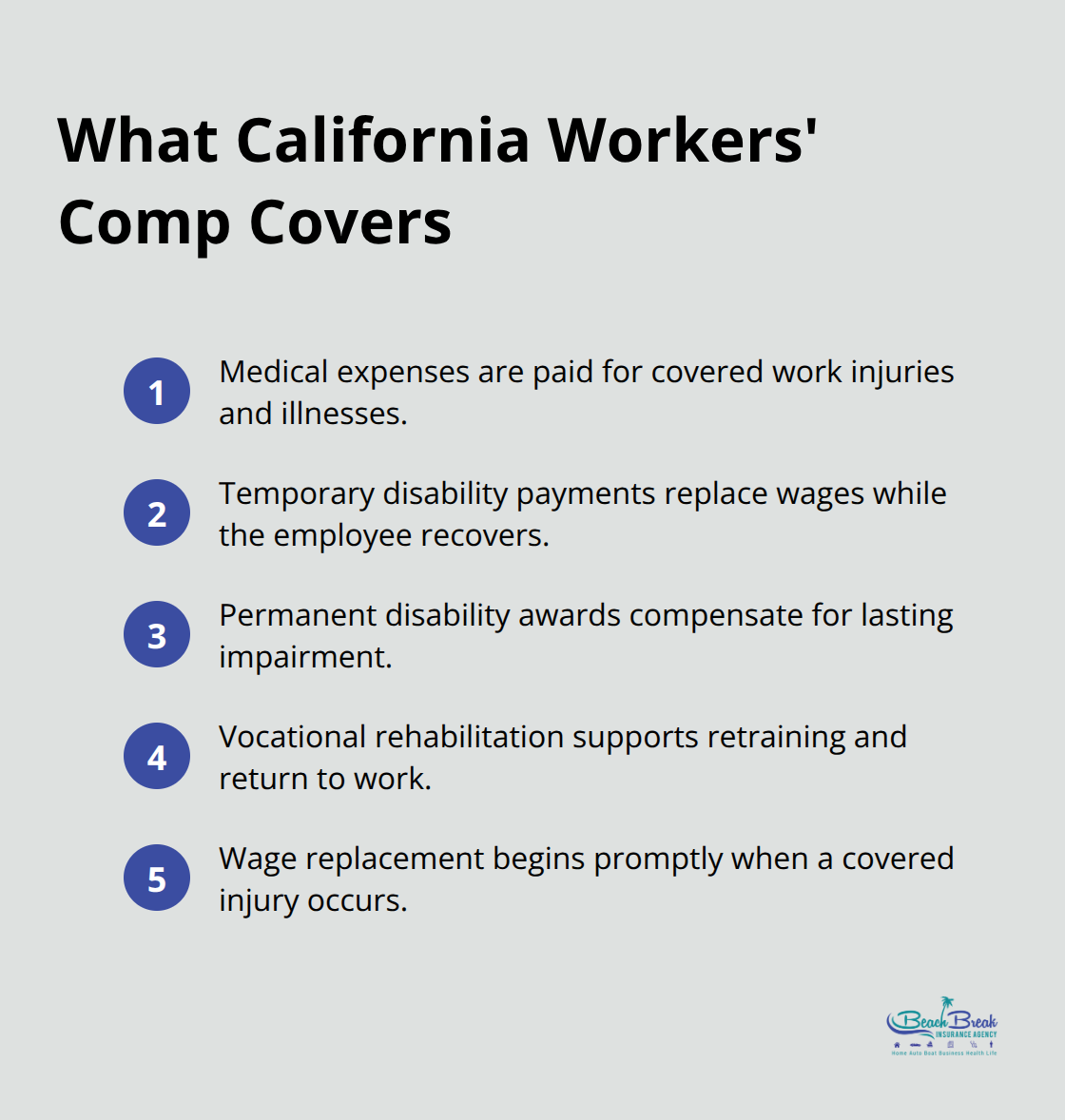
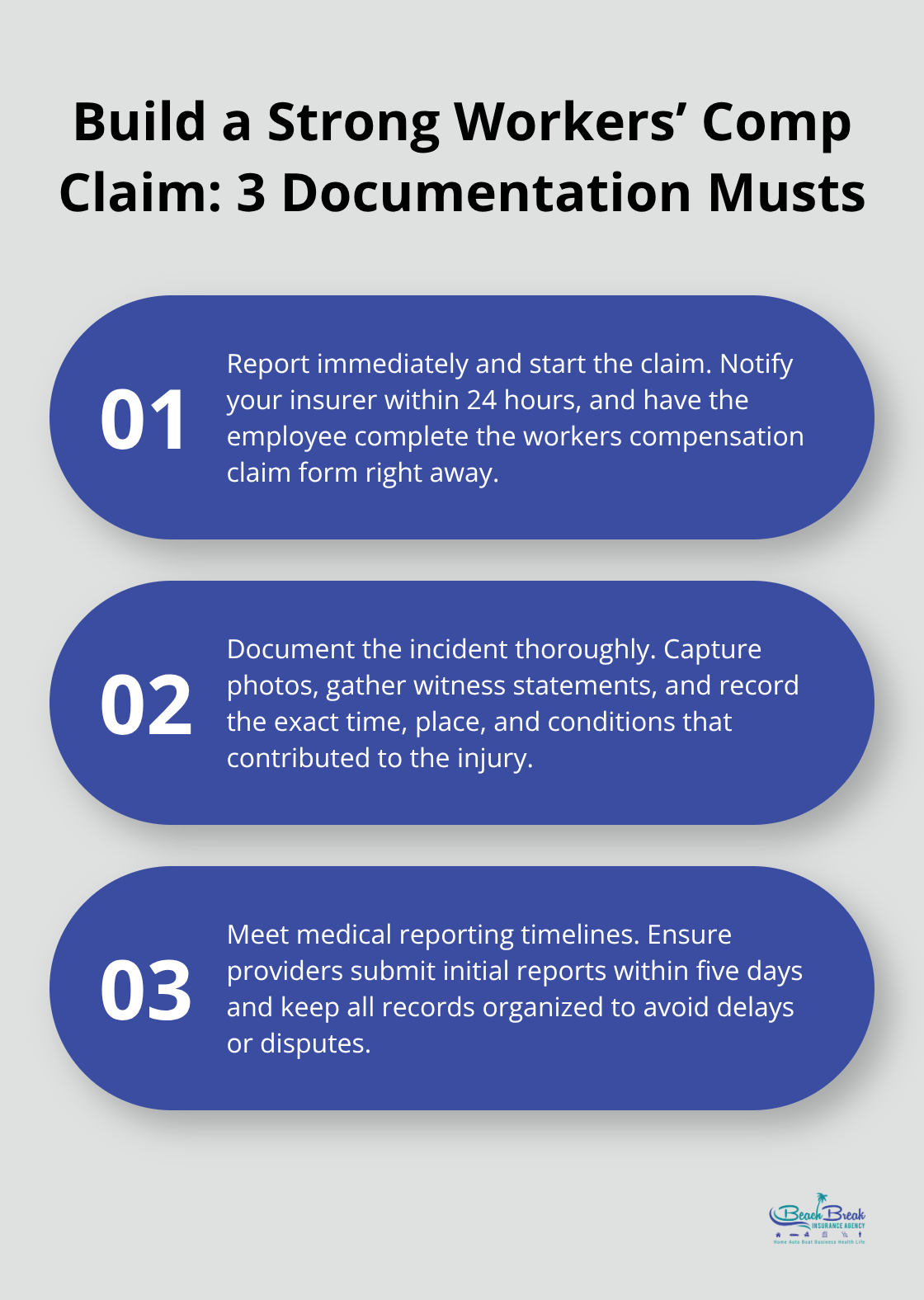
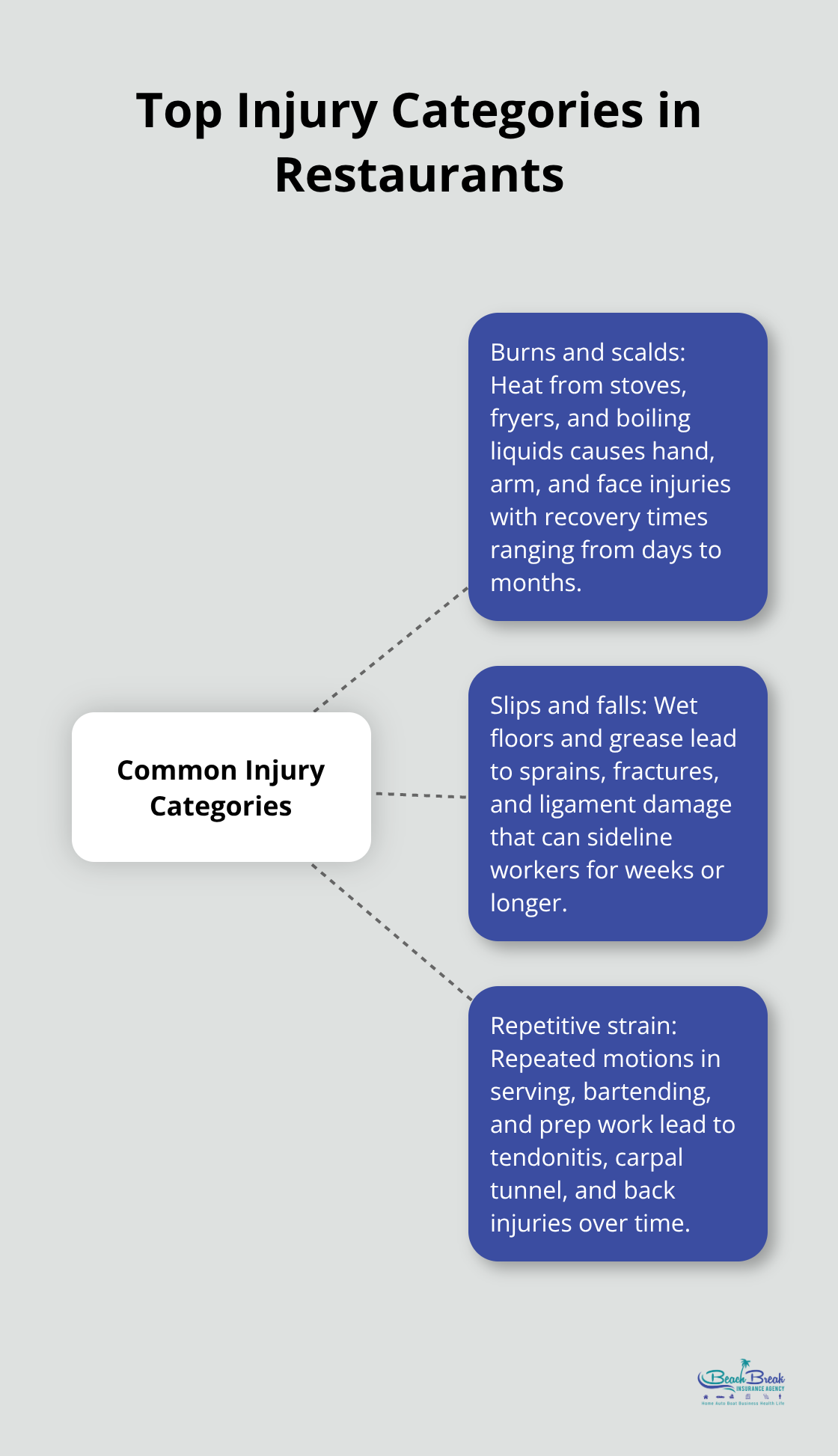
Employee injuries represent your third major exposure area, and workers’ compensation claims in restaurants average $35,000 to $75,000 per incident when serious injuries occur. A line cook suffers a severe burn requiring skin grafting and hospitalization, triggering workers’ comp claims for medical treatment, temporary disability payments, and potential permanent disability awards. California’s workers’ compensation system is no-fault, meaning the employee receives benefits regardless of fault, but inadequate coverage limits force you to cover excess costs from operating capital.
The financial impact accumulates quickly when proper coverage gaps exist. Multiple serious injuries in a single year can exhaust your reserves and force difficult decisions about staffing and operations. Your workers’ compensation limits must align with your actual payroll and injury frequency, not industry minimums that leave you exposed.
Final Thoughts
Most California restaurant owners carry insufficient coverage because they address liability piecemeal rather than systematically. You might have general liability but miss liquor coverage, or carry workers’ compensation limits that don’t match your actual payroll. These gaps create personal financial exposure that a single claim can exploit, and the real cost isn’t the premium you pay monthly-it’s the uninsured loss that forces you to choose between paying a settlement and keeping your doors open.
California restaurant liability insurance requires honest assessment of your actual exposures, not industry minimums that leave you vulnerable. Your slip-and-fall risk differs from a competitor’s based on your layout, flooring, and customer volume. Your foodborne illness exposure depends on your menu complexity and food handling procedures. Your workers’ compensation needs reflect your specific payroll and injury history, and generic coverage recommendations miss these realities entirely.
Contact Beach Break Insurance Agency to schedule a policy review of your current coverage. We’ll identify gaps in your protection and provide quotes that reflect your actual exposure rather than forcing you into standard packages. Your restaurant’s financial survival depends on protection that covers what actually happens in your operation.
The information provided in this blog is for general informational purposes only and does not constitute legal, financial, or insurance advice. Coverage options, terms, and availability may vary. Please consult with a licensed professional for advice specific to your situation.
Artificial intelligence may have been used to generate text and images in some blog articles.