

Workers Compensation Insurance Quotes: Fast Comparisons
Workers compensation insurance quotes vary wildly between providers. Small business owners often overpay simply because they haven’t compared their options side by side.
At Beach Break Insurance Agency, we’ve seen businesses cut their premiums by 20–30% just by reviewing multiple quotes. The right comparison takes less time than you’d think and can reveal coverage gaps that cost far more than the premium savings.
Why Workers Comp Quotes Matter
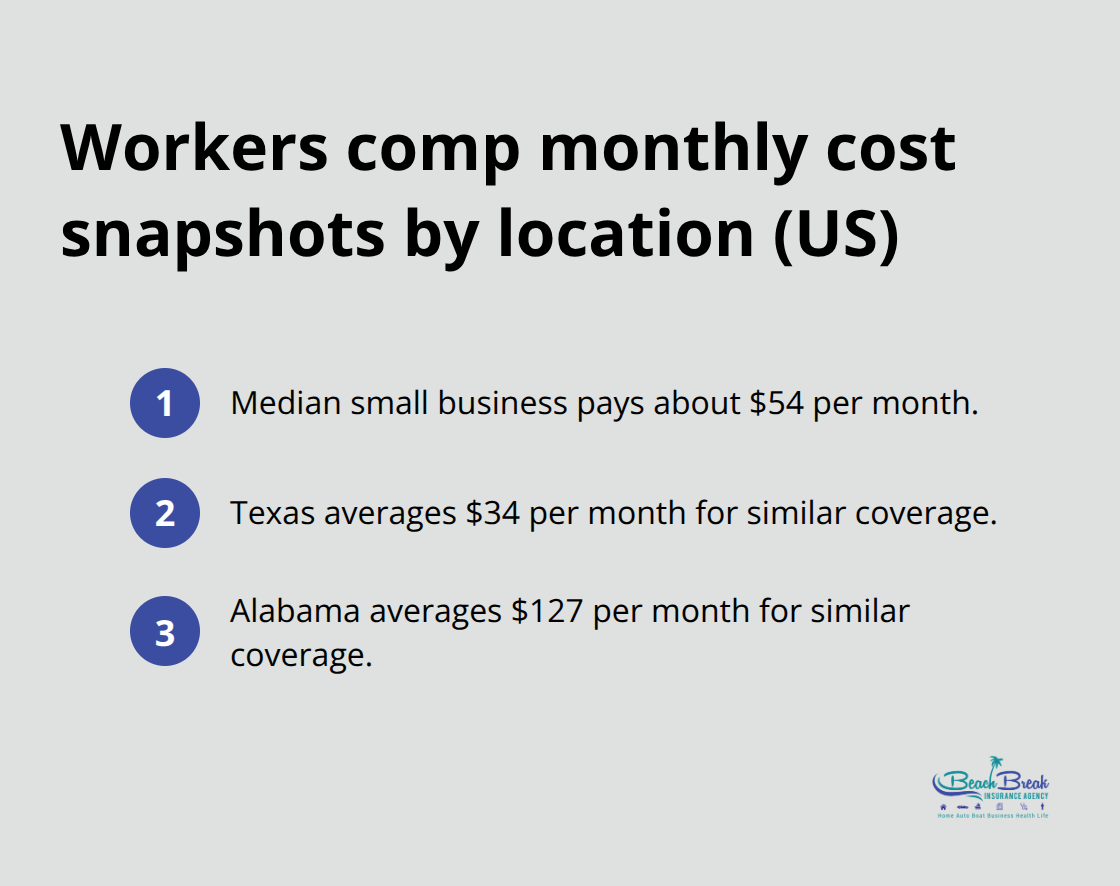
Workers compensation costs have climbed steadily across nearly every industry over the past decade. According to data from Insureon, the median small business now pays around $54 per month for workers comp, though this masks significant regional variation. Texas businesses average $34 monthly while Alabama pays $127 monthly for comparable coverage. These differences stem from state benefit structures, medical cost inflation, and the risk profile of local industries.
The National Council on Compensation Insurance reports that rates are forecast to decline for the seventh consecutive year, yet this doesn’t help businesses paying inflated premiums today based on outdated quotes or incomplete information. A single outdated quote can lock you into overpaying for months or even years.
The Real Cost of Skipping Comparisons
Most small business owners treat workers comp as a static expense rather than a negotiable one. This assumption costs money. Rating plans, experience modification rates, and classification codes shift annually, meaning your premium from last year may no longer reflect your actual risk profile or market rates. The Hartford notes that premiums for small businesses with payroll under $300k can start as low as $13 per month, yet many businesses pay three or four times that amount without exploring alternatives. The gap between your current premium and what you should actually pay often exceeds $200 per year. Comparing quotes across multiple carriers takes roughly 10 minutes online and frequently reveals savings of 20–30 percent. That efficiency matters when your time is already stretched thin running operations.
Coverage Gaps Hide in Quote Details
Price comparisons alone create dangerous blind spots. Many small business owners chase the lowest number without verifying what that quote actually covers. A quote missing employer’s liability coverage leaves you exposed to employee lawsuits that workers comp doesn’t address. Others accept quotes with classification codes that don’t match their actual job duties, resulting in either inadequate coverage or overpayment for protection you don’t need. State-specific requirements add another layer of complexity. Colorado and Idaho require workers comp after your first employee, while Kansas imposes payroll thresholds before coverage becomes mandatory. Selecting a quote without confirming it meets your state’s legal requirements creates compliance risk that far outweighs any premium savings.
Carriers Worth Your Attention
The Hartford, Liberty Mutual, Travelers, AIG, and QBE represent the major carriers most worth comparing (though availability and pricing vary significantly by location and industry). Each carrier applies different rating plans and credits to their base rates, which means the same business profile produces different quotes from different insurers. Shopping across multiple carriers reveals these variations and puts you in position to negotiate better terms. Your next step involves gathering the right information before requesting quotes.
How to Get the Right Quote Comparison
Comparing workers comp quotes demands more precision than simply requesting numbers from five carriers. You need to walk into each quote request with identical information so the quotes you receive are actually comparable.
Locate Your Classification Code First
Start by finding your four-digit classification code on your current policy declarations page. This code determines your risk level and directly drives your premium. If you’re a new business without a policy, identify the code that matches your primary job duties using the WCIRB classification search tool. The National Council on Compensation Insurance maintains these codes, and getting yours right prevents both overpricing and underpricing. Many small business owners skip this step and end up with quotes based on incorrect classifications, making comparisons meaningless.
Gather Accurate Payroll Information
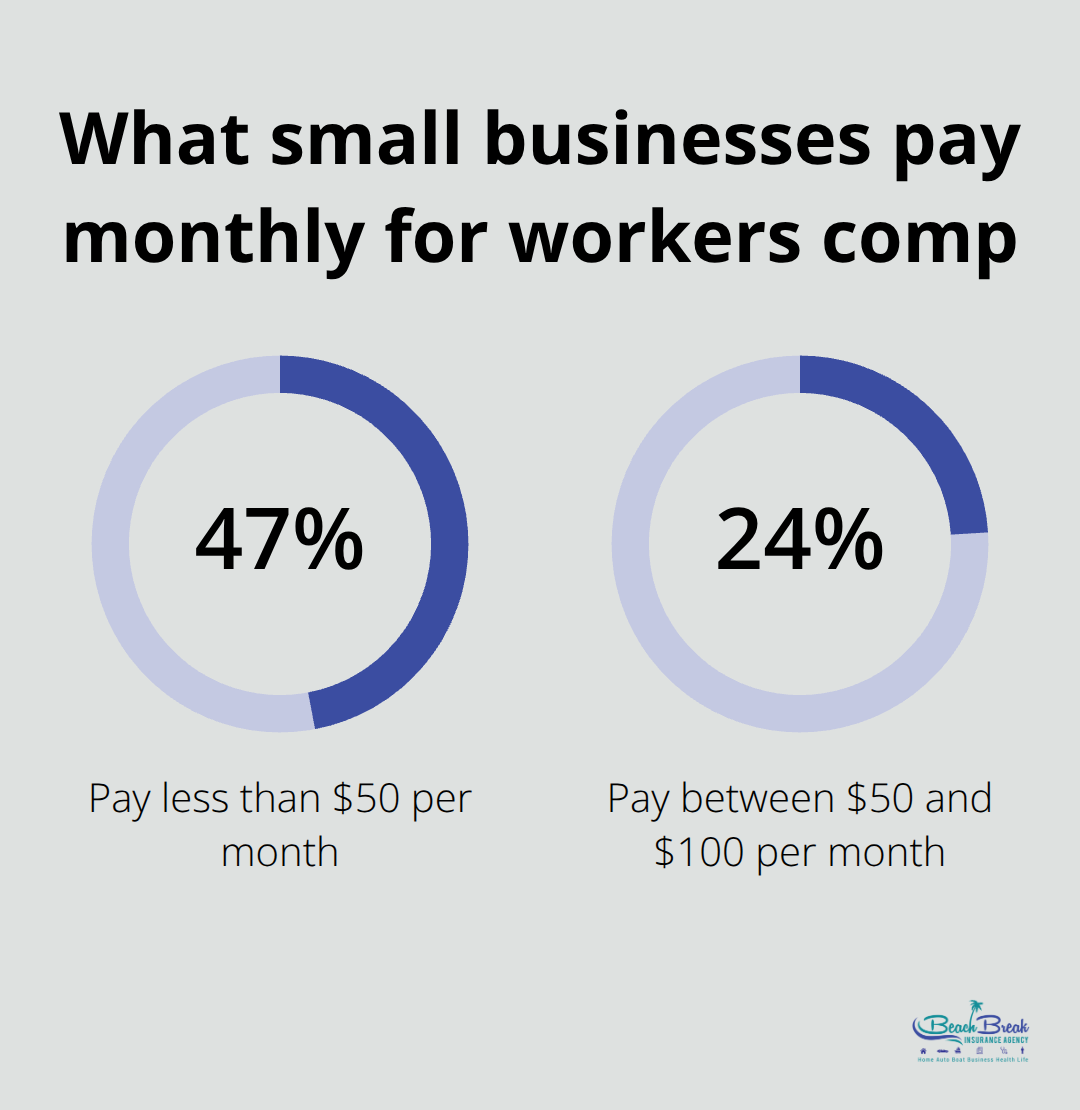
Next, collect your actual payroll figures separated by state if you operate in multiple locations. Insureon data shows that 47 percent of small businesses pay less than $50 monthly while 24 percent pay between $50 and $100 monthly, but these figures only apply when payroll is accurately reported. Underestimating payroll leads to artificially low quotes that balloon at audit time.
Overestimating inflates your premium unnecessarily. If you’re unsure of your exact payroll, estimate conservatively and note it as an estimate when requesting quotes.
Account for Your Experience Modification Rate
Your experience modification rate and claims history dramatically shape final pricing but rarely appear in initial quotes. This EMR score reflects your actual safety record compared to similar businesses in your industry and state. Request quotes that specifically account for your loss history rather than accepting generic base rate quotes.
Evaluate Coverage Beyond Price
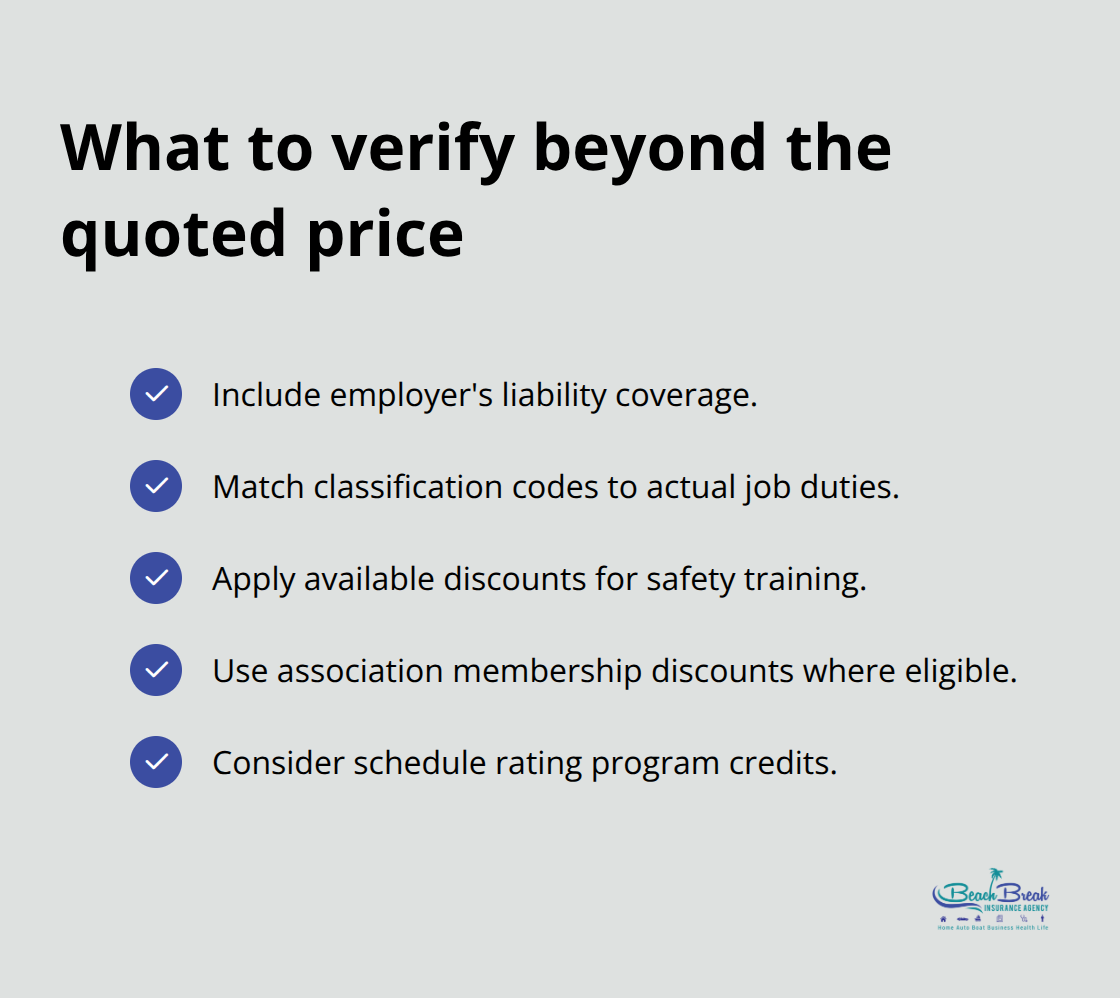
When you receive quotes, ignore the temptation to select based on price alone. Instead, verify that each quote includes employer’s liability coverage, confirm the classification codes match your actual job duties, and check whether the carrier applies any available discounts for safety training, association memberships, or schedule rating programs. These differences matter far more than a $10 monthly premium variation.
Request Quotes from Multiple Carriers
Request quotes from at least three carriers including Liberty Mutual, Travelers, and AIG alongside regional specialists. Once you have quotes in hand, resist the urge to switch carriers mid-term if your current short-rate cancellation penalty erodes the savings you’d gain. Instead, wait until renewal unless savings exceed 25 percent of your annual premium. With your quotes in hand and coverage details verified, the next step involves identifying and avoiding the mistakes that trap most small business owners during this process.
Common Mistakes That Inflate Your Workers Comp Quote
The gap between what you pay and what you should pay rarely stems from market conditions alone. Most small business owners sabotage their own quote comparisons through preventable errors that carriers exploit without hesitation.
Underestimating Payroll Destroys Quote Accuracy
Underestimating payroll ranks first among these mistakes. When you request quotes based on projected payroll rather than actual payroll, carriers price coverage conservatively, then audit your account at year-end and bill you for the difference. Insureon data shows that small businesses with payroll under $300k face significant variation in final premiums, yet many owners submit estimates that understate their true wage expenses. If your business grew 15 percent this year, your payroll estimate should reflect that growth. Carriers don’t reward guessing.
Similarly, misclassifying your employees or job duties creates quotes that bear no relationship to your actual risk profile. A construction supervisor classified as a general laborer receives an artificially low quote that transforms into a compliance violation and premium spike at audit. Your four-digit classification code determines everything-get it wrong and your quote becomes worthless.
Industry-Specific Coverage Requirements Matter More Than Price
Restaurants need different coverage limits than IT consulting firms, yet many owners accept generic quotes without verifying that limits match their operational reality. A restaurant with 12 employees working with hot equipment and slippery floors faces injury frequency that IT firms never encounter, yet both might receive identical quotes if classification codes aren’t examined carefully.
State-specific mandates compound this problem. Some states require employer’s liability coverage automatically included in workers comp policies while others treat it as optional. Selecting a quote without confirming it meets your state’s legal requirements leaves you exposed to employee lawsuits that workers comp specifically excludes.
Coverage Gaps Hide Behind Low Monthly Premiums
Most dangerous of all, small business owners choose quotes based solely on monthly premium without evaluating what that premium actually covers. A $40 monthly quote missing employer’s liability coverage exposes you to employee lawsuits that workers comp specifically excludes. The Hartford and Liberty Mutual both include employer’s liability in standard policies, yet regional carriers sometimes offer lower prices by excluding it entirely. A $15 monthly savings becomes a $50,000 liability if an employee sues.
Verify that each quote includes employer’s liability coverage, confirm the classification codes match your actual job duties, and check whether the carrier applies any available discounts for safety training or association memberships. Incomplete applications force underwriters to make assumptions that inflate premiums or create coverage gaps you did not expect. This verification takes five minutes and prevents the costliest mistakes small business owners make.
Final Thoughts
Fast comparisons between workers compensation insurance quotes eliminate the guesswork that costs small business owners thousands annually. When you request quotes from multiple carriers using identical payroll figures and accurate classification codes, you see exactly where market rates stand and which carriers offer the best value for your specific risk profile. This transparency prevents the premium creep that happens when businesses accept outdated quotes year after year without questioning whether better options exist.
Getting accurate workers compensation insurance quotes requires three concrete steps. First, locate your four-digit classification code and verify it matches your actual job duties. Second, gather your real payroll figures separated by state if you operate in multiple locations, and third, request quotes from at least three major carriers and compare them side by side, paying attention to coverage details rather than chasing the lowest monthly premium.
We at Beach Break Insurance Agency streamline this entire process by comparing quotes from multiple top-rated carriers simultaneously, eliminating the back-and-forth that wastes your time. Our team verifies that classification codes match your operations, confirms your state’s specific coverage requirements are met, and identifies available discounts you might otherwise miss. Contact Beach Break Insurance Agency to compare workers compensation insurance quotes from carriers that match your business profile and budget.
The information provided in this blog is for general informational purposes only and does not constitute legal, financial, or insurance advice. Coverage options, terms, and availability may vary. Please consult with a licensed professional for advice specific to your situation.
Artificial intelligence may have been used to generate text and images in some blog articles.


