

California Business Owners Insurance: A Local Perspective
California business owners face insurance challenges that most other states don’t. Property values keep climbing, wildfire seasons grow more intense, and liability risks shift constantly.
We at Beach Break Insurance Agency know that generic policies fall short for California operations. This guide walks you through what coverage actually matters for your business and how to build protection that fits your specific situation.
Why California Demands Different Insurance
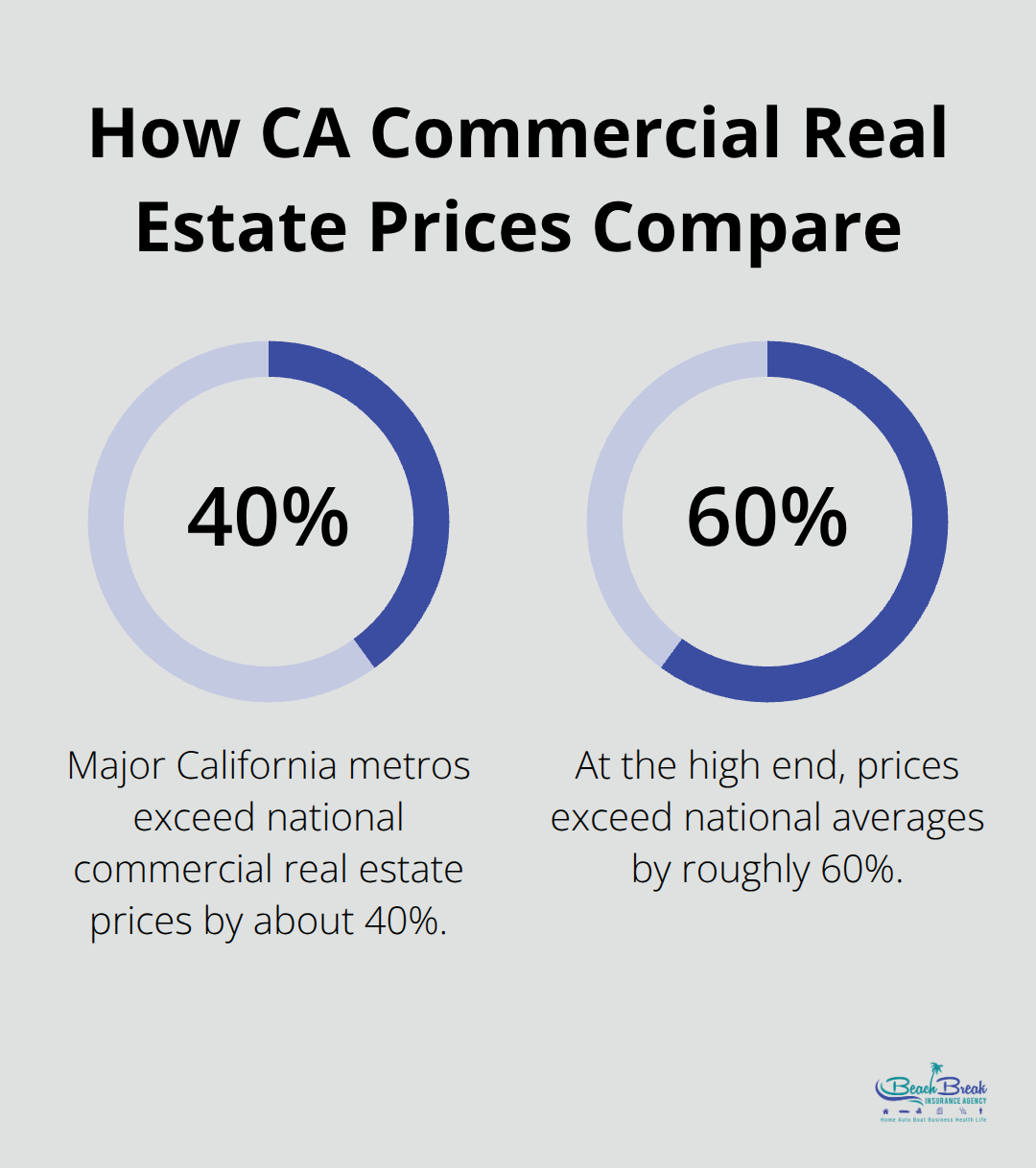
California’s insurance landscape stands apart from the rest of the country, and business owners who ignore this reality pay the price. Property values in California have climbed faster than nearly everywhere else-median commercial real estate prices in major metros like San Francisco and Los Angeles exceed national averages by 40 to 60 percent. This means your building, equipment, and inventory carry replacement costs that standard policies from other states simply don’t account for. If you underinsure your property to its full replacement value, California law penalizes you through coinsurance clauses that reduce your claim payout dollar-for-dollar.
A $2 million building insured for only $1.5 million isn’t just underprotected; it triggers penalties that can slash your recovery by half or more after a loss. Replacement Cost coverage, not Actual Cash Value, is the only rational choice in this market, and Agreed Value policies with upfront appraisals eliminate coinsurance risk entirely.
Wildfire Risk Changes Everything
Wildfire exposure has become the dominant factor in California commercial insurance. The 2023 wildfire season burned over 730,000 acres across the state, and the California FAIR Plan-the insurer of last resort for properties that can’t obtain standard coverage-now holds roughly 1.3 million policies, many of them in high-fire zones. Standard property policies exclude wildfire damage unless you pay for specific endorsements, yet many business owners learn this gap only after a loss strikes. If your operation sits within a fire-hazard severity zone, your carrier may demand defensible space inspections, roof material upgrades, or vegetation management before issuing a quote. Commercial General Liability policies also exclude pollution and damage from smoke, ash, and water runoff, leaving you exposed to liability claims from neighboring properties affected by your building’s fire-related impacts.

Inland Marine coverage becomes critical if you store equipment off-site or operate mobile assets; it protects inventory in transit and in your care during evacuation or relocation.
Liability That Extends Beyond Your Walls
California courts award some of the highest liability judgments in the nation, with jury verdicts in urban areas regularly exceeding $5 million for serious bodily injury or property damage claims. Your standard General Liability policy typically carries per-occurrence limits of $1 million, which sounds adequate until a single incident exhausts that ceiling and leaves you personally liable for the remainder. Commercial Umbrella coverage sits above your primary policies and starts at $1 million in excess protection, with many carriers recommending $2 to $5 million for businesses with significant customer or employee exposure. Completed operations liability-the risk that your product or service causes harm weeks or months after delivery-requires explicit coverage under your CGL policy, and many California contractors and manufacturers face claims years into a project’s completion. If you employ staff, California’s strict employment practices liability environment means wrongful termination, discrimination, and harassment claims occur regularly; Employment Practices Liability Insurance protects you from six-figure legal defense costs and settlements.
How Your Industry and Location Shape Your Needs
Your specific business type and geographic location within California determine which coverage gaps matter most. A retail operation in downtown Los Angeles faces different wildfire exposure than a warehouse in the Central Valley, yet both confront California’s elevated liability environment. Your industry classification affects workers’ compensation rates, property underwriting standards, and the types of liability endorsements carriers will offer. A contractor operating in a fire zone needs different protections than a professional services firm in a coastal city. The next section walks you through how to assess these industry-specific risks and build a coverage strategy that actually protects your operation.
What California Business Owners Actually Need to Protect
Property Coverage That Matches Your Real Replacement Costs
California property coverage operates under rules that trip up business owners from other states. You must insure your building to its full replacement cost, not what you think it’s worth or what you paid for it years ago. Property values climb 3 to 5 percent annually in most California markets, which means a building you insured for $2 million five years ago now costs $2.3 to $2.6 million to rebuild. Standard policies force you to absorb the gap through coinsurance penalties that can cut your claim recovery by 50 percent or more. Agreed Value coverage eliminates this trap entirely-you and your carrier agree upfront on the property’s replacement cost through a professional appraisal, then the policy waives coinsurance if a loss occurs.
Equipment and machinery require separate attention because standard property policies exclude breakdowns from mechanical failure, electrical surge, and boiler malfunction. Boiler and Machinery coverage costs $500 to $2,000 annually depending on your equipment age and maintenance records, but it protects against losses that property policies won’t touch. This gap catches many California business owners off guard when a critical system fails and they discover their standard policy leaves them exposed.
Commercial Auto and Vehicle Protection
If you operate vehicles for business purposes, Commercial Auto insurance is mandatory and separate from your property policy. Most California carriers require per-vehicle limits of $500,000 to $1,000,000 Combined Single Limit, with higher limits recommended if you transport clients or carry high-value cargo. Your personal auto policy explicitly excludes business use, so operating a vehicle for work without Commercial Auto coverage violates your personal policy and leaves you personally liable for any accident.
Liability Coverage in California’s Aggressive Legal Environment
General Liability protection in California must account for the state’s aggressive litigation environment and high jury awards. A single premises liability claim-a customer slipping in your office, a delivery driver injured on your property-can exceed $1 million in medical costs and legal fees before a jury verdict even factors in. Your standard Commercial General Liability policy covers bodily injury and property damage at per-occurrence limits you select, typically $1 million, but California courts regularly award significant damages in serious cases.
Commercial Umbrella insurance sits above your primary policy and provides $1 to $5 million in additional coverage for $300 to $800 annually, depending on your underlying limits and claims history. This protection is not optional for businesses with significant customer or employee contact. Completed operations liability-the risk that your product or service causes harm weeks or months after delivery-requires explicit coverage under your CGL policy, and many California contractors and manufacturers face claims years into a project’s completion.
Income Protection When Operations Stop
Business Interruption coverage restores your lost income when a covered event-fire, theft, equipment breakdown-forces you to close temporarily. If your business generates $50,000 monthly revenue and a fire shuts you down for three months, Business Interruption reimburses that $150,000 loss plus ongoing expenses like payroll and utilities. Extra Expense coverage complements Business Interruption by funding temporary relocation costs, emergency repairs, and accelerated rebuilding so you resume operations faster.
The Hartford reports that small business customers pay roughly $141 monthly for bundled coverage combining property, liability, and business income protection, making this protection affordable for nearly any operation. If you lease space, your landlord requires proof of liability coverage through a Certificate of Insurance you can generate 24/7 online, and many California leases demand $2 million in limits before you even sign the agreement.
Matching Coverage to Your Specific Operation
Your industry classification affects workers’ compensation rates, property underwriting standards, and the types of liability endorsements carriers will offer. A contractor operating in a fire zone needs different protections than a professional services firm in a coastal city. The next section walks you through how to assess these industry-specific risks and build a coverage strategy that actually protects your operation.
Building Coverage That Fits Your California Operation
Map Your Risk Exposure Against Carrier Standards
Assembling the right insurance package for a California business demands more than checking boxes on a standard form. You need to start by mapping your actual risk exposure against what carriers will underwrite at a price you can sustain. Most California business owners accept whatever quote arrives first or select limits based on what competitors claim to carry, rather than analyzing their own operation’s specific vulnerabilities. Your industry classification, location within California, number of employees, revenue level, and claims history determine which carriers will offer you coverage and at what premium. A contractor in a fire zone with a prior water damage claim faces completely different underwriting than a professional services firm in San Diego with a clean loss history.
Document Property Values and Liability Requirements
Start by documenting your property values precisely-not estimated or historical values, but current replacement costs obtained from a commercial appraiser or your accountant. This single step eliminates the coinsurance penalty trap that catches so many California owners off guard. Next, audit your liability exposure by reviewing your lease agreement, customer contracts, and employee agreements to identify coverage requirements your counterparties impose.

Many California commercial leases demand $2 million in General Liability limits before you occupy the space, and some landlords require higher limits if you operate a restaurant, manufacturing facility, or contractor business. Workers’ compensation classification codes vary dramatically by industry, so verify your carrier assigns the correct classification code before accepting a quote.
Compare Quotes Across Multiple Carriers
Comparing quotes from multiple carriers matters far more in California than in other states because underwriting standards vary significantly based on each insurer’s appetite for local risks like wildfire exposure and earthquake damage. However, these averages mask the reality that California carriers often charge 20 to 40 percent premiums above national averages due to elevated property values, aggressive litigation trends, and natural disaster frequency. When you request quotes, specify your exact property replacement cost, employee count broken down by job classification, annual revenue, and whether you occupy a fire-hazard severity zone-vague information produces unreliable quotes that shift dramatically during underwriting.
Select Deductibles That Match Your Cash Position
Deductibles deserve careful attention because selecting a $5,000 deductible instead of $2,500 might reduce your annual premium by $300 to $500, but it forces you to absorb larger out-of-pocket losses when claims occur. Try matching your deductible to your available cash reserves rather than chasing the lowest premium; if a $5,000 deductible would strain your business cash flow during a loss, the lower premium savings evaporate the moment you need to file a claim.
Adjust Coverage Annually as Your Business Evolves
Review your policy limits annually as your business grows, property values climb, and liability exposures shift. California’s 3 to 5 percent annual property appreciation means a building you insured for $2 million three years ago likely requires $2.2 to $2.3 million in coverage today, and failing to adjust creates immediate coinsurance penalties on any loss. An independent agency can help you compare quotes from multiple carriers and adjust your coverage as your operation changes, saving you time while keeping your policies aligned with your actual risk exposure.
Final Thoughts
California business owners insurance demands a fundamentally different approach than coverage in other states because elevated property values, aggressive litigation trends, wildfire exposure, and strict regulatory requirements create gaps that generic policies cannot fill. Underinsuring your property triggers coinsurance penalties that slash your claim recovery by half, liability judgments regularly exceed $5 million, and wildfire exclusions in standard policies expose you to catastrophic losses. The path forward starts with a clear-eyed assessment of your actual replacement costs, liability exposure, and industry-specific risks through professional appraisal rather than guessing.
Document your property values precisely, review your lease agreements and customer contracts to identify coverage requirements, and verify your workers’ compensation classification code matches your actual operations. Request detailed quotes from multiple carriers, specifying your exact exposures rather than accepting vague estimates that shift during underwriting. Match your deductible to your available cash reserves so you can actually afford to file a claim without straining your business, since a $5,000 deductible might save $300 annually but forces you to absorb larger out-of-pocket losses when claims occur.
We at Beach Break Insurance Agency understand that California business owners need coverage tailored to local risks and changing circumstances. As an independent San Diego-based agency, we compare quotes from multiple top-rated carriers to deliver protection that fits your specific operation. Contact us today to review your current coverage gaps and align your policies with your actual needs while controlling costs.
The information provided in this blog is for general informational purposes only and does not constitute legal, financial, or insurance advice. Coverage options, terms, and availability may vary. Please consult with a licensed professional for advice specific to your situation.
Artificial intelligence may have been used to generate text and images in some blog articles.


