

Commercial Liability Insurance California: Essentials for SMBs
One lawsuit can wipe out years of profit for a California small business. Commercial liability insurance California protects you from the financial devastation of bodily injury claims, property damage lawsuits, and legal defense costs that can drain your business account.
At Beach Break Insurance Agency, we’ve seen too many SMBs operate without adequate coverage, only to face catastrophic losses when accidents happen. The right policy isn’t optional-it’s the foundation of responsible business ownership in California.
What Your Commercial Liability Policy Actually Covers
The Three Core Protections
Commercial liability insurance protects your California business from third-party claims of bodily injuries or property damage. First, it covers bodily injury claims when someone is injured on your property or because of your business operations-think a customer slipping in your store or a contractor hurt at your worksite. Second, it handles property damage claims if your business damages someone else’s property, whether that’s a client’s equipment you accidentally broke or structural damage from your work. Third, and this matters more than most SMBs realize, the policy pays for your legal defense costs and court settlements.
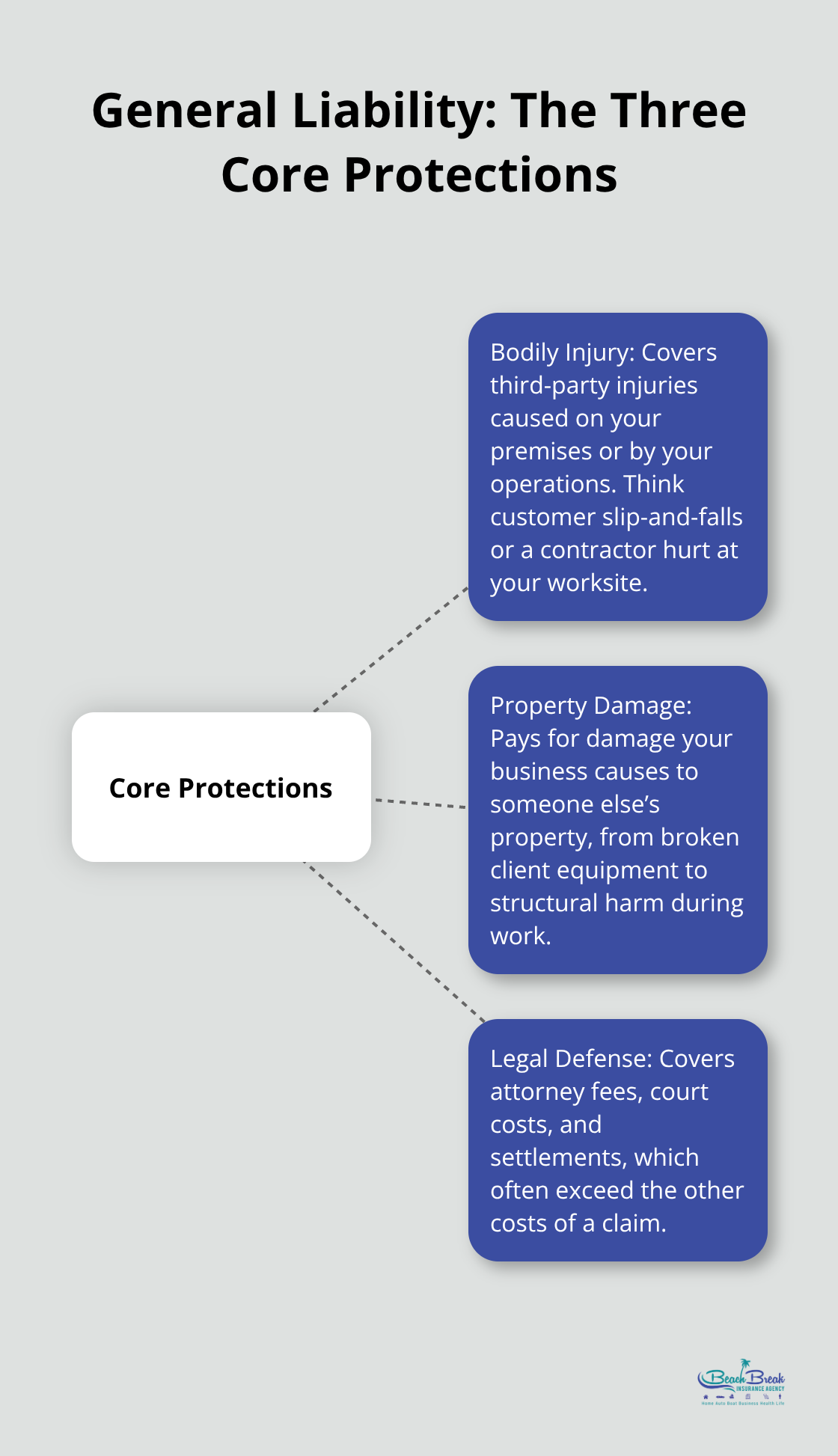
General liability remains the most common coverage for California SMBs precisely because these exposures affect nearly every business type. The policy typically covers medical payments for injured third parties without them having to sue you first, which often prevents claims from escalating into costly lawsuits.
What This Coverage Excludes
Understanding what commercial liability does not cover matters just as much as knowing what it does. General liability does not protect your own property-your building, equipment, or inventory-which is why a Business Owners Policy that bundles property coverage with liability makes more sense for most SMBs. Professional liability, sometimes called errors and omissions insurance, covers claims of negligence in your services but does not handle bodily injury or property damage claims.
If you operate vehicles for work, your personal auto policy excludes business use entirely, meaning you need commercial auto insurance as a separate line. These gaps leave many California business owners exposed without realizing it.
Coverage Limits and Premium Factors
The coverage limits you select significantly impact both your protection and your cost. A $1 million per occurrence and $2 million aggregate limit is the baseline most California contracts require, but higher-risk industries like construction or manufacturing often need $2 million per occurrence limits.
Your actual premium depends on your industry, location, number of employees, and claims history. A landscaper in San Francisco will pay substantially more than a consultant in a rural area due to higher physical risk and cost of living differences. Getting multiple quotes online takes roughly seven minutes and reveals how much your specific risk profile affects pricing.
Finding the Right Fit for Your Business
The policy you select must match your actual operations and the contracts your clients demand. An independent agency can quickly compare quotes from multiple carriers to help you identify the right limits and deductibles for your situation. This comparison process shows you exactly how different coverage levels affect your monthly costs, so you can make an informed decision rather than guessing at what you need.
Why Your California Business Needs This Coverage
Legal Requirements and Client Demands
California law mandates workers’ compensation insurance if you have employees, but commercial liability sits in a different category entirely. While the state doesn’t legally require general liability for most businesses, your clients absolutely will. According to the U.S. Small Business Administration, California has 4.3 million small businesses, and the vast majority of contracts-whether from larger companies, property owners, or event organizers-demand a certificate of insurance showing general liability coverage before they’ll work with you. This means liability insurance isn’t optional in practice, even if it’s not mandatory by statute. A contractor without proof of coverage loses bids. A service provider without general liability gets dropped from vendor lists. A consultant without errors and omissions insurance can’t sign client agreements.
The Real Cost of a Single Lawsuit
The financial exposure isn’t theoretical either. A single bodily injury lawsuit or property damage claim can exceed $100,000 in legal defense costs alone, even if you ultimately win. Medical bills for a serious injury spike fast, and California’s cost of living means settlements and jury awards run higher than national averages. Businesses that carried coverage survived these incidents; those without it faced devastating out-of-pocket costs that forced closures or bankruptcies.
Dangerous Gaps in Your Current Policies
Your existing business policies create dangerous gaps most owners don’t recognize until claims arise. Standard commercial property policies don’t cover liability claims. Personal auto insurance explicitly excludes business use, leaving you uninsured if you use your vehicle for work. Your landlord’s property coverage doesn’t protect you from third-party injury claims on the premises. Professional liability doesn’t cover bodily injury or property damage-it only covers negligence in your services. This fragmentation means you could carry three separate policies and still face a $500,000 lawsuit with zero protection.
Closing Coverage Gaps Affordably
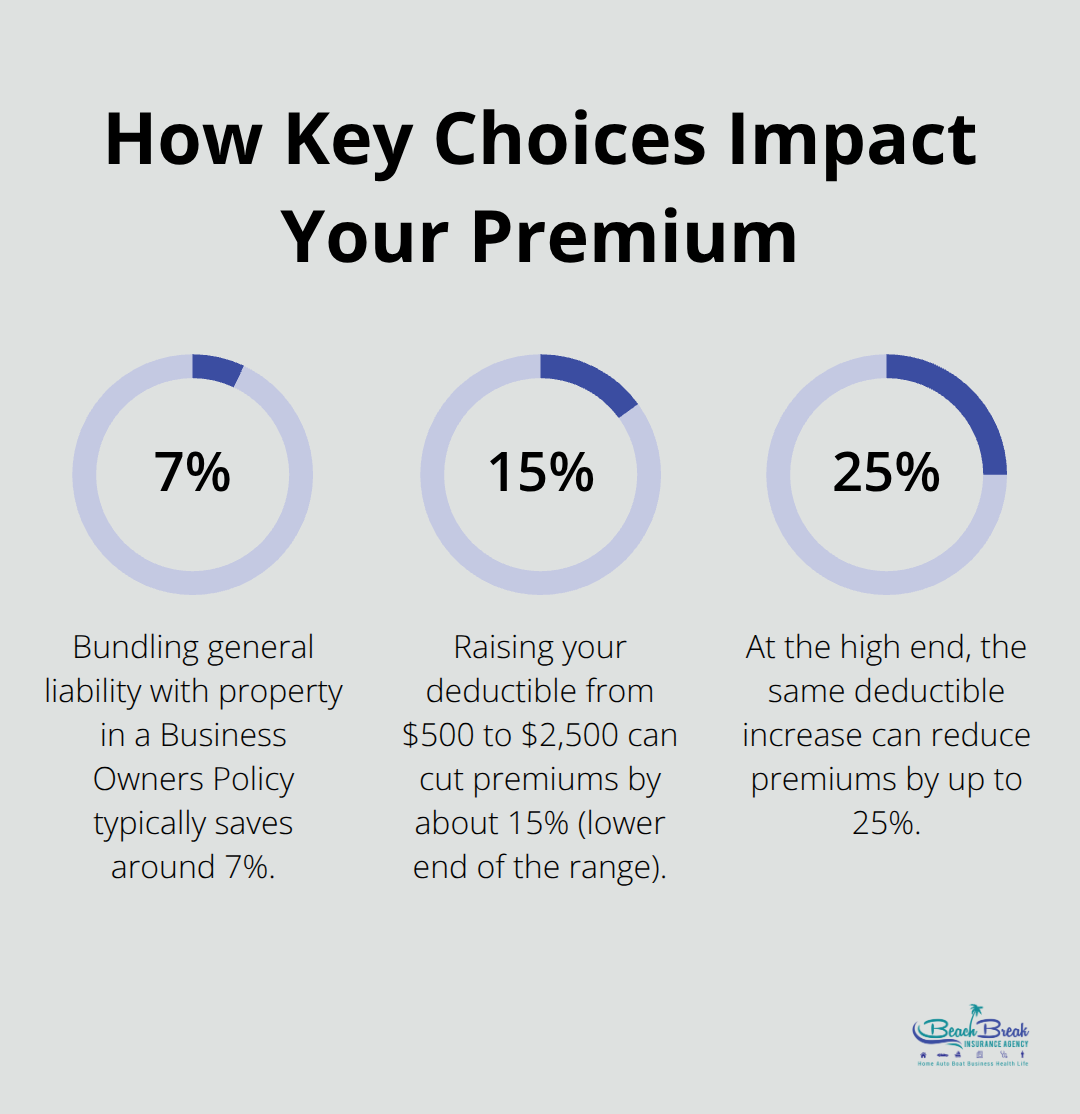
The solution isn’t buying more policies haphazardly; it’s understanding your actual risk profile and closing gaps with the right coverage. A Business Owners Policy combines general liability with property coverage, making it far more cost-effective than buying them separately. For 2025, general liability averages around $55 to $79 per month for new customers, depending on your industry and location, but bundling typically saves around 7% compared to standalone policies. The real cost of underinsurance isn’t the premium you avoid-it’s the uninsured loss that destroys your business when an accident happens.
What Comes Next
Now that you understand why coverage matters, the next step involves selecting the right policy limits and comparing carriers that fit your specific business type and risk profile.
How to Choose the Right Commercial Liability Policy
Assess Your Industry-Specific Risks
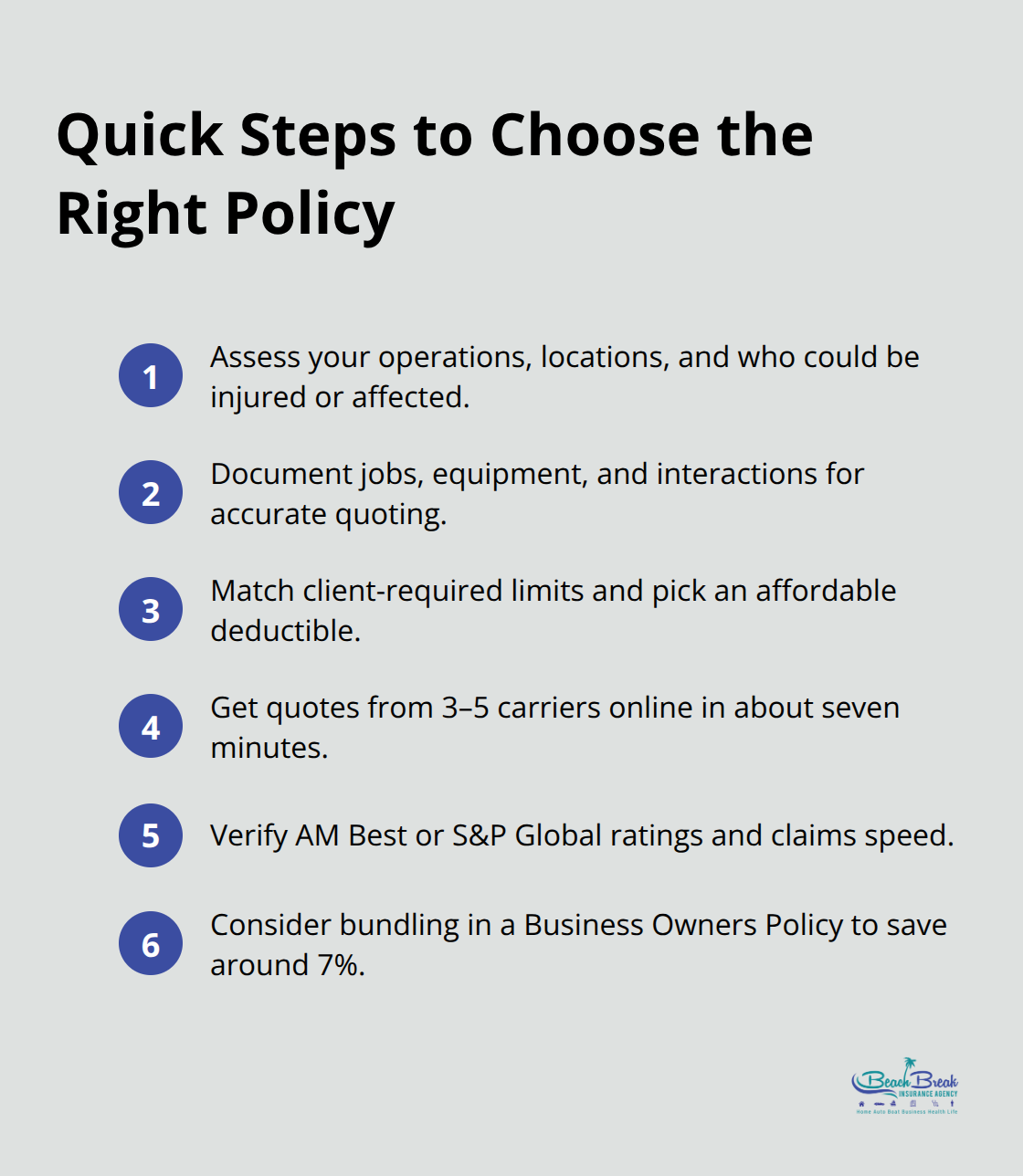
Start by listing exactly what your business does, where it operates, and who it could injure or whose property it could damage. A contractor’s risk profile looks nothing like a consultant’s, and a San Francisco restaurant faces different exposures than a landscaping crew in a rural county. Your industry classification code helps ensure consistency in premium calculation and supports underwriting guidelines. If you tell an insurer you’re a general contractor but also do electrical work, they may underprice your policy and later deny claims for work outside your stated classification.
Spend 30 minutes documenting your actual operations: the types of jobs you take, the locations where you work, the equipment you use, and the people who interact with your business. This inventory becomes your foundation for comparing quotes accurately. A general liability policy for a landscaper in Los Angeles might run $100 to $150 monthly, while the same coverage for a consultant in the same city could cost $40 to $60-your specific industry and location shift pricing dramatically.
Compare Coverage Limits and Deductibles
Once you know your real risk, you can evaluate coverage limits intelligently instead of guessing. Most California contracts demand $1 million per occurrence and $2 million aggregate as a baseline, but higher-risk work like roofing, excavation, or manufacturing often requires $2 million per occurrence limits. Your deductible choice directly affects your monthly cost: increasing your deductible from $500 to $2,500 typically cuts premiums by 15 to 25 percent, but only if you can afford to pay that amount out of pocket after a loss.
Contractors and service businesses often choose $1,000 deductibles as the practical middle ground-low enough to manage if a claim hits, high enough to reduce premiums meaningfully. Getting quotes online takes roughly seven minutes, and comparing three to five carriers reveals how your specific situation affects pricing. Bundling general liability with commercial property through a Business Owners Policy saves approximately 7 percent on your total premium compared to buying coverages separately, meaning a business that bundles often recoups the cost difference within months.
Review Carrier Ratings and Customer Service
Carrier ratings and claims handling speed matter far more than most business owners realize, yet they’re often overlooked in favor of chasing the lowest price. Check financial stability ratings through AM Best or S&P Global to confirm the carrier can actually pay claims when disasters strike.
More importantly, verify claims handling speed by reading recent customer reviews on independent sites-not the carrier’s own website. A policy that costs $20 less monthly but takes three months to settle a $50,000 claim destroys that savings instantly. Contact the carrier’s customer service line with a test question about your specific business type and notice whether they answer clearly or deflect with jargon. An independent agency can represent your interests across multiple carriers, explain exactly what each policy covers and costs, and handle the comparison work for you. This approach typically saves you 10 to 15 hours of research while uncovering discounts you’d miss shopping alone.
Final Thoughts
Commercial liability insurance California protects your business from the financial devastation that follows a single lawsuit or accident claim. Without this coverage, bodily injury claims, property damage lawsuits, and legal defense costs can drain your business account in weeks and force closure. The right policy stands between survival and catastrophe when incidents happen.
Start by documenting your actual business operations and identifying the risks they create. Check whether your clients demand specific coverage limits through their contracts, and determine whether a Business Owners Policy bundling liability with property coverage makes financial sense for your situation, since bundling typically saves around 7 percent compared to buying coverages separately. Getting quotes from multiple carriers takes roughly seven minutes online and shows you exactly how your industry, location, and claims history affect pricing.
Contact Beach Break Insurance Agency to discuss your specific business type, the coverage your clients require, and your budget. We compare options from top-rated carriers that fit your risk profile and explain exactly what each policy covers, costs, and excludes. The right coverage protects your business today and gives you peace of mind tomorrow.
The information provided in this blog is for general informational purposes only and does not constitute legal, financial, or insurance advice. Coverage options, terms, and availability may vary. Please consult with a licensed professional for advice specific to your situation.
Artificial intelligence may have been used to generate text and images in some blog articles.


