

California BOP Insurance Options: A Quick Rundown
Running a small business in California means protecting your assets from real risks. A Business Owner’s Policy bundles general liability, property, and other coverage into one package-and it’s often more affordable than buying policies separately.
At Beach Break Insurance Agency, we’ve helped countless California business owners find the right BOP that fits their specific needs and budget. This guide walks you through your California BOP insurance options so you can make an informed decision.
What a BOP Actually Covers
The Three Core Components
A Business Owner’s Policy combines three essential protections into one package: general liability coverage, property coverage, and business interruption insurance. General liability protects you if a customer gets injured on your premises or claims your product caused them harm. Property coverage pays to repair or replace your building, equipment, inventory, and fixtures if fire, theft, or weather damage strikes.
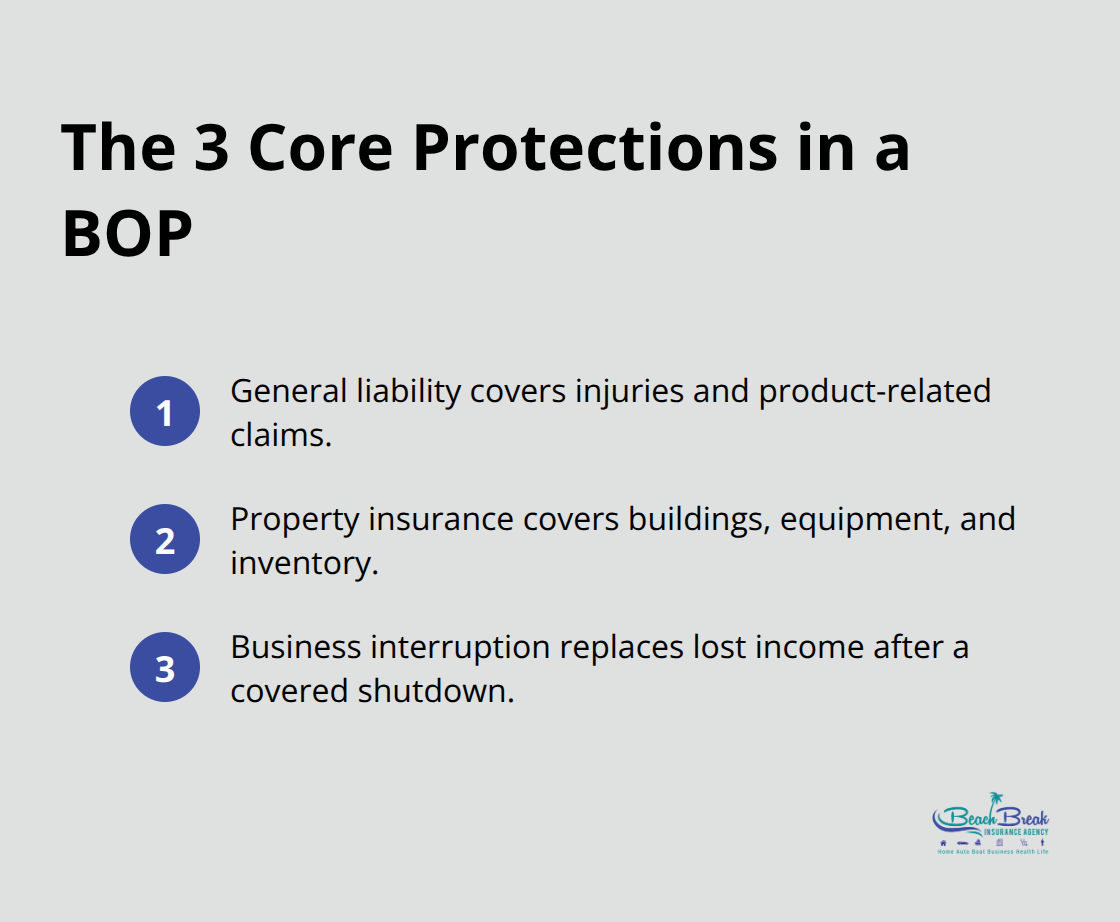
Business interruption coverage replaces lost income when you cannot operate due to a covered event.
Additional Protections Most BOPs Include
Most California BOPs also include commercial crime coverage for employee theft and cyber liability for data breaches, though coverage limits vary by carrier. The appeal is straightforward: bundling these protections costs less than buying each policy separately. Small business owners typically save on group disability insurance rates compared to individual policies, according to the National Association of Insurance Commissioners.
Why Consolidation Matters for Your Business
Individual policies force you to manage multiple renewals, different deductibles, and separate agents. A BOP consolidates everything under one policy with one deductible and one renewal date, which simplifies administration and reduces the chance you’ll accidentally let coverage lapse. California small business owners choose BOPs because the format matches how they actually operate. You’re not buying theoretical coverage for risks that don’t exist in your business; you’re getting the protections that matter most bundled at a price that works for a lean operation.
The combination of affordability, simplicity, and relevant coverage makes BOPs the preferred option for restaurants, retail shops, professional services, and contractors across California. The coverage isn’t one-size-fits-all, though. A boutique retail store needs different limits than a plumbing contractor, and coastal businesses face fire risks that inland operations don’t. That’s where the specifics of your industry and location become critical to getting a BOP that actually protects your business instead of just looking good on paper.
What Makes California BOPs Different
Fire Risk Shapes Your Coverage Options
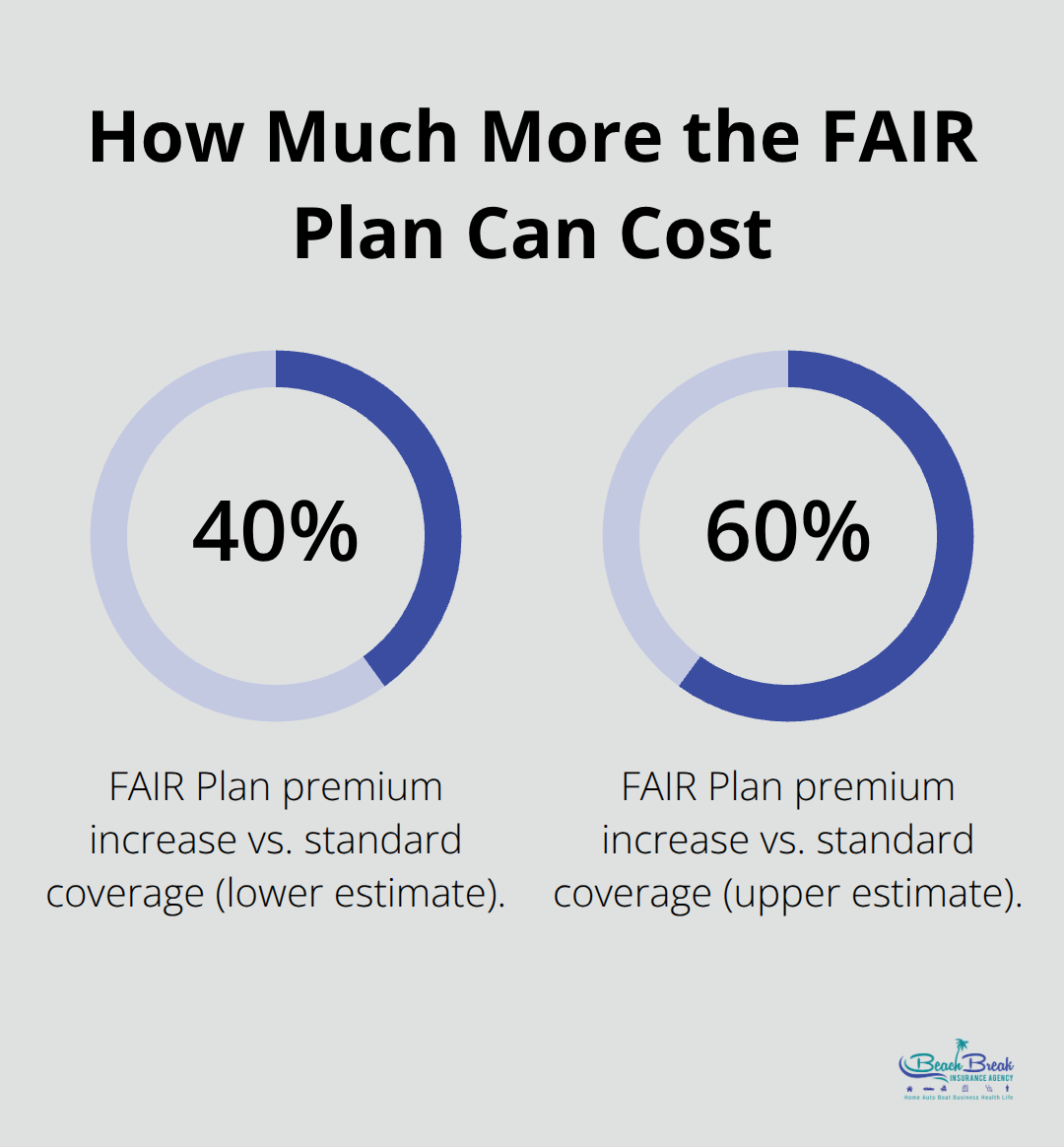
California’s insurance landscape forces business owners to think differently about coverage than operators in most other states. Fire risk dominates the conversation, particularly for coastal and mountain properties. The 2023 wildfire season destroyed over 632,000 acres across California, and insurance carriers responded by tightening coverage or exiting the market entirely. If standard carriers deny your property coverage application, you land in the California FAIR Plan, which offers basic property protection at significantly higher premiums. A FAIR Plan policy costs roughly 40 to 60 percent more than standard commercial coverage, making it an expensive safety net rather than a competitive option.
Your BOP quote depends heavily on your property’s location, construction materials, and distance from fire zones. A restaurant in downtown San Diego faces different underwriting scrutiny than one in the foothills. You need to understand your fire rating before comparing quotes, because it directly impacts your premium and eligibility with standard carriers.
Industry Type and Location Drive Coverage Needs
Industry type and location combine to create wildly different coverage requirements across California’s diverse business landscape. A tech startup in San Francisco needs cyber liability limits that protect against data breaches affecting thousands of customers, while a landscaping contractor in Sacramento needs equipment coverage and commercial auto bundled into the package. Premium variations reflect these differences precisely.
Small business owners in high-fire zones pay significantly more for identical coverage than those in low-risk areas. Coastal properties pay higher premiums due to salt spray damage to equipment and structures. You cannot apply a single BOP template across California and expect appropriate protection.
Preparing Your Business for Quote Comparison
Get your property assessed for fire risk, document your specific equipment and inventory value, and identify which coverage limits matter most for your operation before requesting quotes. This preparation prevents you from overpaying for unnecessary coverage or discovering critical gaps after a loss occurs. Comparing three to five quotes from different carriers reveals how dramatically premiums fluctuate based on your specific risk profile and location.
The differences between your options become clear only when you gather concrete information about your business. Once you understand your fire risk, industry requirements, and actual asset values, you’re ready to evaluate which BOP structure works best for your operation.
How to Choose the Right BOP for Your California Business
Assess Your Coverage Needs with Precision
Start by listing every asset your business owns and every liability risk your operation creates. Walk through your physical location and document equipment, inventory, fixtures, and building improvements with replacement costs, not current depreciated value. A restaurant owner needs to account for kitchen equipment, furniture, POS systems, and signage. A contractor tracks tools, vehicles, and materials stored on-site. This inventory becomes your baseline for property coverage limits.
Next, identify your actual liability exposure by considering customer interactions, product handling, and employee activities. A salon has slip-and-fall risks; a consulting firm has professional liability concerns; a retail store faces product liability if customers suffer injury from merchandise. Your industry determines which risks matter most, and your specific operation determines the limits you actually need.
Most California business owners underestimate replacement costs according to the Insurance Information Institute, which means they discover coverage gaps only after losses occur. Spend time getting the numbers right because inadequate limits create financial exposure that a cheap premium cannot justify.
Compare Quotes from Multiple Carriers
Request detailed quotes from at least three different carriers rather than accepting the first offer. Carriers price California BOPs differently based on their risk appetite and underwriting criteria. One carrier might specialize in restaurant coverage and offer competitive rates while another charges premiums 40 percent higher for identical risks.
Ask each carrier for a complete breakdown showing property limits, liability limits, deductible options, and what specific coverages they include or exclude. An independent agent can gather multiple quotes simultaneously and explain how each policy differs, saving you hours of phone calls and preventing confusion when comparing options.
Select the Right Deductible for Your Situation
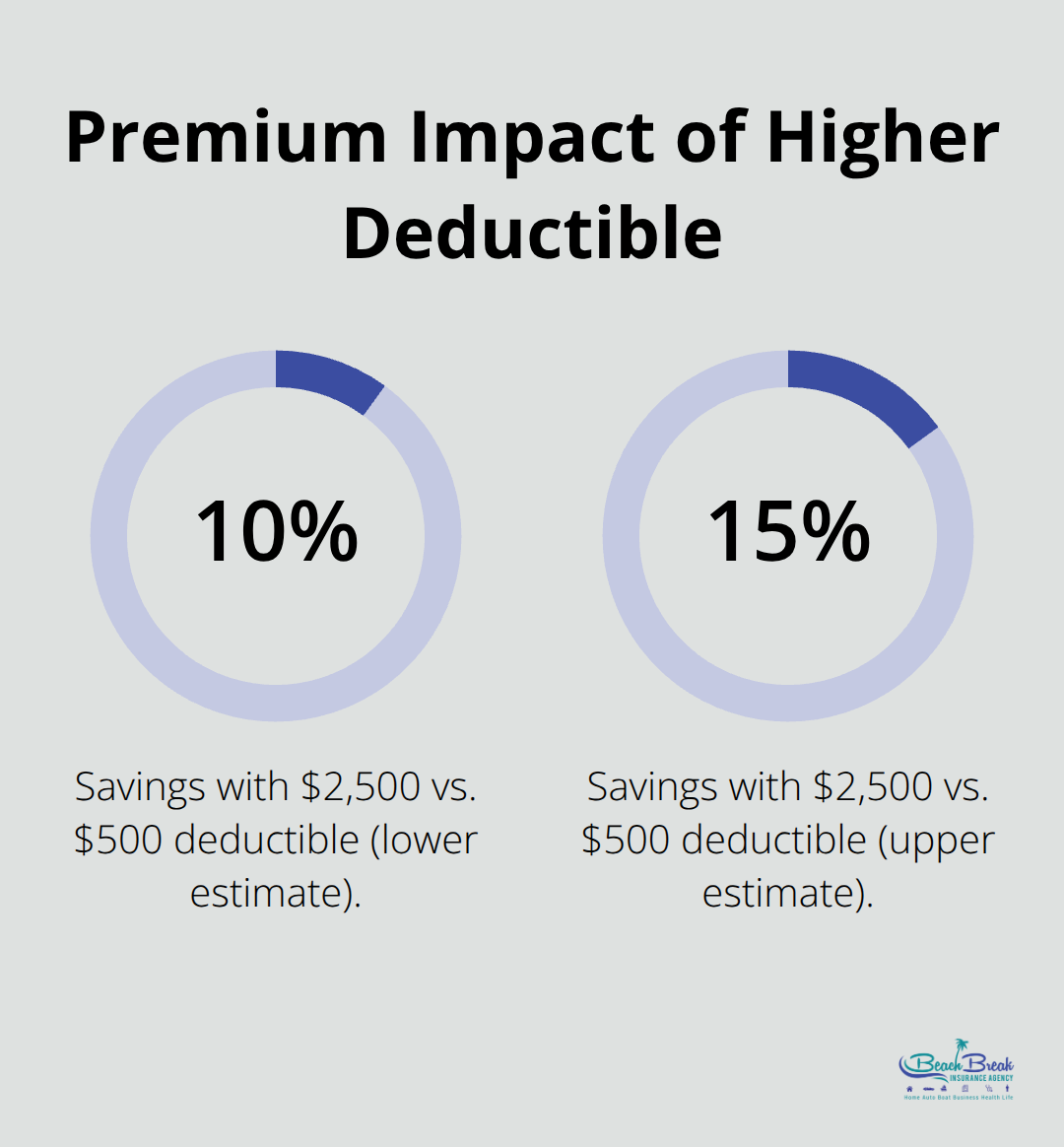
Deductible selection matters more than most owners realize because it directly impacts both your premium and out-of-pocket costs during a claim. A $2,500 deductible saves roughly 10 to 15 percent on premiums compared to a $500 deductible, but that difference only benefits you if you actually avoid filing small claims.
Calculate your cash position and loss tolerance honestly before selecting a deductible that looks good on paper but strains your finances when you need to use it. Request quotes with multiple deductible options so you see exactly how much you save and can make an informed choice rather than guessing.
Work with an Independent Agent
An independent agent like those at Beach Break Insurance Agency compares quotes from multiple top-rated carriers and explains how each policy differs for your specific situation. This approach saves you time navigating carrier websites and prevents you from missing important coverage differences buried in policy documents.
Independent agents also help you understand how fire risk, location, and industry type affect your premium and coverage options. They answer questions about what happens if a standard carrier denies your application and you need FAIR Plan coverage (which costs 40 to 60 percent more than standard policies). Having someone explain your actual options prevents costly mistakes and ensures your BOP matches your real business needs.
Final Thoughts
California BOP insurance options work best when you match coverage to your actual business risks rather than accepting whatever a carrier offers first. Your specific industry, location, and fire risk determine whether a standard BOP protects you adequately or leaves gaps that cost money when you need coverage most. Comparing quotes from multiple carriers reveals how dramatically premiums vary for identical risks, with one carrier offering competitive rates for your industry while another charges significantly more based on their underwriting criteria.
Deductible selection impacts both your premium and your out-of-pocket costs during a claim, so request quotes with multiple deductible options before deciding. Fire risk shapes California’s insurance landscape in ways that don’t apply elsewhere, which means your BOP quote depends on factors most business owners don’t consider until they start shopping. A restaurant owner’s coverage needs differ fundamentally from a contractor’s needs, and a coastal property faces different underwriting scrutiny than an inland location.
Your next step involves gathering information about your property, assets, and liability risks, then reaching out to Beach Break Insurance Agency to compare your California BOP insurance options. We help California business owners navigate these decisions by comparing quotes from multiple top-rated carriers and explaining how each policy differs for your specific situation. Professional guidance ensures your coverage matches your real business needs rather than just looking good on paper.
The information provided in this blog is for general informational purposes only and does not constitute legal, financial, or insurance advice. Coverage options, terms, and availability may vary. Please consult with a licensed professional for advice specific to your situation.
Artificial intelligence may have been used to generate text and images in some blog articles.


