

San Diego Wildfire Insurance: Protecting Coastal Homes
San Diego’s wildfire season grows more intense each year, putting coastal homes at serious risk. Property damage from wildfires in San Diego County has exceeded $3 billion over the past decade, and many homeowners discover their standard policies don’t cover fire losses adequately.
We at Beach Break Insurance Agency help San Diego residents find the right wildfire insurance protection before disaster strikes. This guide walks you through your options and shows you how to secure coverage that actually protects your investment.
Understanding Wildfire Risk in San Diego
Why Coastal San Diego Properties Face Extreme Wildfire Risk
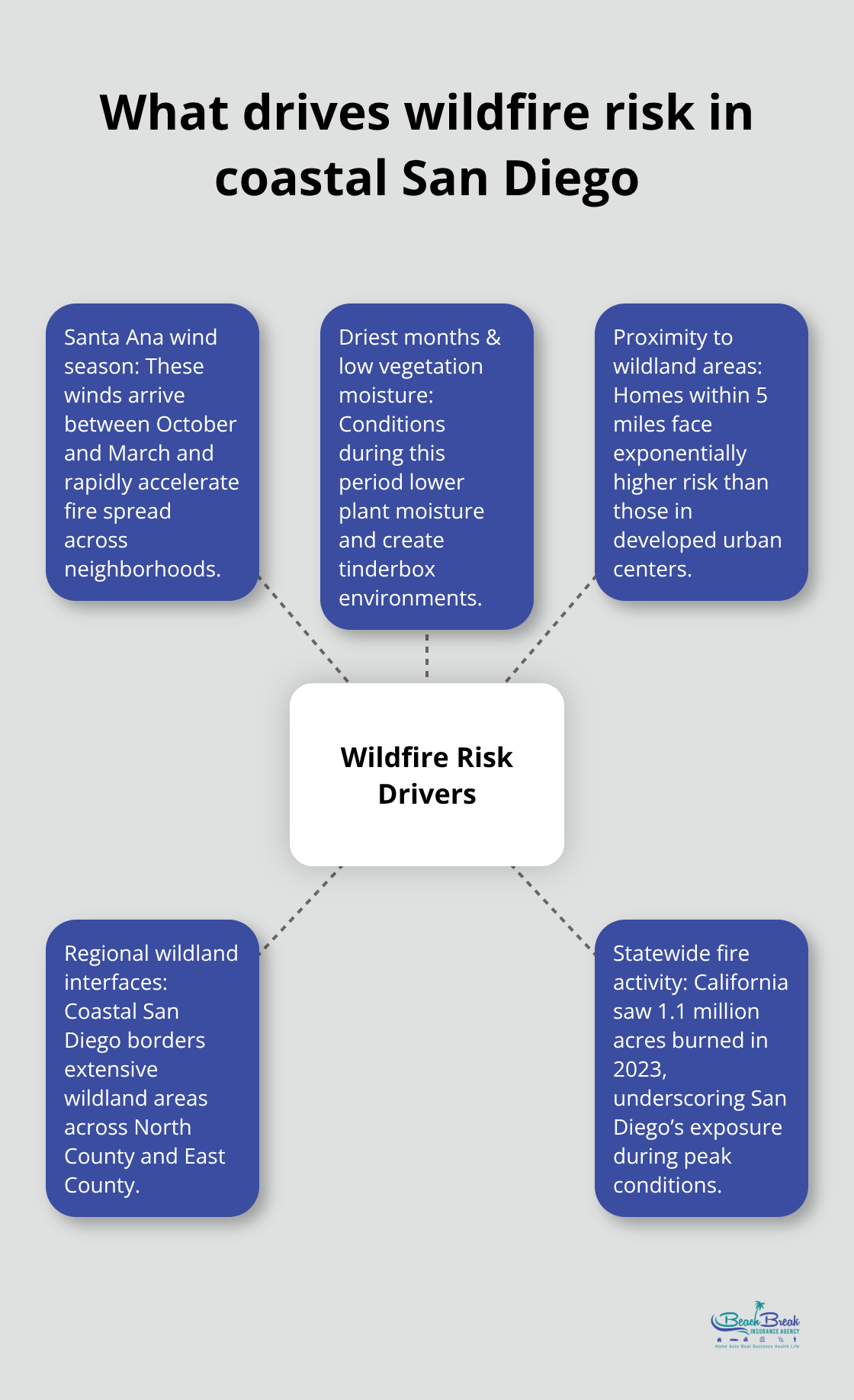
Coastal San Diego properties sit in a perfect storm of fire danger. Santa Ana winds bring hot, dry weather and push flames across neighborhoods in hours rather than days. These winds typically arrive between October and March, coinciding with the driest months of the year when vegetation moisture drops to dangerous levels. The National Interagency Fire Center reported that California experienced 1.1 million acres burned in 2023 alone, with San Diego County accounting for significant portions of that total. Your home’s location matters enormously-properties within 5 miles of wildland areas face exponentially higher risk than those in developed urban centers, and coastal San Diego has extensive wildland interfaces throughout North County and East County regions.
Geography Makes San Diego a Fire Magnet
San Diego’s terrain amplifies wildfire danger in specific ways. Canyons funnel wind and flames upward with increased intensity, while dense chaparral vegetation that covers hillsides burns with extreme heat. The county’s elevation changes create microclimates where fire behaves unpredictably. Areas like Ramona, Escondido, and Poway sit at higher elevations where vegetation dries faster and burns hotter than coastal flatlands. The 2007 Witch Creek Fire destroyed 1,644 structures and burned 197,990 acres, demonstrating how rapidly fires spread through San Diego’s topography. The 2014 Cocos Fire and 2017 Lilac Fire followed similar patterns, each destroying hundreds of homes. If your property sits in a canyon, on a hillside, or within a mile of dry brush, your risk level jumps substantially compared to homes in established neighborhoods surrounded by maintained landscaping.
The Numbers Tell a Blunt Story
San Diego County has experienced 19 major fires burning over 10,000 acres each since 2000. Property damage from wildfires in San Diego County exceeded $3 billion over the past decade, according to data tracked by the California Department of Forestry and Fire Protection. Individual fires have caused losses exceeding $500 million. The average wildfire in San Diego now burns twice as fast as fires from the 1980s, giving residents less evacuation time. Standard homeowners insurance policies frequently exclude wildfire damage or cap coverage at inadequate levels, leaving owners with massive financial exposure. These gaps in protection make finding the right coverage essential before fire season arrives.
Insurance Solutions for High-Risk Fire Areas
Why Standard Policies Fall Short in San Diego’s Fire Zones
Standard homeowners insurance becomes unavailable or inadequate in high-fire zones, leaving San Diego property owners facing a critical protection gap. Private insurers simply decline to write new policies for properties within 5 miles of wildland areas, forcing homeowners to look elsewhere for coverage. This market withdrawal affects thousands of San Diego residents annually, particularly those in North County and East County regions where fire risk runs highest.
The California FAIR Plan: Basic Protection with Real Limitations
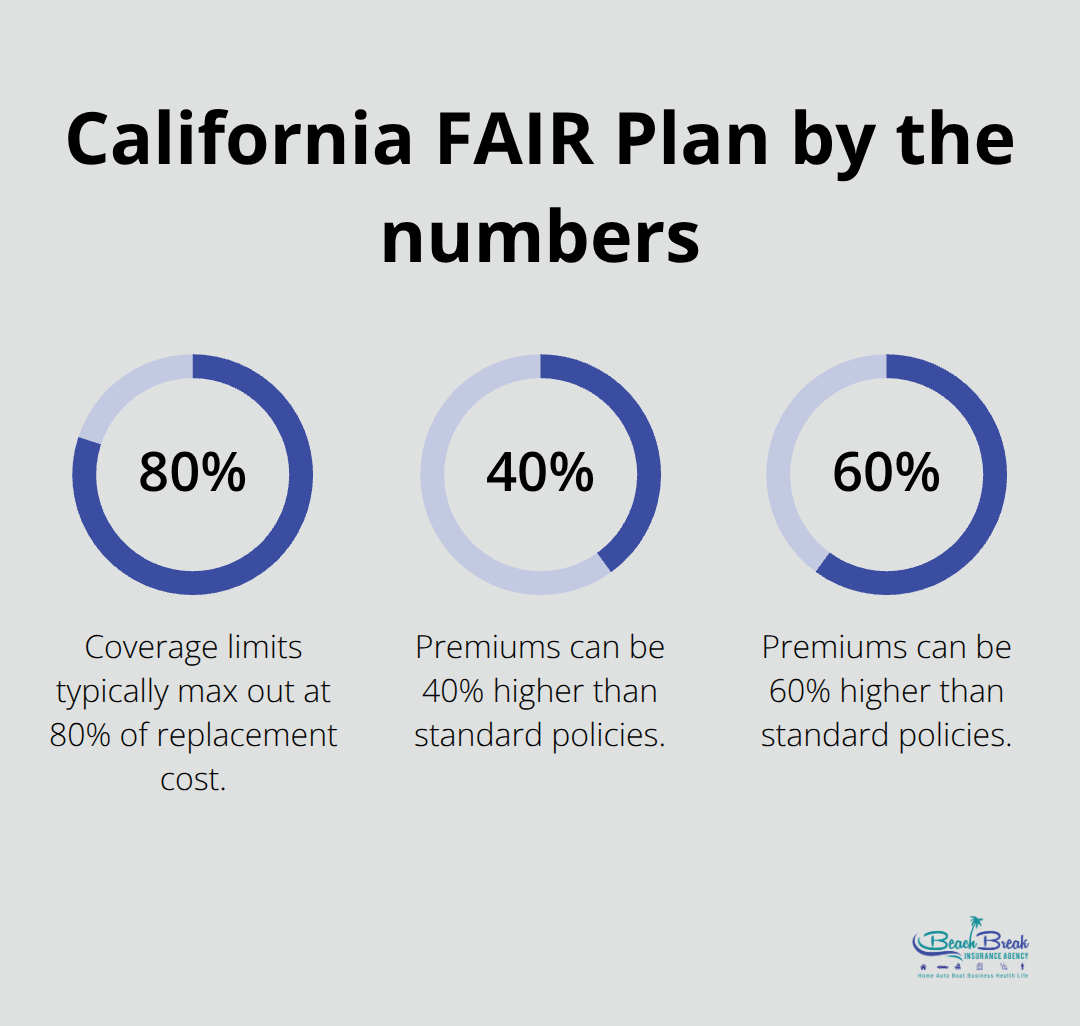
The California FAIR Plan fills the coverage void by offering protection to property owners who cannot obtain insurance through traditional carriers. FAIR Plan policies cover dwelling, other structures, and personal property against fire and related perils, though coverage limits typically max out at 80 percent of replacement cost. Premiums run 40 to 60 percent higher than standard policies, and San Diego County represents a substantial portion of the plan’s over 850,000 statewide policies as of 2024.
However, FAIR Plan policies intentionally provide basic protection only. They exclude liability coverage, water damage from firefighting efforts, and loss of use expenses that leave families without housing during evacuations. These gaps create serious financial exposure for homeowners who accept FAIR Plan coverage as their final answer.
Comparing Carriers Reveals Better Options
Independent agencies compare quotes from multiple carriers that still write in high-fire areas, identifying policies that provide actual liability protection, additional living expenses during evacuations, and coverage for debris removal costs. Some carriers offer specialized wildfire endorsements that reduce deductibles specifically for fire losses or provide extended replacement cost coverage that pays beyond policy limits when construction costs spike after major fires.
Carriers evaluate whether your property qualifies for preferred rates based on defensible space improvements, roof condition, and distance from vegetation-factors that individual insurers weight differently. Properties with Class A fire-rated roofing, maintained defensible zones, and updated electrical systems often qualify for standard rates even in high-risk zones, potentially saving thousands annually compared to FAIR Plan premiums.
The Real Savings from Exploring Your Options
The difference between choosing FAIR Plan alone versus exploring available carrier options can mean saving $800 to $2,000 per year while gaining substantially better protection. An independent San Diego-based agency like Beach Break Insurance Agency quickly compares quotes from multiple top-rated carriers to identify which insurers will still write your property and at what rates. This comparison process reveals coverage options and pricing that individual homeowners cannot access on their own, transforming what appears to be a limited market into genuine choices.
With carrier options identified and FAIR Plan limitations understood, the next step involves assessing your specific property’s fire risk and determining which coverage types actually protect your investment.
Securing the Right Coverage for Your San Diego Home
Assess Your Property’s Fire Risk Zone and Physical Characteristics
Start with your property’s fire hazard severity zone rating from the California Department of Forestry and Fire Protection website. This official designation determines which insurers will consider your home and at what rates. Properties in very high fire hazard severity zones face immediate carrier rejection, while those in high or moderate zones may qualify for standard or slightly elevated rates depending on other factors.
Next, measure your defensible space. Properties with 100 feet of cleared brush and trees from structures qualify for better rates than homes surrounded by dense vegetation. Check your roof material and age, since Class A fire-rated roofing installed within the last 10-15 years significantly improves your insurability. Homes with older composition roofs or wood shakes face automatic premium increases or carrier denial regardless of other improvements.
Document your electrical system’s condition and whether your home has updated wiring rather than outdated aluminum or knob-and-tube systems. Insurance companies prioritize these physical characteristics because they directly correlate with survival rates during wildfires. The California Department of Insurance reports that homes meeting defensible space and structural standards face 80 percent lower loss rates than non-compliant properties.
Identify Coverage Gaps in Your Current Policy
Review your current policy’s fine print for wildfire exclusions and coverage limits on debris removal, loss of use, and liability. Standard homeowners policies often cap wildfire-related additional living expenses at 10-20 percent of dwelling coverage, leaving families in evacuation zones without adequate housing funds during extended fire events.
Check whether your policy covers temporary housing costs during mandatory evacuations, since San Diego County has issued mass evacuation orders affecting tens of thousands of residents during major fire years. Compare your current deductible structure against carriers that offer reduced deductibles specifically for fire losses, which can lower out-of-pocket costs substantially when disaster strikes.
Compare Carriers to Find Better Protection and Savings
An independent San Diego agency can quickly identify which carriers still write your specific property, what rates each offers based on your home’s characteristics, and which policies include the coverage gaps your current policy leaves exposed. This comparison typically takes one week and reveals savings ranging from $800 to $2,000 annually while providing substantially better protection than FAIR Plan-only coverage.
Carriers evaluate whether your property qualifies for preferred rates based on defensible space improvements, roof condition, and distance from vegetation (factors that individual insurers weight differently). Properties with Class A fire-rated roofing, maintained defensible zones, and updated electrical systems often qualify for standard rates even in high-risk zones, potentially saving thousands annually compared to FAIR Plan premiums. The difference between choosing FAIR Plan alone versus exploring available carrier options can mean substantial savings while gaining better liability protection, additional living expenses coverage, and debris removal benefits.
Final Thoughts
Waiting until fire season arrives leaves your San Diego home exposed to catastrophic financial loss. Wildfires move faster than evacuation timelines, and standard policies frequently deny claims or cap payouts far below actual replacement costs. Taking action now means your family has protection in place before Santa Ana winds arrive and fire danger peaks. We at Beach Break Insurance Agency understand that navigating San Diego wildfire insurance feels overwhelming when carriers reject your property and FAIR Plan policies offer only basic protection.
Our independent agency compares quotes from multiple top-rated carriers that still write in high-fire zones, identifying coverage options and pricing that individual homeowners cannot access alone. This comparison process typically reveals $800 to $2,000 in annual savings while providing substantially better liability protection, additional living expenses coverage, and debris removal benefits than FAIR Plan policies alone. The process moves quickly because we handle the carrier research and quote comparison for you, delivering multiple options within days.
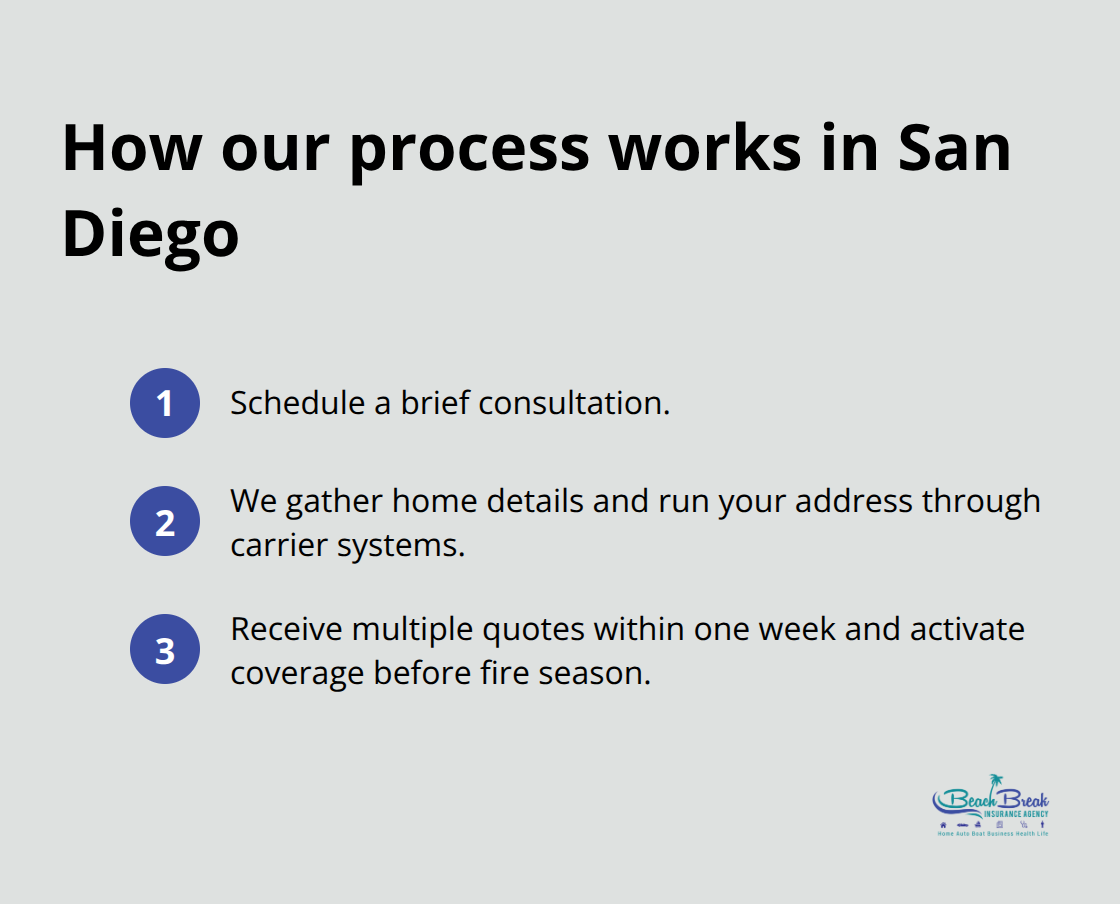
Contact Beach Break Insurance Agency to schedule a brief consultation about your property’s fire risk and current coverage. We gather basic information about your home, run your address through carrier systems to identify which insurers will still write your policy, and provide quotes within one week. From there, you select the coverage that fits your budget and protection needs, and your policy activates before fire season intensifies.
The information provided in this blog is for general informational purposes only and does not constitute legal, financial, or insurance advice. Coverage options, terms, and availability may vary. Please consult with a licensed professional for advice specific to your situation.
Artificial intelligence may have been used to generate text and images in some blog articles.


