
Restaurant Insurance California: A Practical Overview
Running a restaurant in California means managing dozens of risks daily-from customer injuries to equipment failures to employee accidents. The right restaurant insurance California coverage protects your business from financial devastation when something goes wrong.
At Beach Break Insurance Agency, we’ve helped countless restaurant owners find policies that actually match their operations. This guide walks you through the coverage types you need and how to choose the right protection for your specific situation.
Why Restaurant Owners Need Comprehensive Insurance in California
Customer Injuries Create Immediate Financial Exposure
Restaurant owners face liability exposure that most other small businesses don’t encounter. A customer slips on a wet floor and sues for medical bills plus lost wages. Your establishment becomes responsible for settlements that can reach $250,000 or more depending on injury severity. The National Restaurant Association reports that food service establishments face an average of 2.5 liability claims annually, with settlements ranging from $15,000 to $250,000. Without general liability insurance, a single incident drains your operating capital or forces temporary closure.
Equipment Failures and Inventory Loss Threaten Operations
Your walk-in freezer fails and spoils $8,000 in inventory overnight. A fire damages your kitchen equipment and forces you to shut down for weeks. Property coverage protects your building, equipment, and inventory from fire, theft, and weather damage-critical in California where wildfire season creates genuine risk for many locations. Your lease likely requires this coverage anyway, but the real value emerges when disaster strikes and you need to rebuild quickly without depleting savings.
Workers Compensation Protects Both Employees and Your Assets
An employee gets burned on the line and files a workers compensation claim. California requires workers compensation insurance for any restaurant with employees, and the penalties for operating without it reach $10,000 per uninsured worker per week. When employees get injured, this insurance covers their medical treatment and wage replacement, preventing lawsuits that could otherwise target your personal assets. California’s Division of Labor Enforcement conducts workplace audits regularly, and uninsured operators face immediate fines plus mandatory back-payment of premiums.
Food-Related Claims Happen More Often Than Expected
Food poisoning claims, allergen reactions, and contamination incidents create liability exposure specific to restaurants. General liability insurance handles these food-related claims, which occur more frequently than many owners anticipate. A single food poisoning outbreak can affect multiple customers and generate multiple claims simultaneously, making this coverage essential for any food service operation.
Multiple Risks Require Layered Protection
Restaurant operations combine customer-facing risks, employee safety hazards, valuable equipment, and inventory exposure in one location. No single insurance policy covers all these exposures-you need multiple coverage types working together. Understanding which risks your specific operation faces helps you build the right protection strategy, which leads directly to selecting the appropriate coverage types for your restaurant.
Types of Restaurant Insurance Coverage Available
General Liability and Product Liability Form Your Foundation
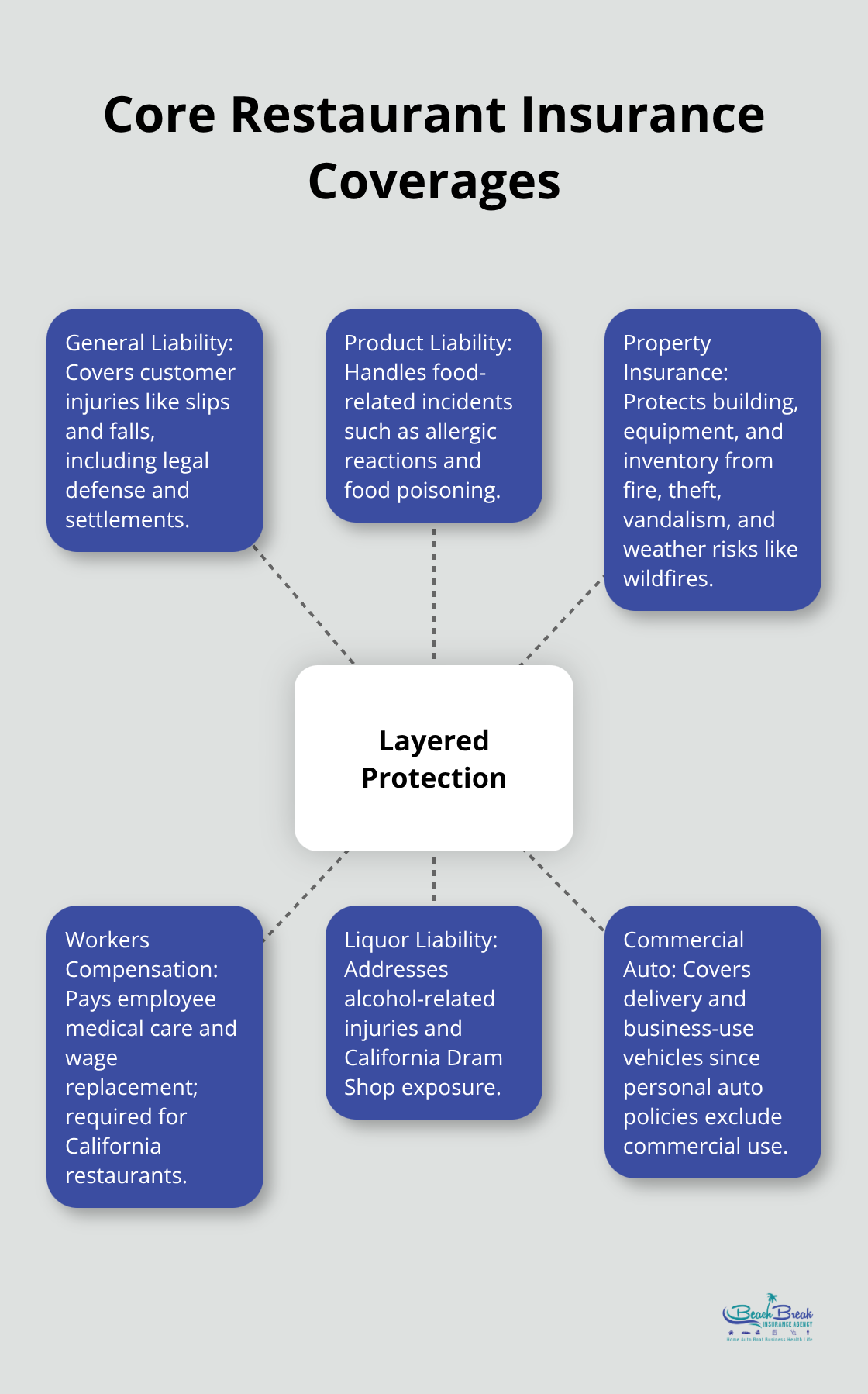
General liability and product liability operate differently, yet both protect your restaurant from customer-related claims. General liability covers bodily injury when a customer slips on your floor or gets hit by a server carrying hot plates. Product liability specifically handles food-related incidents like allergic reactions or food poisoning, which matters far more than many owners realize.
The CDC tracks foodborne illness outbreaks regularly across the country, and a single outbreak affecting multiple customers generates claims totaling $100,000 or more when medical expenses and legal fees combine. Your general liability policy covers legal fees, settlements, and judgments, but you should verify the specific limits because some carriers cap food-related claims separately from other bodily injury claims. Many restaurant owners mistakenly assume general liability handles everything, then discover their policy excludes certain food-related scenarios when a claim arrives.
Property Insurance Protects Your Physical Assets
Property insurance protects your building, kitchen equipment, inventory, and furniture from fire, theft, vandalism, and weather damage-which matters enormously in California where wildfire risk affects many locations. Equipment breakdown coverage, often added as a rider, reimburses you when your refrigeration fails or your HVAC system breaks down, preventing the inventory loss and operational shutdown that can cripple cash flow for weeks.
Liquor Liability Addresses Alcohol-Specific Risks
Liquor liability applies specifically to alcohol-related incidents, covering situations where an intoxicated customer injures themselves or others and claims your establishment served them while visibly drunk. California’s Dram Shop law holds establishments liable for serving alcohol to obviously intoxicated persons, making this coverage mandatory if you serve beer, wine, or spirits.
Workers Compensation and Commercial Auto Insurance Complete Your Coverage
California law requires workers compensation for any restaurant with employees, and the cost typically ranges from 5 to 15 percent of payroll depending on your specific operations and claims history. Commercial auto insurance becomes necessary if your restaurant operates delivery vehicles or uses company cars for business purposes, since personal auto policies exclude commercial use.
Many restaurant owners overlook this coverage until they face a delivery accident, then discover their personal policy denies the claim because the vehicle was being used for business. Understanding which specific risks your operation faces helps you build the right protection strategy, which leads directly to selecting the appropriate coverage limits and comparing quotes from multiple carriers.
How to Choose the Right Restaurant Insurance Policy
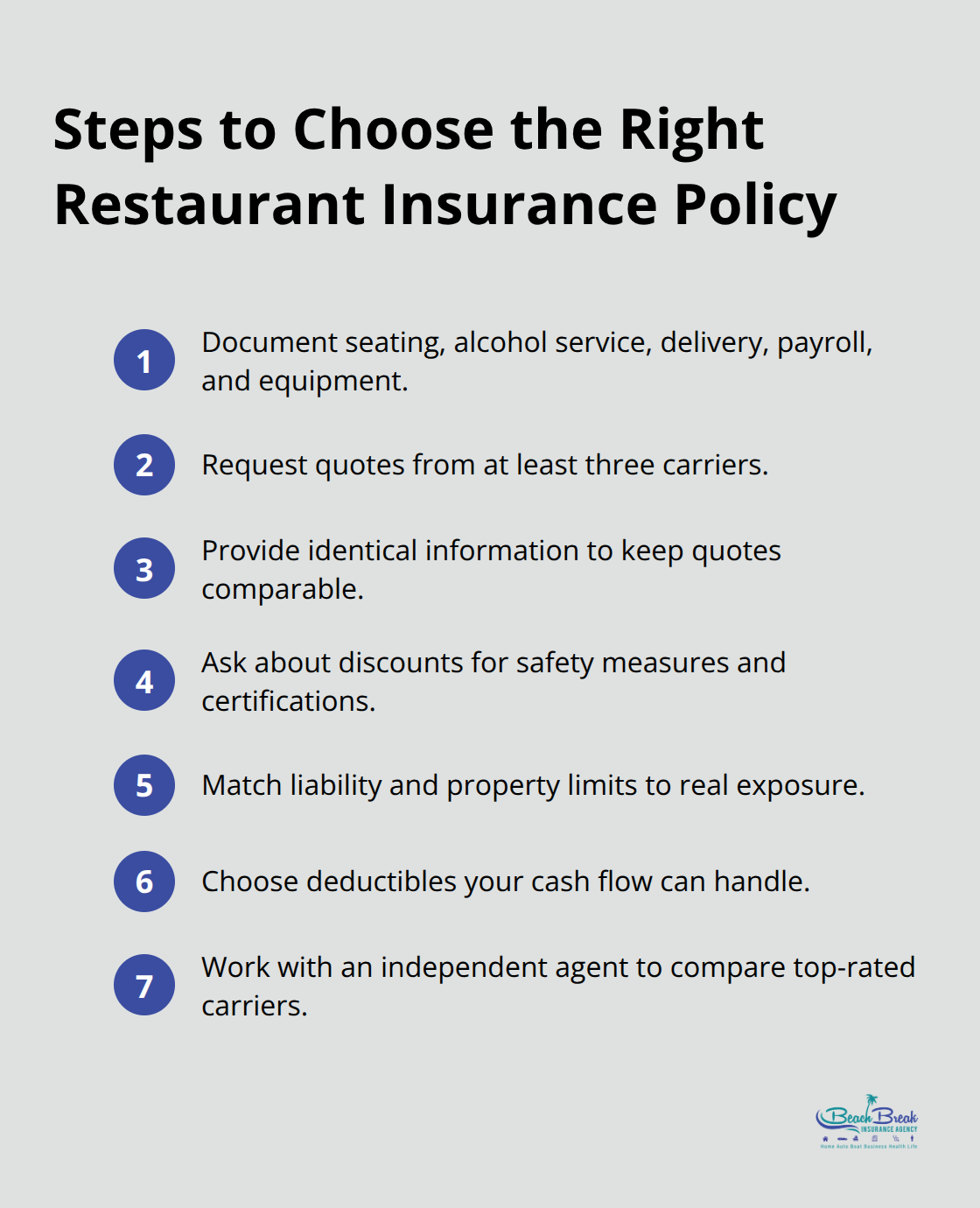
Start by documenting your specific operational details rather than picking coverage based on what other restaurants carry. Your seating capacity, whether you serve alcohol, if you operate a delivery service, your annual payroll, and your equipment value all directly determine which coverage types you actually need and what limits make sense. A 50-seat restaurant with no bar faces completely different risks than a 150-seat establishment with full liquor service and delivery operations.
Request Quotes from Multiple Carriers
Request quotes from at least three different carriers rather than relying on online calculators or estimates from a single agent. Each carrier prices restaurant risk differently based on their claims experience and underwriting appetite, so the difference between the cheapest and most expensive quote often reaches 30 to 40 percent for identical coverage. When you request quotes, provide identical information to each carrier so the numbers remain comparable.
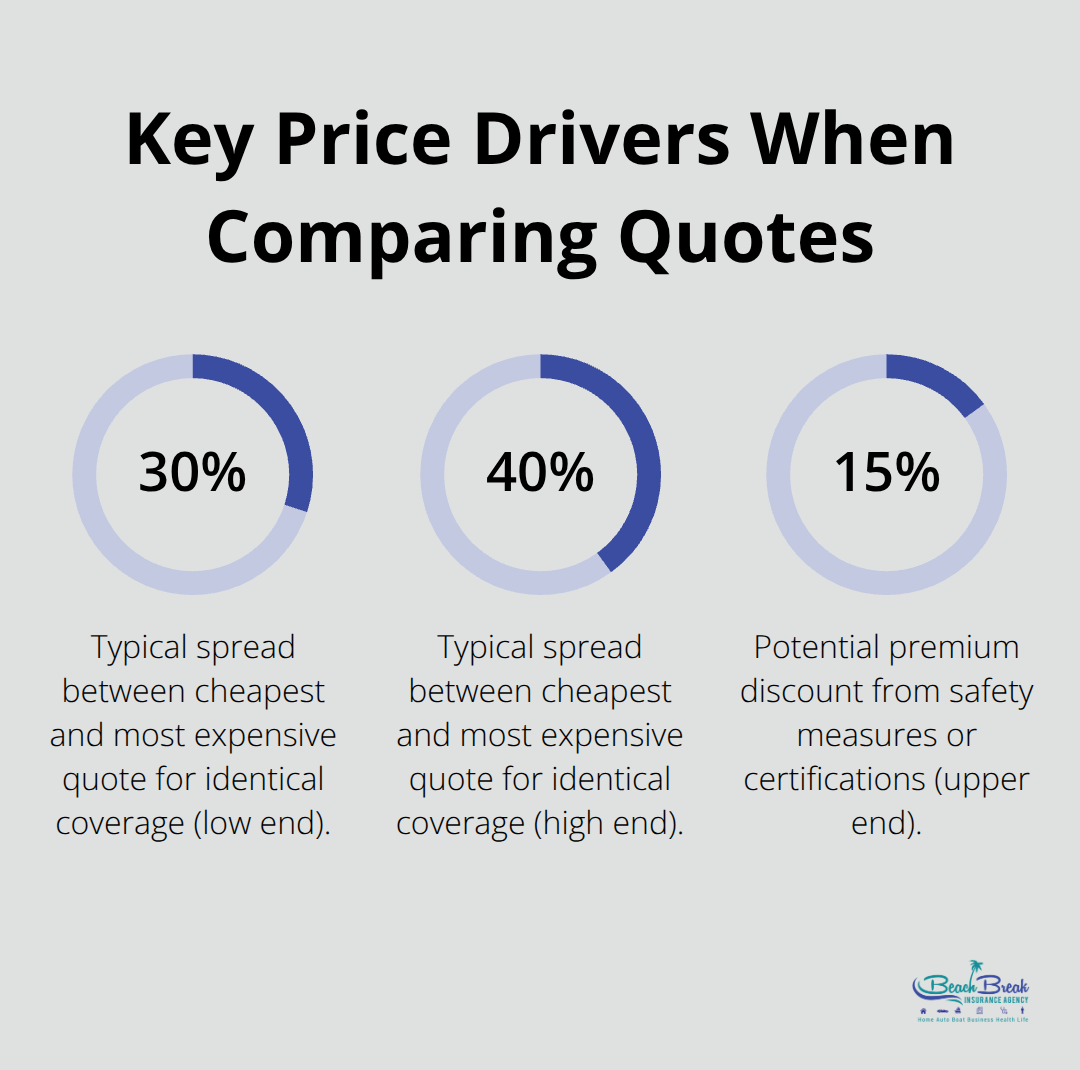
Ask specifically about any discounts available for loss control measures like fire suppression system maintenance, food safety certifications, or safety training programs, since these sometimes reduce premiums by 10 to 15 percent. California restaurants that complete food safety certifications through programs like ServSafe often qualify for carrier discounts, yet many owners never ask about this reduction. Get the quotes in writing and compare the actual coverage limits, deductibles, and exclusions side by side rather than focusing only on the premium amount.
Match Coverage Limits to Your Financial Exposure
Your general liability limit should reflect what a serious injury claim could actually cost, not just what sounds reasonable. California settlements for restaurant-related injuries frequently reach $100,000 to $500,000+ when medical costs, lost wages, and legal fees combine, so a $500,000 limit provides meaningful protection without excessive premium cost.
Property insurance limits should cover the full replacement cost of your building, equipment, and typical inventory levels, which means getting a professional assessment of your actual equipment value rather than guessing. Many owners undershoot their property limits to save premium dollars, then face a shortfall when rebuilding becomes necessary after fire or theft.
Calculate Workers Compensation and Deductible Amounts
Your workers compensation coverage amount is determined by your payroll, so this calculation becomes straightforward once you have your annual wage information. Choose deductibles that your business can actually afford to pay out of pocket without creating cash flow problems, since higher deductibles do reduce premiums but only provide savings if you can cover the out-of-pocket cost when a claim occurs.
Insurance brokers often ask detailed questions about your operations specifically because a policy built for your actual business costs less and covers you better than a generic package. An independent agent compares quotes from multiple top-rated carriers to match coverage directly to how your restaurant actually operates, which means you avoid paying for protection you don’t need while preventing gaps in areas where you face genuine exposure.
Final Thoughts
Your restaurant faces genuine financial risk from customer injuries, equipment failures, employee accidents, and food-related incidents. Restaurant insurance California protects your business when disaster strikes and keeps operations running through the recovery process. General liability, property coverage, workers compensation, and liquor liability work together to address the specific exposures your operation faces daily.
Start by documenting what your restaurant actually looks like-your seating capacity, whether you serve alcohol, your annual payroll, and your equipment value all determine which coverage types matter most. Request quotes from multiple carriers using identical information so you can compare options fairly rather than making decisions based on premium alone. Many restaurant owners delay this process because insurance feels complicated, but the real complexity disappears once you work with someone who understands restaurant operations.
Contact Beach Break Insurance Agency to start comparing quotes today. We compare quotes from multiple top-rated carriers to deliver coverage tailored specifically to how your restaurant operates, and we keep your policies aligned with your changing needs as your business grows. Your restaurant deserves protection built for your actual operations, not generic coverage that leaves gaps or wastes money on unnecessary limits.
The information provided in this blog is for general informational purposes only and does not constitute legal, financial, or insurance advice. Coverage options, terms, and availability may vary. Please consult with a licensed professional for advice specific to your situation.
Artificial intelligence may have been used to generate text and images in some blog articles.


