
Restaurant Insurance Requirements: What Business Owners Should Know
Running a restaurant means juggling dozens of moving parts. Insurance shouldn’t be one of them-but getting restaurant insurance requirements right is non-negotiable.
Most owners we work with at Beach Break Insurance Agency discover they’re either over-insured or dangerously under-protected. The gap between what’s legally required and what actually protects your business is wider than you’d think.
State-Mandated Insurance Requirements for Restaurants
Workers’ Compensation: Your Legal Shield
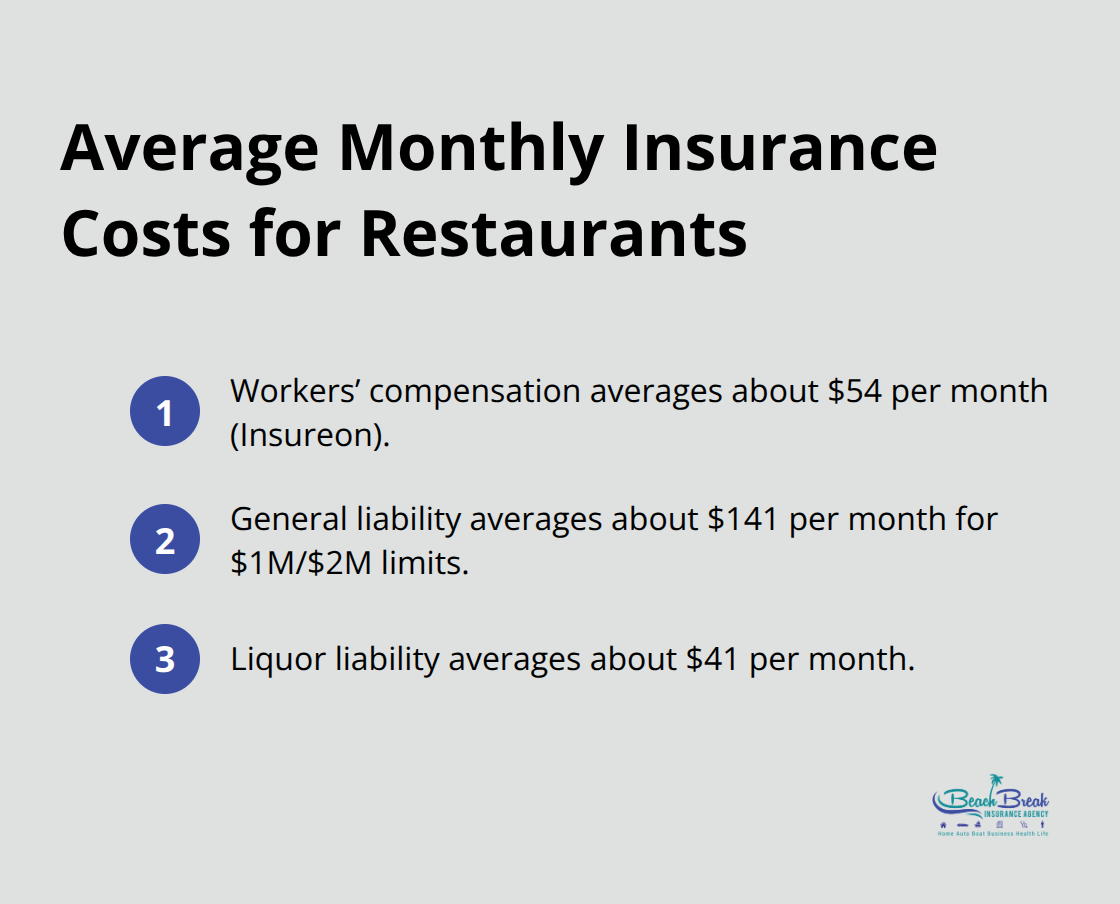
Workers’ compensation is mandatory in nearly every state if you have employees. California requires it regardless of headcount, while Texas makes it optional. The cost averages about $54 per month according to Insureon, but this varies dramatically based on your payroll and job classifications. A kitchen worker costs more to insure than front-of-house staff because burns and cuts happen regularly in food service.
Stop thinking of workers’ comp as a grudge expense and start viewing it as your legal shield. When an employee gets hurt, this coverage pays their medical bills and lost wages, which means they’re less likely to sue you personally. The NFPA reports that kitchen injuries from knives and hot surfaces occur frequently enough that you should enforce strict standard operating procedures, require proper PPE like cut-resistant gloves and heat-resistant sleeves, and train staff quarterly on safety protocols.
General Liability: The Landlord’s Requirement
General liability insurance protects you when a customer slips on a wet floor or claims your food made them sick. It’s not technically mandatory everywhere, but your landlord will demand it before you sign a lease. Most restaurants operate with $1 million per occurrence and $2 million aggregate limits, which costs around $141 monthly on average.
This coverage specifically excludes alcohol-related claims. That exclusion is why a separate liquor liability policy becomes essential the moment you serve beer, wine, or spirits. Without it, you face a significant protection gap that can expose your business to serious financial risk.
Liquor Liability: The Dram Shop Law Reality
If you serve alcohol, liquor liability insurance is non-negotiable because dram shop laws in most states hold you liable when an intoxicated patron injures themselves or someone else. This coverage averages $41 per month and protects you from lawsuits filed by third parties harmed by your patrons, not just claims from the intoxicated person themselves.
Your state’s specific dram shop law determines your actual exposure, so verify whether your state requires this coverage for licensing or simply makes it smart business. A customer who leaves your bar and causes a car accident can sue you directly, and without liquor liability, your general liability policy won’t cover the defense costs.
Server training on responsible alcohol service reduces your claims frequency, which helps when you renew your policy next year. The NCSL notes that frequent ID checks with scanners, documented refusal logs, and incident documentation create the paper trail that insurers reward with better rates. Bars and taverns face higher liquor liability premiums than casual dining restaurants, so your operation type shapes what you’ll pay.
What These Three Coverages Leave Unprotected
These three coverages meet baseline legal requirements, but most restaurant owners discover too late that legal minimums leave dangerous gaps in their protection. Your equipment, inventory, and employees face risks that state-mandated insurance simply doesn’t address. The next section reveals which coverage gaps cost restaurant owners the most money.
Coverage Gaps Most Restaurant Owners Miss
Property Insurance Protects Your Equipment and Inventory
Property insurance is where most restaurant owners realize their existing coverage falls dangerously short. A kitchen fire, refrigerator failure, or water damage from a burst pipe destroys thousands of dollars in equipment and inventory overnight. Your general liability policy covers someone else’s injury on your premises, not your own losses. According to recent industry research, restaurant owners can expect to pay anywhere from about $3,000 to $10,000 per year for comprehensive property insurance that protects your cooking equipment, furniture, and building contents with a typical $1,000 deductible.
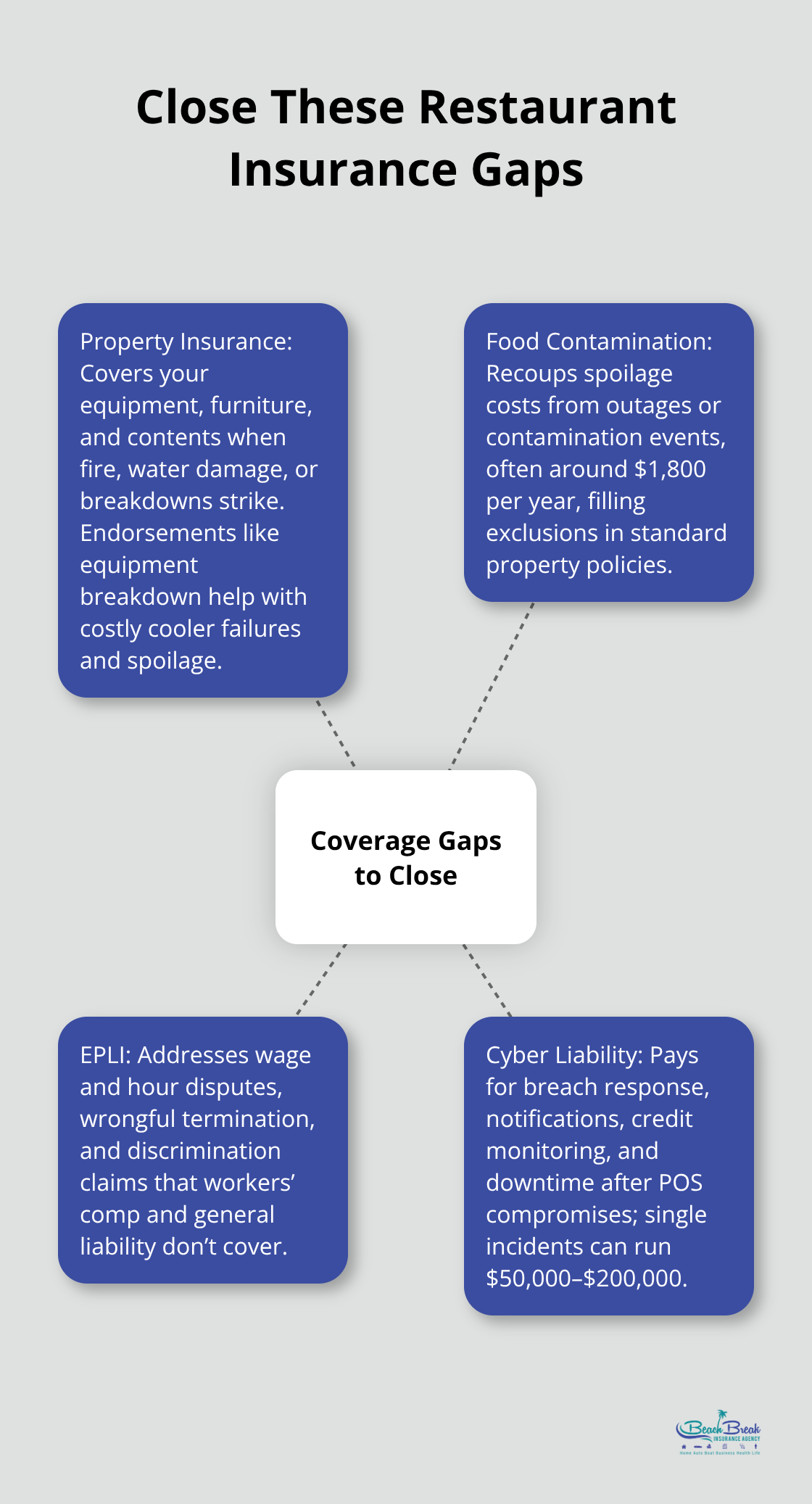
Kitchen fires stem from grease buildup in hoods and ducts that haven’t been serviced, according to the NFPA. Without property coverage tied to regular maintenance schedules, you absorb the full replacement cost yourself. Equipment breakdown endorsements matter more than most owners realize because a single failed walk-in cooler costs $5,000 to $15,000 to replace, and spoilage losses stack up quickly during downtime.
Food Contamination Coverage Recoupes Spoilage Losses
A power outage spoils your inventory in hours. Food contamination coverage recoupes those costs at around $1,800 per year with no deductible. This endorsement protects you when equipment fails or contamination events occur, covering losses that property insurance alone might exclude. Most restaurant owners overlook this protection until they face actual spoilage, which makes it an easy gap to miss during initial policy setup.
Employment Practices Liability Addresses Wage and Hour Disputes
Employment practices liability insurance addresses wage and hour disputes, wrongful termination claims, and discrimination allegations that workers’ compensation doesn’t touch. The U.S. Department of Labor Wage & Hour Division tracks persistent violations around tip pooling disputes, overtime miscalculations, and retaliation claims that cost restaurants real money in settlements and legal defense.
This coverage protects you when an employee sues over scheduling practices, failure to promote, or alleged harassment, which general liability explicitly excludes. Precise timekeeping systems and wage and hour policy enforcement reduce your exposure, but this insurance provides the financial protection when disputes arise anyway.
Cyber Liability Protects Payment Card Data
Cyber liability insurance has become non-negotiable because your point-of-sale system stores customer payment card data that hackers actively target. The Verizon Data Breach Investigations Report 2025 shows payment card intrusions remain common in hospitality, and a single breach notification costs $50,000 to $200,000 depending on customer count and notification requirements.
Cyber insurance covers breach response costs, customer notification, credit monitoring services, and business interruption if your POS system gets compromised. Restaurants handling 50 or more customer records should treat cyber coverage as mandatory, not optional. Multi-factor authentication, segmenting your POS network from guest Wi-Fi, and phishing simulations reduce your cyber risk profile and help you negotiate better premiums when you shop for coverage.
These gaps in protection expose your restaurant to financial losses that state-mandated insurance simply won’t cover. The next section shows how bundling strategies and risk management practices lower your overall costs while closing these dangerous protection gaps.
Cost-Saving Strategies Without Sacrificing Protection
Bundle Policies Strategically for Real Savings
Bundling your restaurant policies with a single carrier cuts premiums significantly, but only if you understand which coverages belong together and which ones don’t. A Business Owner’s Policy bundles general liability and property coverage into one package. However, bundling workers’ compensation with your BOP rarely makes financial sense because workers’ comp rates depend entirely on your payroll and job classifications, while property and liability rates depend on your building and operations.
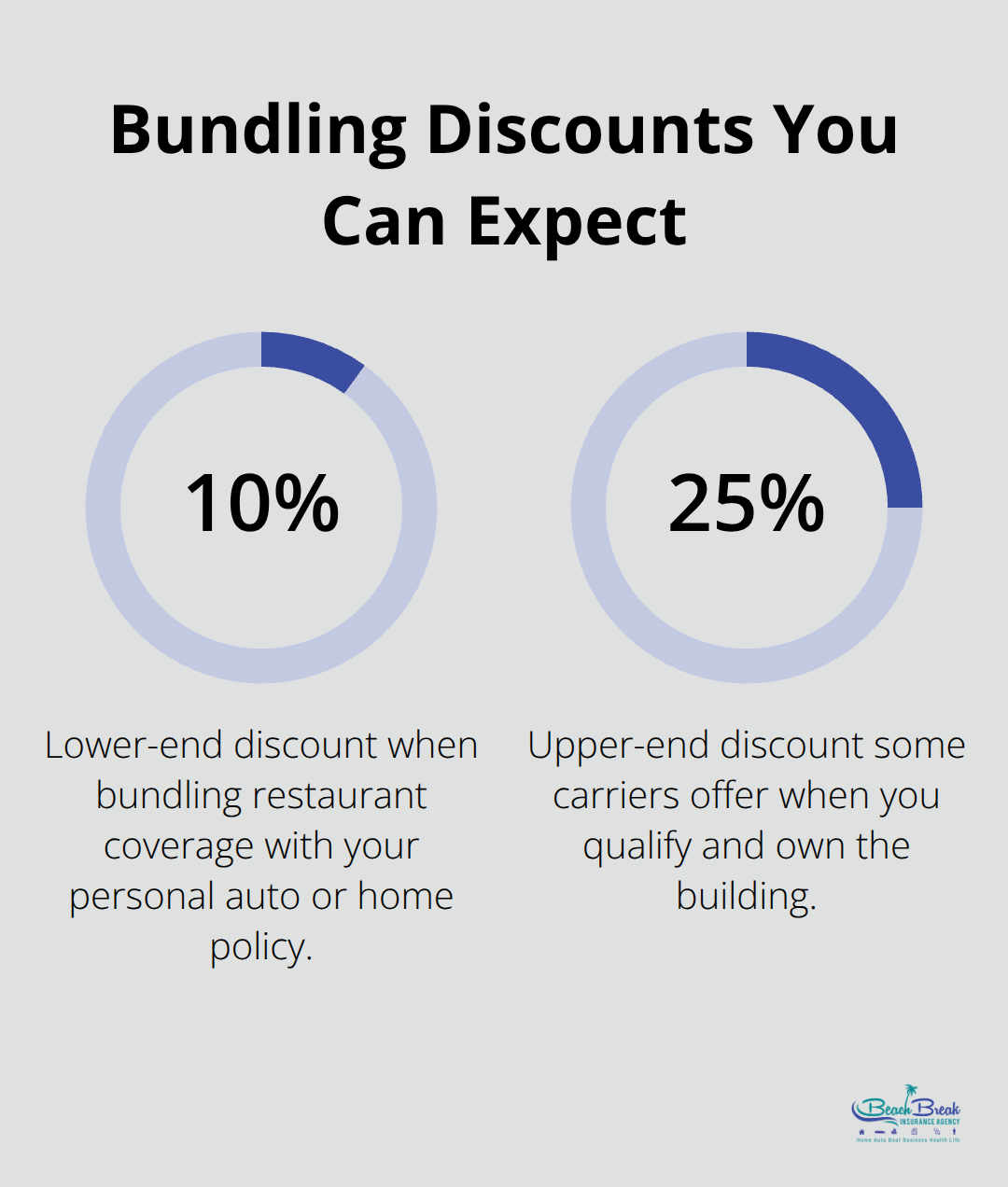
The real savings come from bundling your restaurant coverage with your personal auto or home policy if you own the building, which can yield 10 to 25 percent discounts depending on your carrier. Shop quotes from at least three carriers before accepting a bundled package because some insurers price bundled policies aggressively while others don’t, and you want to verify that bundling actually saves you money versus standalone policies with better limits or lower deductibles.
Document Safety Practices to Lower Premiums
Your actual risk profile determines what you’ll pay far more than any discount strategy does. Restaurants with documented safety practices pay significantly lower premiums than identical restaurants without them. The NFPA confirms that kitchen fires stem from grease buildup in hoods and ducts, so schedule hood cleaning and duct inspections every quarter and maintain verification records. This documentation tells your insurer you take fire prevention seriously and directly lowers your property insurance renewal rates.
Slip and fall claims drive liability costs higher than almost any other restaurant risk. Implement daily front-of-house floor inspections, use wet-floor cones aggressively, keep aisles clear of clutter, and photograph any incident within 24 hours. This risk management demonstrates commitment that insurers reward with better rates. Food safety documentation matters equally because the FDA Food Code 2022 emphasizes handwashing timing, time and temperature logs, food labeling, and excluding ill workers. Restaurants that maintain these records with timestamps face lower food contamination premiums than those relying on verbal policies.
Update Coverage When Your Operations Change
Review your coverage annually as your restaurant changes because adding a delivery operation increases your auto liability exposure and requires hired and non-owned auto coverage. Expanding your customer data handling expands your cyber liability needs. A restaurant that added online ordering during the pandemic probably needs more cyber coverage than the original policy provided, and your premiums reflect outdated risk profiles until you update them.
Contact your agent before making operational changes so coverage adjustments happen simultaneously with your business growth rather than leaving gaps that only appear when a claim occurs. This proactive approach prevents expensive surprises and keeps your protection aligned with your actual operations.
Final Thoughts
Restaurant insurance requirements protect your business, your employees, and your customers from financial devastation, but legal minimums alone leave you exposed. Workers’ compensation, general liability, and liquor liability form your legal foundation, while property insurance, food contamination coverage, employment practices liability, and cyber insurance fill the gaps that separate surviving a disaster from closing your doors permanently. The restaurants that recover quickly from fires, equipment failures, or employee disputes align their policies with actual operations and risk profiles rather than settling for bare-minimum coverage.
Start by gathering your current policies and identifying which gaps exist in your protection. Then contact Beach Break Insurance Agency to review your coverage against your current operations. A quick conversation now prevents expensive surprises later.
The information provided in this blog is for general informational purposes only and does not constitute legal, financial, or insurance advice. Coverage options, terms, and availability may vary. Please consult with a licensed professional for advice specific to your situation.
Artificial intelligence may have been used to generate text and images in some blog articles.


