
Workers Compensation Policy Guide: Choose The Right Coverage
Workers compensation protects your employees when they get hurt on the job, but choosing the right policy isn’t straightforward. Many small business owners either buy too little coverage or miss critical add-ons that could save them thousands.
At Beach Break Insurance Agency, we’ve seen firsthand how the wrong workers compensation policy guide decisions cost businesses money and expose them to legal risk. This guide walks you through what you actually need.
Workers Compensation Basics
What Workers Compensation Actually Covers
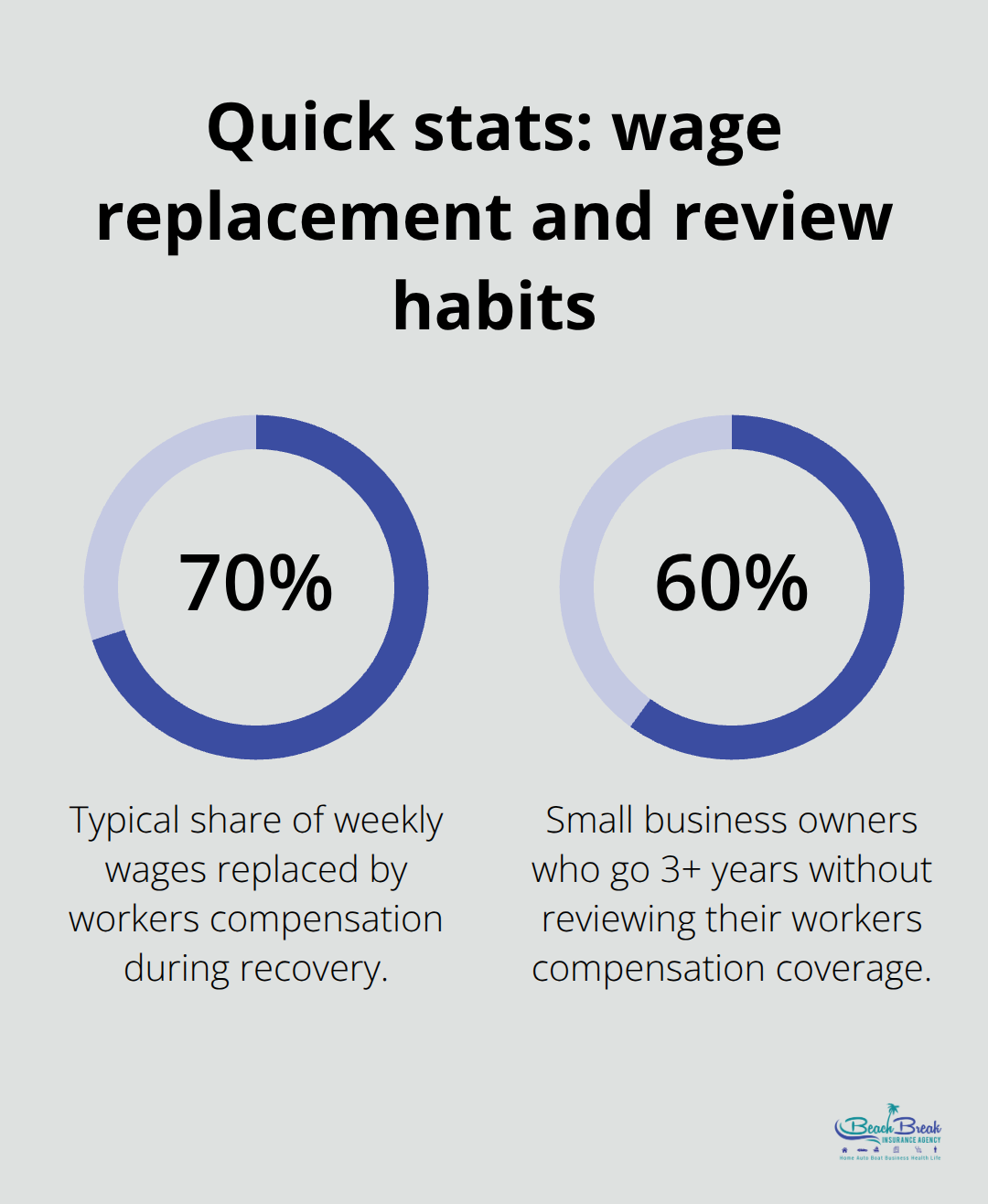
Workers compensation covers medical expenses, rehabilitation costs, and lost wages when an employee gets injured or becomes ill because of work. This includes emergency room visits, surgery, physical therapy, prescription medications, and ongoing treatment related to the injury. If an employee cannot work during recovery, workers compensation replaces a portion of their lost income-typically 60 to 70 percent of their average weekly wage. In 2023, total benefits paid amounted to $64.1 billion, covering roughly 140 million workers across the United States. Death benefits also fall under workers compensation, protecting employees’ families if a work-related fatality occurs.
The policy does not cover injuries that happen outside work or conditions that develop over time without a specific incident. Many small business owners misunderstand what’s included, leading them to think their coverage is broader than it actually is.
Why State Law Requires This Coverage
Most states legally require workers compensation if you have employees, and violations carry steep penalties. California, for example, fines employers up to 10,000 dollars per uninsured employee per year, plus potential criminal charges. Beyond legal requirements, workers compensation protects your business from lawsuits. Without it, an injured employee can sue you directly for damages, medical bills, and lost earnings-costs that could exceed your annual revenue.
How This Coverage Protects Your Bottom Line
Workers compensation reduces your insurance costs through experience rating, which rewards businesses with fewer claims by lowering future premiums. Your employees also benefit from knowing they’re protected if an accident happens, which improves retention and morale. A single serious injury without proper coverage can create financial devastation that threatens your business operations.
Understanding what your policy covers and why you need it sets the foundation for selecting the right limits and add-ons for your specific situation.
Matching Coverage to Your Business Reality
Identify Your Industry’s Actual Hazards
Your industry determines your workers compensation costs more than anything else. A software developer working at a desk faces minimal injury risk compared to a construction worker or warehouse supervisor, yet many small business owners apply a one-size-fits-all approach to coverage limits. The National Academy of Social Insurance reports that construction workers file claims at substantially higher rates than office workers, and when they do, costs run substantially higher due to lost-time injuries and permanent disabilities. Your first step involves identifying where your employees actually work and what tasks create genuine hazards. If you run a salon, your stylists face repetitive strain injuries and chemical exposures. If you operate a delivery service, your drivers face traffic accidents and heavy lifting incidents. These specific risks should drive your coverage decisions, not generic industry benchmarks or what your competitor down the street carries.
Calculate Coverage Limits Based on Payroll
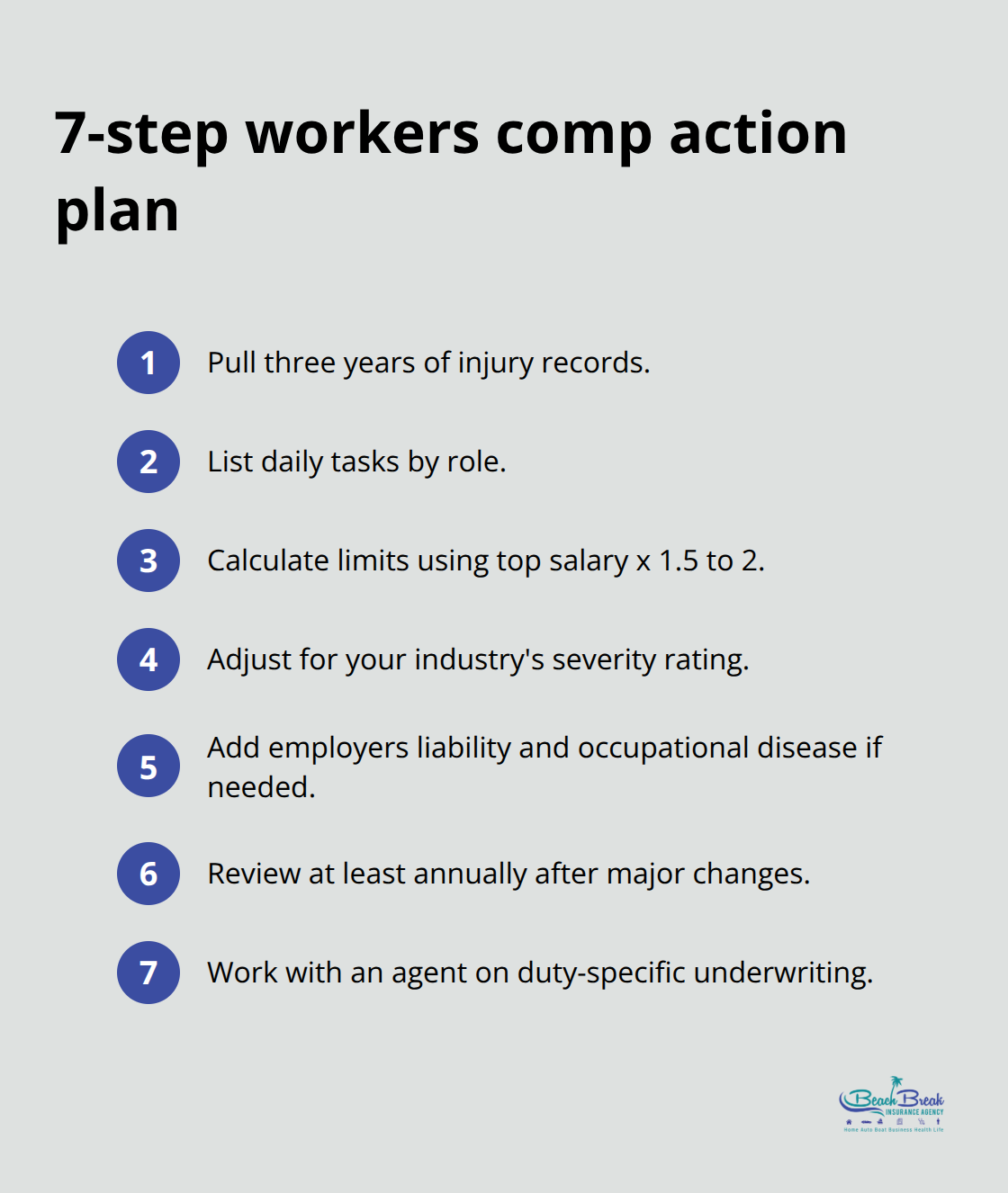
Coverage limits require calculation based on payroll, not guesswork. Most states use a formula tied to your average weekly wage, but determining the right limit means understanding your worst-case scenario. A catastrophic injury resulting in permanent disability or death can trigger benefits extending years into the future. The Council of Insurance Agents and Brokers suggests calculating limits by multiplying your highest-paid employee’s annual salary by 1.5 to 2, then adjusting for your industry’s severity rating. If your payroll exceeds $500,000 annually, this calculation becomes even more critical because underinsurance exposes you to significant out-of-pocket liability.
Review Your Actual Injury History
Pull your actual injury history for the past three years, if you have it, and discuss specific job duties with your insurance agent rather than describing your business in broad terms. This specificity prevents you from overpaying for unnecessary coverage or, worse, discovering gaps when a claim arrives.
Add Endorsements That Close Coverage Gaps
Beyond basic medical and wage replacement coverage, endorsements and add-ons address gaps that standard policies leave open. Employers liability coverage protects against lawsuits from employees claiming negligence, which standard workers compensation doesn’t cover. Voluntary employers liability starts around $100,000 per occurrence in most states but should increase if you have 25 or more employees.
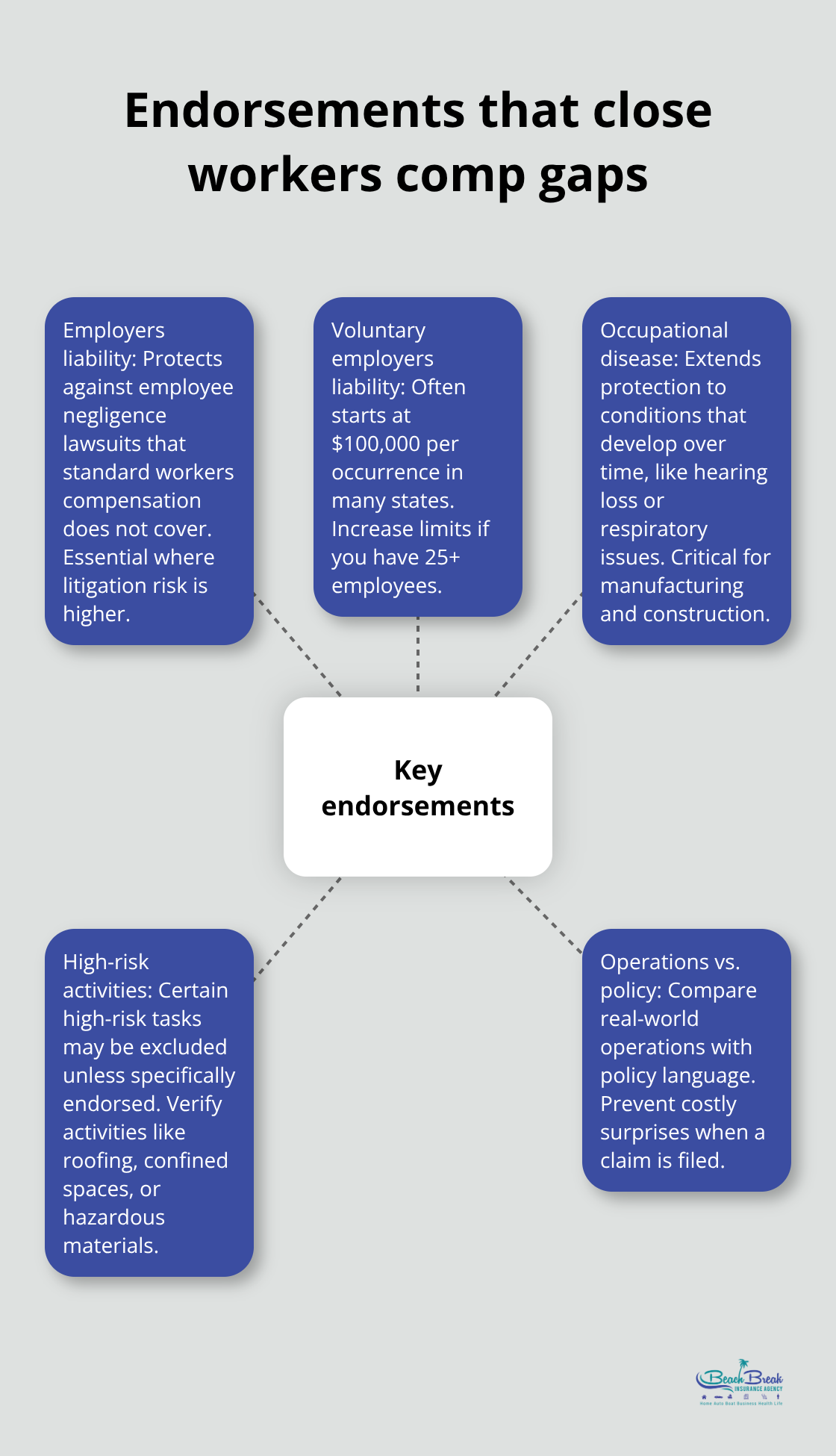
Occupational disease endorsements extend coverage to conditions developing over time, such as hearing loss in manufacturing or respiratory issues in construction. Many policies exclude certain high-risk activities unless you purchase specific endorsements, so reviewing your actual operations against policy language prevents costly surprises when claims arrive.
What Most Small Business Owners Get Wrong About Workers Comp
The Hidden Costs That Insurance Doesn’t Cover
Most small business owners severely underestimate what an injury actually costs their business. You might think workers compensation covers everything, but it doesn’t cover your lost productivity, temporary staffing, equipment downtime, or the administrative overhead of managing a claim. Indirect costs from workplace injuries run two to five times higher than the direct medical and wage replacement expenses covered by your policy.
If a key employee suffers a back injury that sidelines them for three months, workers compensation replaces roughly 70 percent of their wages, but you still absorb the cost of hiring temporary coverage, retraining, and the revenue your business loses while production slows. This gap between what insurance pays and what an injury actually costs your bottom line forces many small business owners to realize they’re massively underinsured only after a serious claim arrives.
Industry-Specific Risks Demand Tailored Coverage
You also miscalculate your actual exposure when you ignore how your specific job duties create injury patterns unique to your operation. A plumbing business with three employees working residential service calls faces entirely different risks than a plumbing company with 30 employees managing commercial construction projects, yet both might carry identical coverage limits based on payroll alone. Your policy should reflect the actual work environment, not a generic template.
The National Academy of Social Insurance reports that construction workers file claims at substantially higher rates than office workers, and when they do, costs run substantially higher due to lost-time injuries and permanent disabilities. Your coverage limits must account for these industry-specific realities, not industry averages.
Policies That Drift Out of Sync With Your Business
Most small business owners set their workers compensation policy once and never revisit it, even when their business fundamentally changes. You might add a new department, shift to heavier equipment, hire younger or older workers with different injury susceptibility, or expand your geographic territory into higher-risk areas. The Council of Insurance Agents and Brokers reports that roughly 60 percent of small business owners go three or more years without reviewing their workers compensation coverage, meaning their policies drift further from their actual operations with each passing year.
Your payroll grows, your job duties evolve, your employee demographics shift, but your coverage stays frozen in time. This mismatch creates dangerous gaps that expose you to significant financial liability.
Final Thoughts
Selecting the right workers compensation policy guide requires matching your coverage to your actual business operations, not industry templates or what competitors carry. Start by pulling your injury records from the past three years and listing the specific tasks your employees perform daily, then calculate your coverage limits based on your highest-paid employee and your industry’s severity rating. Add endorsements like employers liability and occupational disease coverage if your operations warrant them, and schedule a policy review at least annually when you’ve added employees, changed job duties, or expanded into new service areas.
The three mistakes we outlined-underestimating injury costs, ignoring industry-specific risks, and letting policies drift out of sync with your business-account for most of the coverage gaps we see among small business owners. Your workers compensation policy should reflect your payroll, your specific job duties, your injury history, and the endorsements that close gaps in standard coverage. The cost of reviewing your coverage takes a few hours; the cost of discovering gaps after a serious claim arrives can threaten your business.
We at Beach Break Insurance Agency specialize in comparing workers compensation quotes from multiple carriers to find coverage that actually fits your operation. Contact us to discuss your current coverage and identify any gaps before an injury forces the conversation.
The information provided in this blog is for general informational purposes only and does not constitute legal, financial, or insurance advice. Coverage options, terms, and availability may vary. Please consult with a licensed professional for advice specific to your situation.
Artificial intelligence may have been used to generate text and images in some blog articles.


