

How to Compare California Business Insurance Quotes for Smart SMB Coverage
California business insurance quotes vary wildly depending on your coverage needs and carrier. Getting multiple quotes isn’t just smart-it’s the difference between overpaying and getting real protection for your business.
At Beach Break Insurance Agency, we’ve seen too many small business owners pick the first quote they receive. That approach costs money and leaves gaps in coverage that hurt when claims happen.
Why Comparing Quotes Saves Real Money
California insurance premiums have climbed 71 percent since 2013, according to direct premium data tracked across the state.
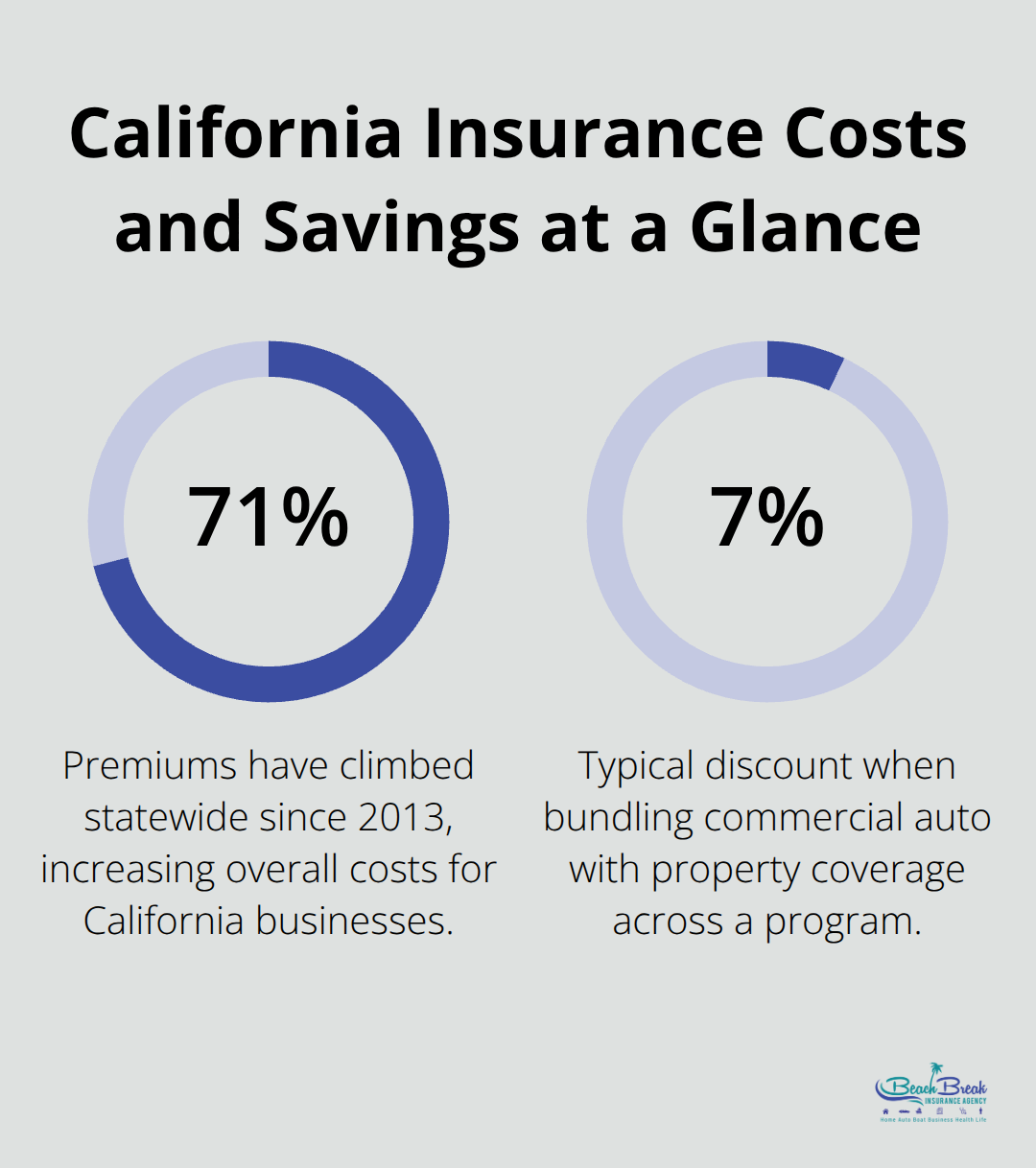
That surge means the carrier you pick today directly controls whether your business pays $5,000 or $15,000 annually for the same coverage. General liability alone ranges from $400 to $1,500 per year for small firms, but high-risk industries like construction jump to $2,000 or more. A Business Owner’s Policy bundles property and liability coverage and typically costs 10 to 20 percent less than buying those lines separately, which is why checking multiple carriers matters. One business might qualify for a BOP at $1,200 per year while another receives a quote of $2,000 for identical limits simply because underwriters weigh risk differently. Shopping three to five carriers reveals these gaps fast. Workers’ compensation premiums vary wildly too, calculated per $100 of payroll and ranging from under $1 for clerical work to over $20 for roofing. A small construction firm with five employees could see premiums swing by thousands depending on the carrier’s appetite for that trade. Commercial auto insurance typically runs $1,200 to $3,500 per vehicle annually, but a clean driving record with one insurer might earn you a better rate than a competitor offers. The point is blunt: accepting the first quote you receive leaves money on the table, and in a market where California premiums already outpace most states, that mistake compounds year after year.
Hidden Exclusions Cost More Than High Premiums
Coverage gaps hide in plain sight across quotes. A quote that looks cheap often excludes coverages your lease requires or your industry demands. California contracts routinely mandate specific liability limits and endorsements even when state law does not, so comparing quotes against your actual lease or client agreements reveals which carriers truly fit your obligations. Professional liability for service businesses starts around $500 to $1,000 annually, but endorsements like equipment breakdown or extended business interruption add protection that some quotes include and others skip entirely.
Specialized Coverage Varies Dramatically Between Carriers
Cyber liability premiums range from $500 to $5,000 per year depending on data volume and security practices, yet many small owners skip it because they did not see it listed in a baseline quote. Wildfire coverage in fire-prone regions like Sonoma County affects property insurance costs dramatically, and carriers respond differently to wildfire risk based on their underwriting appetite. One insurer might renew you at the same rate while another non-renews because their portfolio exposure shifted.
Identical Limits Hide Critical Differences
Comparing quotes side by side against your specific exposures prevents you from discovering a coverage gap only after a loss occurs. The most dangerous mistake is thinking all quotes for the same coverage limit are equal. Identical limits can hide different exclusions, different deductible structures, or different claim-handling processes that matter when you actually file a claim. These differences determine whether a carrier pays your claim quickly or fights you in court.
What Actually Matters When You Compare Quotes
Start With Your Actual Coverage Needs, Not the Lowest Price
Coverage limits and deductibles form the foundation of every quote comparison, but most small business owners reverse the process. They chase the lowest premium first and then try to understand what they actually bought. Start instead with your actual exposures and work backward to find quotes that match. If your lease requires $2 million in general liability coverage, a quote offering $1 million at a lower price becomes worthless because you cannot accept it. California contracts often demand specific coverage amounts that state law does not require, so pull your lease, client agreements, and any vendor contracts before requesting quotes. Compare quotes only after you normalize all of them to identical coverage limits across every line. An $800 annual premium for a Business Owner’s Policy with $300,000 in property coverage does not cost less than a $950 quote with $500,000 in property coverage if your equipment inventory actually exceeds $400,000.
Deductibles Determine What You Pay When Claims Happen
Deductibles create the second layer of comparison that trips up owners. Higher deductibles lower your premium but raise what you pay out of pocket when a loss hits. A $1,000 deductible versus a $2,500 deductible might save $300 annually on workers compensation, but if your business cannot absorb that extra $1,500 in a single claim, you chose poorly.
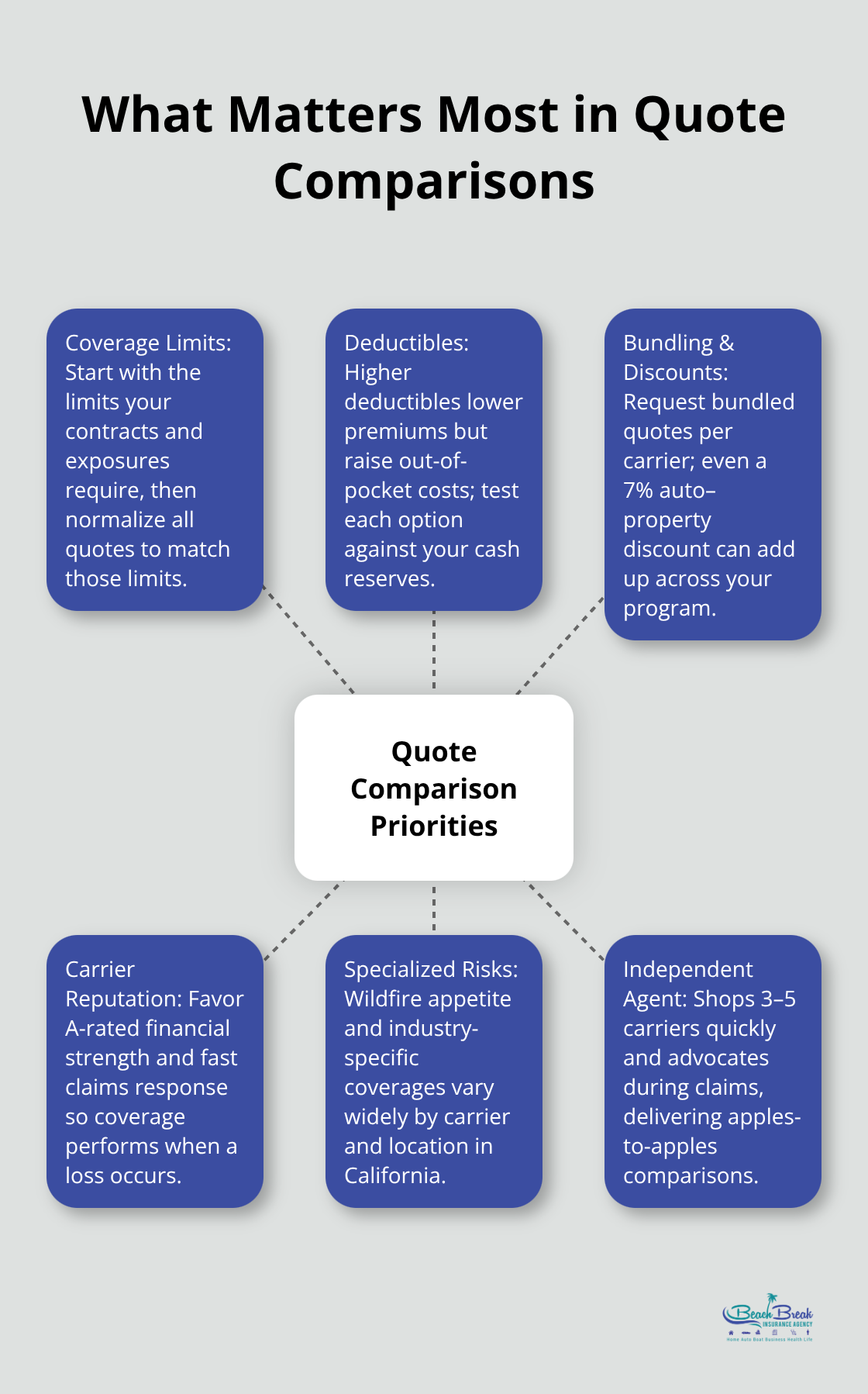
California construction firms and manufacturers face workers comp premiums calculated per $100 of payroll ranging from $5 to $20 depending on the trade, so a deductible choice compounds across dozens of employees. Test each deductible option against your actual cash reserves to confirm you can cover it without disrupting operations.
Bundling Discounts and Premium Context Matter More Than You Think
Premium cost comparisons demand context that online quote tools cannot provide. A 7 percent discount for bundling auto and property coverage sounds small until you calculate it across your entire program, which could mean $400 to $800 in annual savings depending on your size. A Business Owner’s Policy median runs around $1,687 annually for small firms, but your actual quote depends entirely on your industry risk level and location within California. Construction and manufacturing pay substantially more than professional services, and wildfire-prone areas like Sonoma County see property premiums spike compared with inland regions. Request bundling quotes from each carrier and compare the total program cost, not individual line items.
Carrier Reputation and Claims Speed Separate Good Insurance From Real Protection
Carrier reputation and claims processing speed separate adequate insurance from actual protection when you need it most. Check the California Department of Insurance complaint records and financial stability ratings through A.M. Best, trying for carriers rated A or better, because a low premium from a financially weak insurer becomes worthless if they cannot pay your claim. Ask every carrier directly how long they take to assign a claims adjuster after you file, and request the contact information for their local claims office in your area. Independent agents can shop multiple carriers simultaneously and advocate for you during claims, while captive agents sell only one company’s products and cannot reveal better options elsewhere in the market. The speed at which a carrier responds to your claim often matters more than the premium you paid.
Getting Quotes Ready Without Wasting Time
Organize Your Business Information First
Requesting quotes without first organizing your business information wastes everyone’s time and produces incomplete comparisons. Pull together the actual details that underwriters need: your business structure, annual revenue, number of employees, specific job duties for each role, equipment inventory value, annual payroll, any prior claims history, and lease or contract requirements. This takes about 30 minutes but prevents carriers from requesting information three times over email. When you request quotes with complete data upfront, you receive comparable quotes within days rather than weeks.
Incomplete applications force underwriters to make assumptions that inflate premiums or create coverage gaps you did not expect. For workers compensation specifically, have your payroll breakdown by classification ready because California rates vary significantly by job classification. If you operate multiple locations or have seasonal employees, document that structure clearly because it affects how carriers structure your quote.
Document Your Contractual Coverage Requirements
A construction firm with five permanent employees and ten seasonal workers requires different workers comp calculations than a firm with only five permanent staff, and vague descriptions lead to low-ball quotes that do not cover your actual exposure. Pull your commercial lease and any client contracts that specify insurance requirements, then flag the exact coverage limits and endorsements demanded. Most California contracts require general liability minimums of $1 million to $2 million even when state law does not mandate those amounts, so knowing your contractual obligations before requesting quotes prevents you from accepting inadequate coverage at a discount price.
Use an Independent Agent to Shop Multiple Carriers
Independent agents dramatically streamline the quote process because they request quotes from multiple carriers simultaneously rather than you contacting each insurer separately. An independent agent can shop three to five major carriers within 24 to 48 hours and present you with apples-to-apples comparisons, while requesting quotes individually takes two weeks or more. An independent agent can compare multiple top-rated carriers at once to deliver tailored coverage and help you save time and money.
Build a Comparison Spreadsheet With All Key Data Points
Once you receive quotes, create a spreadsheet with coverage type, limits, deductibles, annual premium, available discounts, and exclusions for each carrier across every line of coverage. This forces you to normalize quotes to identical limits so you see real price differences rather than comparing a $1 million liability limit against a $2 million limit. Add columns for claims contact information and carrier financial ratings from A.M. Best so you have carrier stability data alongside pricing.
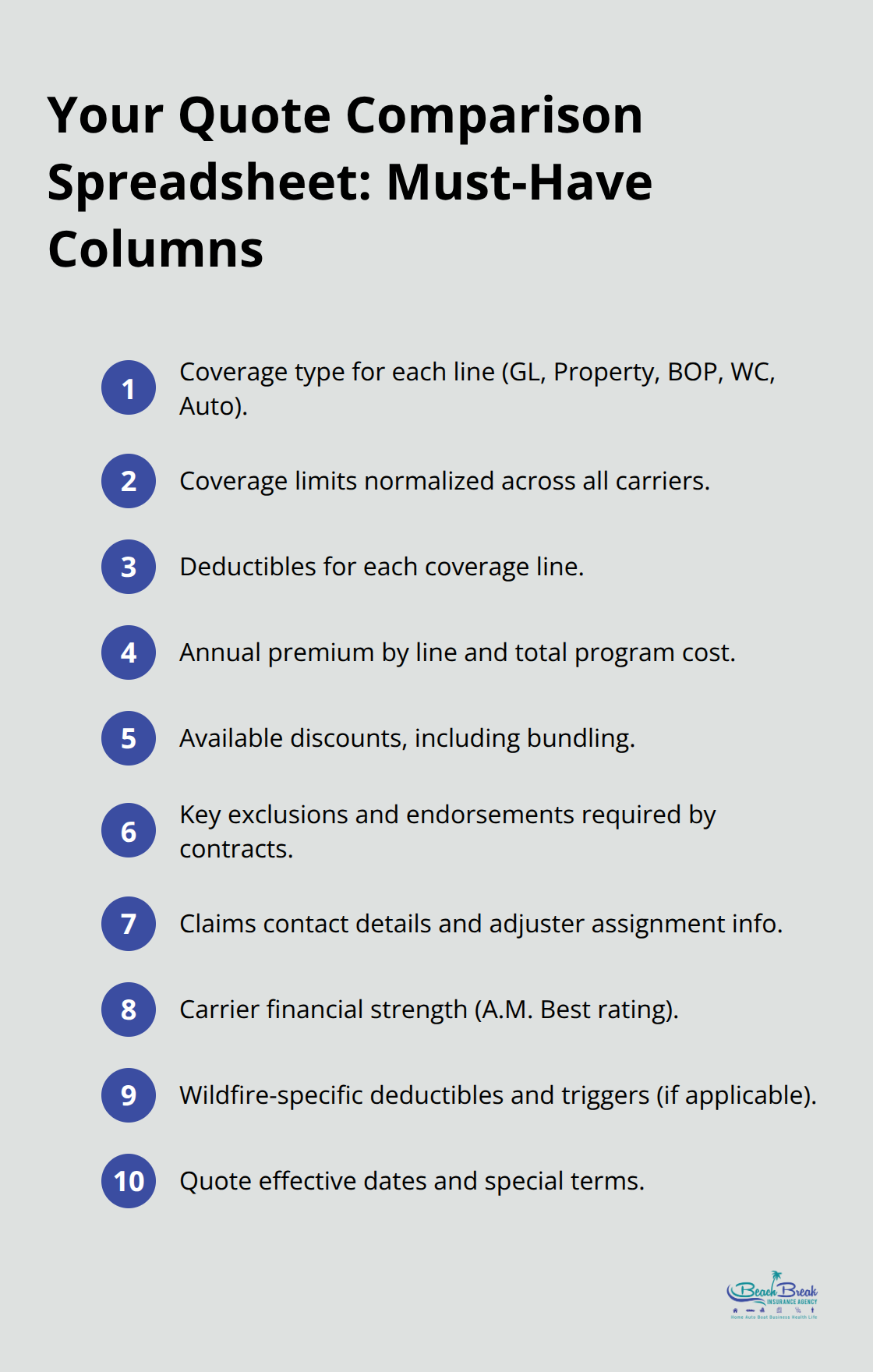
For a business with property, liability, workers compensation, and commercial auto coverage, this spreadsheet contains roughly 20 to 30 data points per carrier, but comparing those details side by side reveals which carrier truly offers the best value rather than just the lowest premium. Wildfire-prone regions like Sonoma County need property coverage columns that specifically track fire deductibles and coverage triggers because carriers vary dramatically on wildfire appetite. A spreadsheet also prevents you from overlooking bundling discounts, which typically save 7 percent on auto when bundled with property and can compound to hundreds of dollars annually across your full program.
Final Thoughts
Comparing California business insurance quotes directly controls whether your business pays $5,000 or $15,000 annually for the same protection. Premiums have surged 71 percent since 2013, which means the carrier you select today compounds into thousands of dollars in savings or waste over the years ahead. Start with your actual coverage needs rather than chasing the lowest premium, normalize all quotes to identical limits, and build a spreadsheet that tracks coverage, deductibles, exclusions, and carrier ratings side by side.
An independent agent accelerates this process by shopping multiple top-rated carriers simultaneously and advocating for you during claims in ways that captive agents cannot match. Test each deductible option against your cash reserves to confirm you can absorb it without disrupting operations, and always verify that carriers hold A-rated financial strength from A.M. Best because a low premium from a weak insurer protects nothing. At Beach Break Insurance Agency, we compare quotes from multiple carriers to deliver tailored coverage that aligns with your actual exposures and budget.
Contact an independent agent who understands California’s regulatory environment and can shop the full market on your behalf. The time you invest now in comparing California business insurance quotes compounds into years of savings and genuine protection when claims happen.
The information provided in this blog is for general informational purposes only and does not constitute legal, financial, or insurance advice. Coverage options, terms, and availability may vary. Please consult with a licensed professional for advice specific to your situation.
Artificial intelligence may have been used to generate text and images in some blog articles.


