
Coastal Wildfire Insurance California: Protecting Seaside Homes
Coastal California homeowners face a growing wildfire threat that standard insurance often doesn’t cover. We at Beach Break Insurance Agency know that coastal wildfire insurance in California requires specialized knowledge and the right coverage strategy.
This guide walks you through your insurance options, protection measures, and how to get properly covered for the risks your seaside home actually faces.
Why Your Coastal Home Faces Greater Wildfire Risk
Coastal California homes sit in some of the most fire-prone zones in the state, and the risks keep intensifying. The Wildfire Hazard Potential data from the USDA Forest Service shows that high and very-high wildfire risk zones cover roughly 63% of California’s land area combined. What matters more for you is this: about 2.5 million housing units in California sit in high or very-high wildfire risk ZIP codes, representing roughly 30% of all insured units. If you own a coastal home, you’re statistically more exposed than most homeowners.

The 2018 Camp Fire in Paradise demonstrated the severity of losses possible, and eight of the top 10 insured-fire losses in the U.S. have occurred since 2017 alone. Stanford researchers found that coastal wildfire risk is a major driver of rising insurance costs for seaside homes, with average California homeowners insurance premiums surging 84% over the past five years. The steepest gains hit high wildfire risk zones hardest. This isn’t a theoretical concern for coastal property owners-it’s reshaping your insurance market right now.
Santa Ana Winds Amplify Your Exposure
Santa Ana winds create conditions that make coastal fires spread faster and burn hotter than inland fires. These seasonal winds push flames toward populated coastal areas with predictable intensity. Coastal communities face a compressed timeline when evacuation becomes necessary, and insurance claims spike during Santa Ana fire seasons. Insurers recognize this pattern, which directly influences their willingness to renew policies in coastal ZIP codes. In 2019, insurer-initiated nonrenewals reached 7.3% in very-high-risk ZIP codes, 4.3% in high-risk zones, and 3% in moderate-risk areas, according to research from Resources for the Future. The geographic hotspots for nonrenewals include eastern San Diego County, the western Sierra Nevada slope, and the Shasta Cascades-many of these overlap with coastal exposure. When insurers pull back, coastal homeowners face California’s FAIR Plan, the insurer of last resort, where coverage costs more and protects less.

The Market Squeeze Intensifies
The share of policies in California’s FAIR Plan has climbed steadily in the highest-risk ZIP codes since about 2010. More than 3% of insured units and premiums in very-high-risk areas now flow through the FAIR Plan. In 2018, average annual premiums ran about $1,095 for standard homeowners insurance but only $663 for FAIR Plan policies-a difference that looks good until you realize FAIR Plan coverage is far more limited. Stanford analysis shows that the share of new mortgages backed by FAIR Plan coverage quadrupled to 5%, making high-cost, restricted coverage increasingly common for new buyers in risky coastal areas. This market tightness means coastal homeowners cannot simply shop around and find better rates. The California Department of Insurance hotline at 1-800-927-4357 handles thousands of calls monthly from homeowners struggling to find coverage. If you own a coastal property, you need to act now before nonrenewal hits your policy. The window for securing affordable standard coverage narrows every fire season, which is why understanding your options-and moving quickly-matters so much as you prepare your coastal home for the protection it actually needs.
Understanding Your Wildfire Insurance Options in California
Standard Coverage Fails in High-Risk Coastal Zones
Standard homeowners insurance in California covers your home’s structure and contents, but most policies exclude or severely limit wildfire damage once you occupy a high-risk zone. Insurers use fire risk models to decide whether to offer coverage at all, and coastal properties fail that test regularly. If your insurer decides your coastal address is too risky, they will not renew your policy-and no legal requirement forces them to explain the detailed reasoning. This means coastal homeowners often discover mid-year that their renewal will not happen, leaving them scrambling for alternatives. The reality is blunt: standard coverage becomes unavailable in coastal wildfire zones not because of policy language but because insurers simply exit those markets.
The FAIR Plan: Your Last Resort, Not Your Best Option
When standard coverage disappears, California’s FAIR Plan becomes your only option, and that’s where the real cost hits. The FAIR Plan offers HO-2 coverage by default, which excludes valuable personal property and provides less protection than standard HO-3 policies. In 2021, the California Department of Insurance required the FAIR Plan to offer HO-3 coverage as an option, but you must specifically request it-and that expanded coverage costs significantly more. The FAIR Plan also comes with higher deductibles, typically $2,500 or more, compared to standard policies at $1,000. Your claims experience with FAIR Plan moves slower and becomes more adversarial; the organization exists as a last resort, not as a customer-focused carrier.
Surplus Lines Carriers: More Expensive, Less Stable
Private insurers still write coastal coverage, but only through surplus lines carriers that operate outside California’s standard market. These policies cost substantially more than standard insurance and provide narrower coverage. Surplus lines carriers also reserve the right to non-renew faster than standard carriers, sometimes after a single claim. The California Department of Insurance hotline at 1-800-927-4357 can help identify available private options, though availability shifts monthly as carriers adjust their appetite for coastal risk.
Act Now Before Your Window Closes
Timing matters more than anything else in coastal wildfire insurance. If your current standard policy is set to renew, contact your agent immediately to confirm renewal rather than waiting for a non-renewal notice. Coastal homeowners who act now still have access to standard coverage from multiple carriers, but that window closes rapidly as fire seasons intensify. An independent agency can quickly compare quotes from multiple top-rated carriers to help you secure the best available coverage before nonrenewals hit your policy.
Mitigation Actions Lower Your Rates
If you’re already in the FAIR Plan or facing non-renewal, focus on documenting every mitigation action you take-defensible space clearing, Class-A fire rated roof upgrades, gutter cleaning-because the California Department of Insurance rules now require carriers to consider these actions when setting rates under their wildfire risk models. Communities participating in Firewise USA programs may see rate recognition as well. This underscores why securing the best available coverage now, combined with aggressive property mitigation, is the only realistic path to protecting your coastal home’s financial future. The next step involves understanding what specific protection measures actually reduce your wildfire risk and lower your insurance costs.

How to Protect Your Coastal Home from Wildfire Damage
Defensible Space Reduces Risk and Lowers Premiums
Defensible space is not optional if you own a coastal home-it’s the single most effective action that lowers your wildfire risk and directly influences your insurance rates. The California Department of Insurance requires carriers to consider defensible space improvements when setting rates under their wildfire risk models, meaning you can translate physical work into measurable premium reductions. Start with the immediate zone: clear vegetation within 30 feet of your home’s foundation, remove dead branches that hang over your roof, and trim tree canopies to at least 10 feet above the ground. Extend a second zone from 30 to 100 feet where you thin dense vegetation and space out remaining trees. Your fire department can assess your specific property during a free consultation and identify which areas pose the greatest risk. Contact your local fire department directly rather than waiting for an insurance company to demand action-fire departments prioritize safety over profitability and will tell you exactly what matters most for your location.
Home Hardening Materials Make Your Home Fire-Resistant
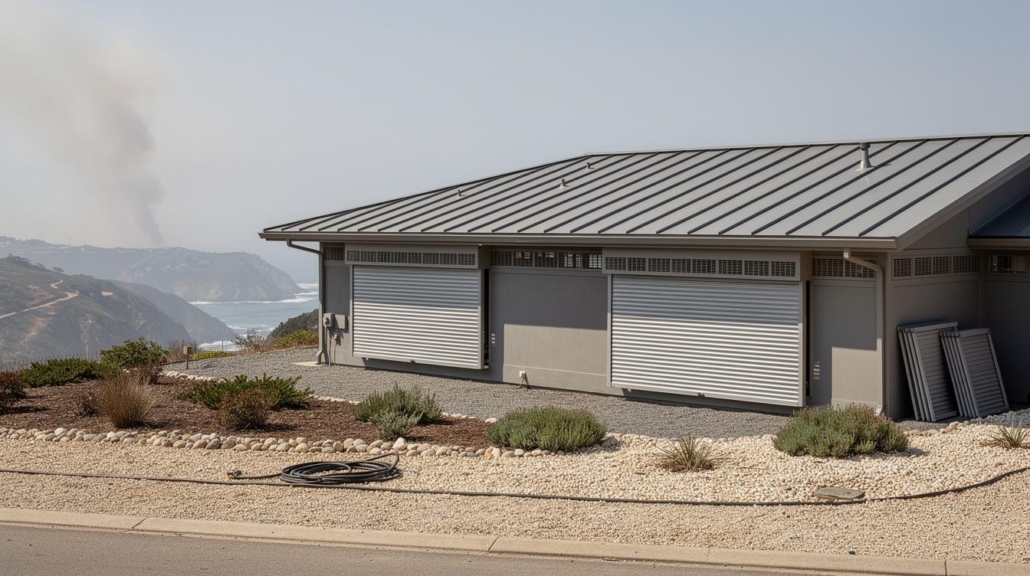
Home hardening focuses on the materials that actually resist fire: Class-A fire-rated roofing replaces standard asphalt shingles, metal gutters prevent ember accumulation, and tempered or dual-pane windows resist radiant heat better than standard glass. These upgrades cost money upfront, but they directly reduce your insurance costs and make your home dramatically harder to ignite. The California Department of Insurance framework explicitly recognizes these improvements, so document everything you complete and share records with your insurer before renewal time. Coastal properties with documented home hardening work often qualify for standard coverage instead of FAIR Plan policies, which translates to lower premiums and better protection.
Fire Department Assessments Transform Your Insurance Strategy
Working with your fire department transforms insurance from a reactive problem into a proactive strategy. Request a formal wildfire risk assessment from your local department rather than relying solely on digital fire hazard maps. Fire departments understand local wind patterns, fuel conditions on neighboring properties, and evacuation constraints that generic mapping misses. If you’re in the FAIR Plan or facing non-renewal, this documented assessment becomes your strongest argument for rate reductions under California’s new mitigation-based pricing rules.
Firewise USA Recognition and Rate Advantages
Communities participating in Firewise USA programs receive formal recognition that can influence how insurers model your risk. The Safer from Wildfires program encourages risk-reduction actions and supports these efforts with technical guidance. An independent insurance agency can help translate your mitigation work into rate quotes from multiple carriers, showing exactly how much each improvement lowers your costs. This matters because some carriers recognize mitigation more aggressively than others-comparing quotes after completing defensible space and home hardening work reveals which insurers value your efforts most. The gap between FAIR Plan premiums and standard coverage narrows significantly once you document serious mitigation, sometimes by hundreds of dollars annually.
Prove Your Property Is Less Risky Than Statistics Suggest
Your goal is straightforward: prove to insurers that your coastal property is less risky than the statistics suggest, and they’ll compete for your business rather than non-renew your policy. Documentation of defensible space maintenance, home hardening upgrades, and fire department assessments creates a compelling case for rate reductions. Carriers evaluate risk models differently, so comparing multiple quotes after completing mitigation work reveals which insurers recognize your efforts most favorably. This approach works because insurers respond to concrete evidence that your property poses lower risk than comparable coastal homes without mitigation.
Final Thoughts
Coastal wildfire insurance California demands action now, not after your insurer sends a non-renewal notice. The market tightens rapidly, and coastal homeowners who wait lose access to standard coverage and face FAIR Plan policies with higher costs and limited protection. Your window to secure affordable standard insurance closes faster each fire season as insurers pull back from high-risk zones.
Contact your current insurer immediately to confirm your renewal status rather than assuming coverage will continue. Document every mitigation action you complete-defensible space clearing, roof upgrades, gutter maintenance-because California’s new rating rules explicitly recognize these improvements and translate them into lower premiums. Compare quotes from multiple carriers after completing mitigation work, since different insurers value risk reduction differently and some will compete aggressively for your business once you prove your property is less risky than statistics suggest.
We at Beach Break Insurance Agency quickly compare quotes from multiple top-rated carriers to deliver tailored coverage that actually fits your coastal property’s specific risks and your budget. Contact us today to discuss your coastal home’s coverage needs and get competing quotes from carriers that recognize your mitigation efforts. The difference between acting now and waiting could mean hundreds of dollars in annual premiums and the security of knowing your seaside home is properly protected.
The information provided in this blog is for general informational purposes only and does not constitute legal, financial, or insurance advice. Coverage options, terms, and availability may vary. Please consult with a licensed professional for advice specific to your situation.
Artificial intelligence may have been used to generate text and images in some blog articles.


