
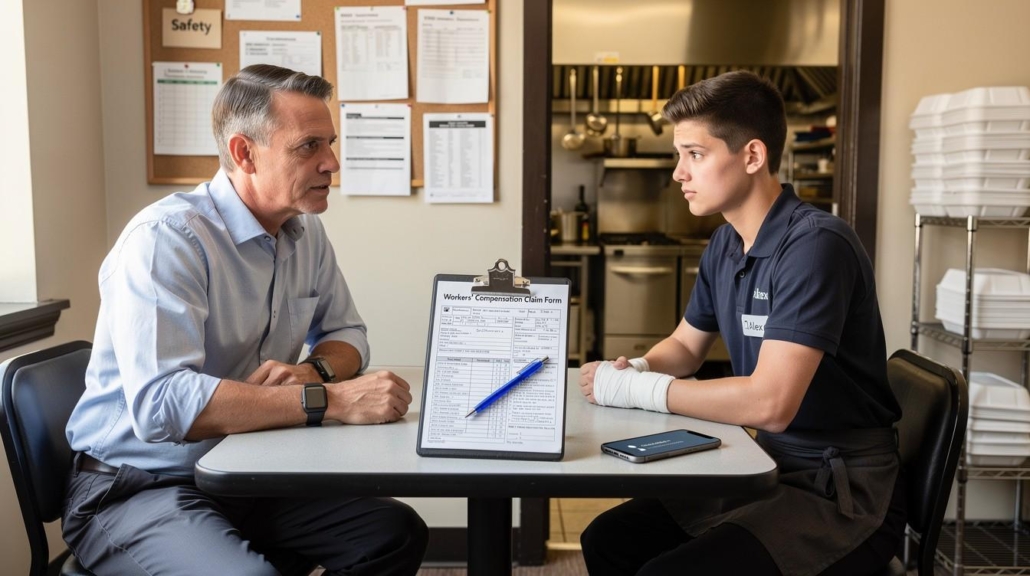
Restaurant Workers Comp: What Restaurant Owners Need to Know
Running a restaurant means managing countless moving parts, and worker safety is one of the most important. Restaurant workers comp isn’t just a legal requirement in California-it’s your safety net when injuries happen.
At Beach Break Insurance Agency, we’ve seen how the right coverage protects both your team and your bottom line. This guide walks you through what you need to know to keep your restaurant compliant and your workers protected.
What California Restaurants Must Carry for Workers Comp
California’s workers comp system leaves no room for negotiation. If you operate a restaurant in California and have even one employee on your payroll, you must carry workers compensation insurance. The state enforces this mandate strictly, and the penalties for non-compliance are severe. Uninsured employers face significant fines, plus potential criminal charges and civil liability for workplace injuries. This isn’t a gray area where you can cut corners or wait until something happens. You need coverage active before your first employee starts their shift.
Who counts as an employee for coverage purposes
The classification question trips up many restaurant owners because it determines whether someone needs to be covered. California has specific rules about who qualifies as an employee versus an independent contractor, and the state applies these rules aggressively. Owners, partners, and officers of corporations or LLCs can often exclude themselves from coverage, but you need proper documentation to prove their status. All other workers on your payroll must be covered, regardless of whether they work full-time, part-time, or seasonally. The California Labor Commissioner uses the ABC test to determine employment status, which means if a worker fails any part of the test (they’re under your control, they perform work integral to your business, or they lack an independent business), the state classifies them as an employee who needs coverage. Many restaurants misclassify kitchen staff, servers, or dishwashers as independent contractors to save money, but this exposes you to massive liability and back-payment obligations if the state audits you.
Coverage limits that protect your restaurant
California doesn’t allow you to set your own coverage limits for workers comp. The state determines benefit levels based on the worker’s average weekly wage at the time of injury. Medical expenses have no monetary cap, which means your insurance covers all necessary treatment for a work-related injury. Temporary disability benefits replace a portion of lost wages while the worker recovers, and permanent disability benefits apply if the injury causes lasting damage. Death benefits go to the worker’s dependents if a workplace fatality occurs. Your insurance premium depends on your payroll, your industry classification code, and your claims history. Restaurants typically fall into classification codes 8868 or 9014, depending on whether you primarily serve food on-premises or handle catering operations. These codes carry higher premiums than many other industries because restaurant work involves significant injury risk.
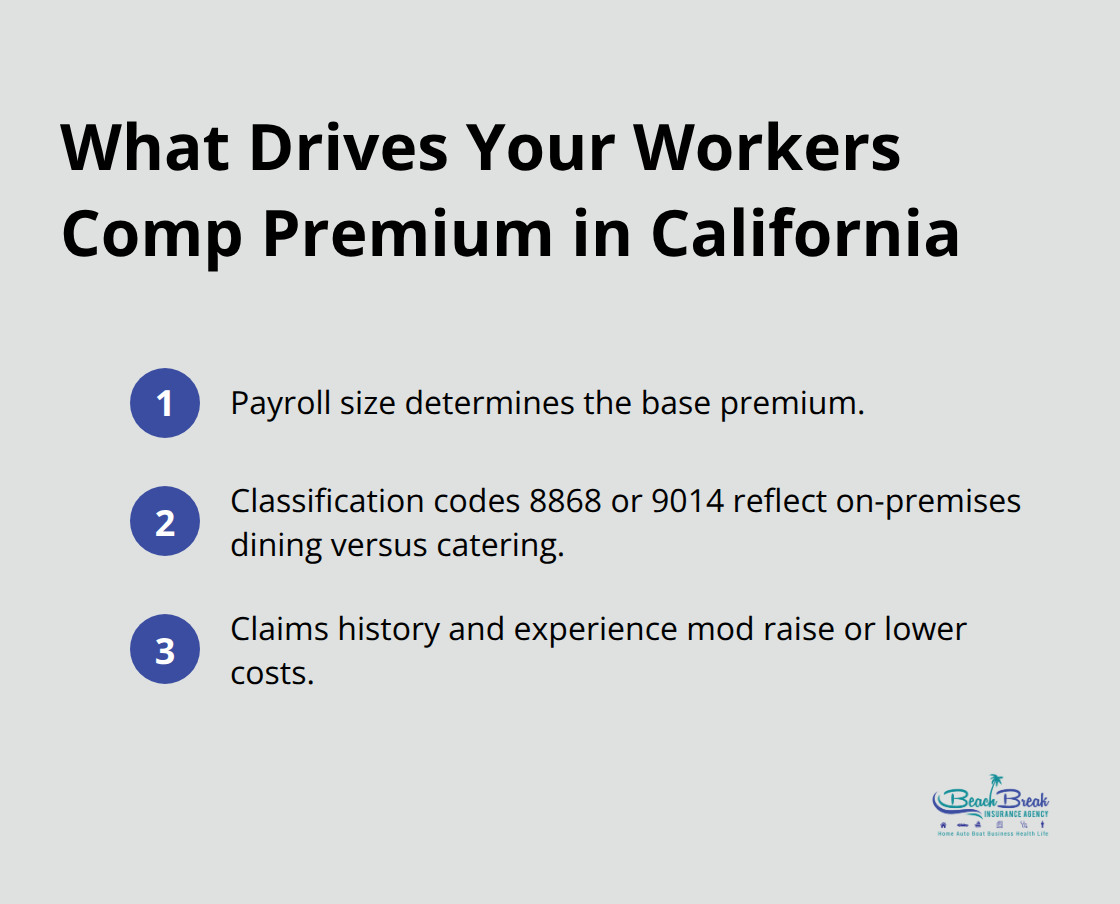
Your actual cost depends on your specific operation and past claims.
What happens next with your coverage
Once you understand these requirements, the next step involves identifying which injuries occur most frequently in your operation. Restaurant workers face specific hazards that differ from other industries, and knowing these risks helps you prepare your team and your insurance strategy.
Why Restaurant Injuries Cost More Than You Think
Restaurant work carries injury rates that outpace most other industries. The Bureau of Labor Statistics reports that food service workers experience 5.9 injuries per 100 full-time workers annually, compared to 3.5 across all private industries. This gap matters because each injury raises your workers comp premiums, increases your experience modification rate, and disrupts your operations.
Slips, Falls, and Burns Lead the Injury List
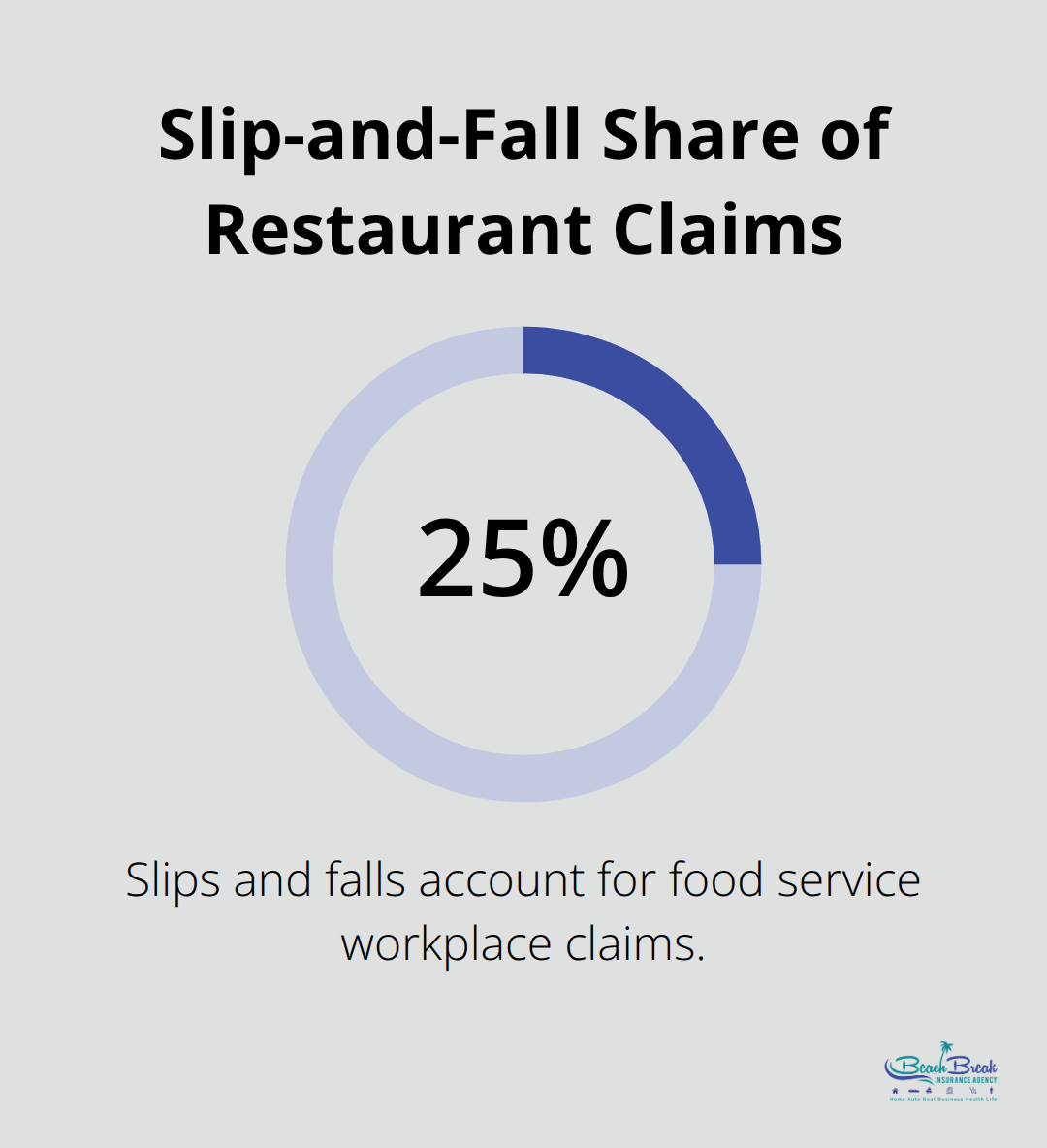
Slips and falls dominate the injury landscape in restaurants, accounting for roughly 25% of all workplace claims in food service. These incidents happen on wet kitchen floors, in walk-in coolers, and near prep stations where speed and multitasking create hazards. A single slip that fractures an ankle can sideline a server or line cook for weeks, forcing you to hire temporary staff or ask remaining workers to cover shifts.
Burns represent the second major category, particularly among kitchen staff working near fryers, grills, and hot surfaces. Most burn injuries occur when workers move quickly between stations or when someone bumps into a colleague holding hot pans or liquids. Thermal burns account for a significant portion of hospitality-related emergency room visits.
Back Injuries and Repetitive Strain
Back injuries and repetitive strain develop more slowly but cause longer absences. Cooks lift heavy stock pots, servers carry full trays, and dishwashers stand for eight-hour shifts, all facing cumulative stress on their lower backs and shoulders. These injuries often result in chronic pain that keeps workers out for months or forces them into lighter-duty roles, reducing your kitchen’s capacity.
Cuts and lacerations round out the major injury types, stemming from knife work, broken glass, and sharp edges on equipment. While many cuts seem minor in the moment, infections and nerve damage can turn a small laceration into a significant claim.
Prevention Strategies That Lower Your Costs
Installing non-slip flooring in high-traffic areas reduces fall claims substantially, and commercial kitchens with proper drainage and regular floor maintenance see fewer incidents. Organizing your prep stations to minimize reaching and twisting cuts repetitive strain claims. Providing proper training on knife skills and knife handling, along with requiring cut-resistant gloves during prep work, reduces laceration frequency.
Kitchen equipment maintenance matters too because worn handles, loose parts, and malfunctioning safety guards increase injury risk. Many restaurants skip regular equipment inspections, but catching a fryer’s broken thermostat before someone gets burned saves money and prevents suffering. Staffing levels directly influence injury rates as well-understaffed shifts push workers to move faster and take shortcuts, multiplying accident risk.
Using Your Claims Data to Drive Improvements
When you track your own claims history, patterns emerge about when and where injuries occur most frequently. This data becomes valuable when you work with your insurance provider to identify specific improvements that reduce your premiums over time. Your experience modification rate (the factor that adjusts your base premium up or down based on claims history) responds directly to injury prevention efforts. Carriers reward restaurants that demonstrate commitment to safety through documented training programs, equipment maintenance logs, and incident response procedures. Understanding which injuries plague your operation most frequently allows you to target your prevention efforts where they matter most. The next step involves building a comprehensive safety program that addresses these specific hazards and protects your team from day one.
Reducing Restaurant Workers Comp Costs Starts With Prevention
The best way to lower your workers comp premiums isn’t waiting for injuries to happen and then managing claims. Stop injuries before they occur through deliberate, measurable prevention programs. Restaurants that implement structured safety training see injury rates drop by 20-30% within the first year, according to data from the National Safety Council. This matters because your experience modification rate directly ties to your claims history, meaning fewer injuries translate into lower premiums within 12-24 months. Restaurant owners who reduce their experience mod from 1.15 to 0.85 through consistent safety efforts cut their annual premiums by thousands of dollars. The investment in prevention pays back quickly when you measure it against the true cost of a single serious injury claim.
Kitchen design and layout prevent injuries before they start
Your physical kitchen layout either works for you or against you when it comes to injury prevention. Restaurants with cluttered walkways, poorly organized prep stations, and inadequate spacing between work areas generate more slip, fall, and strain injuries than those with deliberate design. Start by measuring your high-traffic zones and remove obstacles that force workers to navigate around equipment or supplies. Wet floors cause most slip-and-fall incidents, so install commercial-grade non-slip flooring in areas where water accumulates, particularly near dishwashing stations and under ice machines. The upfront cost of non-slip flooring typically ranges from $8-15 per square foot, but one prevented ankle fracture claim worth $15,000-40,000 justifies the investment immediately.
Next, organize your prep stations so workers access frequently used items at waist height rather than bending or reaching overhead. This simple change cuts repetitive strain claims significantly because it removes the cumulative stress that builds up across dozens of shifts. Position your fryers, grills, and hot surfaces away from main traffic pathways so workers carrying hot liquids or pans don’t collide with colleagues moving through the kitchen. Many restaurant injuries happen when someone bumps into a coworker holding something dangerous, and thoughtful spacing prevents this entirely.
Training programs need specificity and regular reinforcement
Generic safety training accomplishes almost nothing because workers tune out abstract concepts that don’t connect to their actual job. Conduct monthly safety huddles focused on the specific injuries your restaurant experiences most frequently. If your claims data shows that back injuries dominate, spend 15 minutes teaching proper lifting technique for stock pots and cases of supplies, then have workers demonstrate the technique. If burns rank high, walk through the specific near-miss incidents that almost happened during the previous month and discuss what went differently.
Safety training works best when it’s job-specific and repeated regularly rather than delivered once during onboarding. Document these training sessions with attendance sheets and brief notes about what was covered because this documentation becomes valuable when you work with your insurance carrier to demonstrate your safety commitment and potentially earn premium discounts. New employees should receive kitchen-specific safety training within their first week, not buried in generic HR materials. Show them exactly where hazards exist in your kitchen, how to move safely on wet floors, proper knife handling for your specific equipment, and what to do when they witness a near-miss or injury.
Incident reporting and data tracking reveal patterns
Most restaurants respond to injuries reactively, treating each incident as isolated rather than part of a pattern. Create a simple incident log that captures when, where, and how each injury occurred, then review this log monthly to identify trends. If you notice that Friday nights generate twice as many injuries as other shifts, understaffing is likely the culprit.
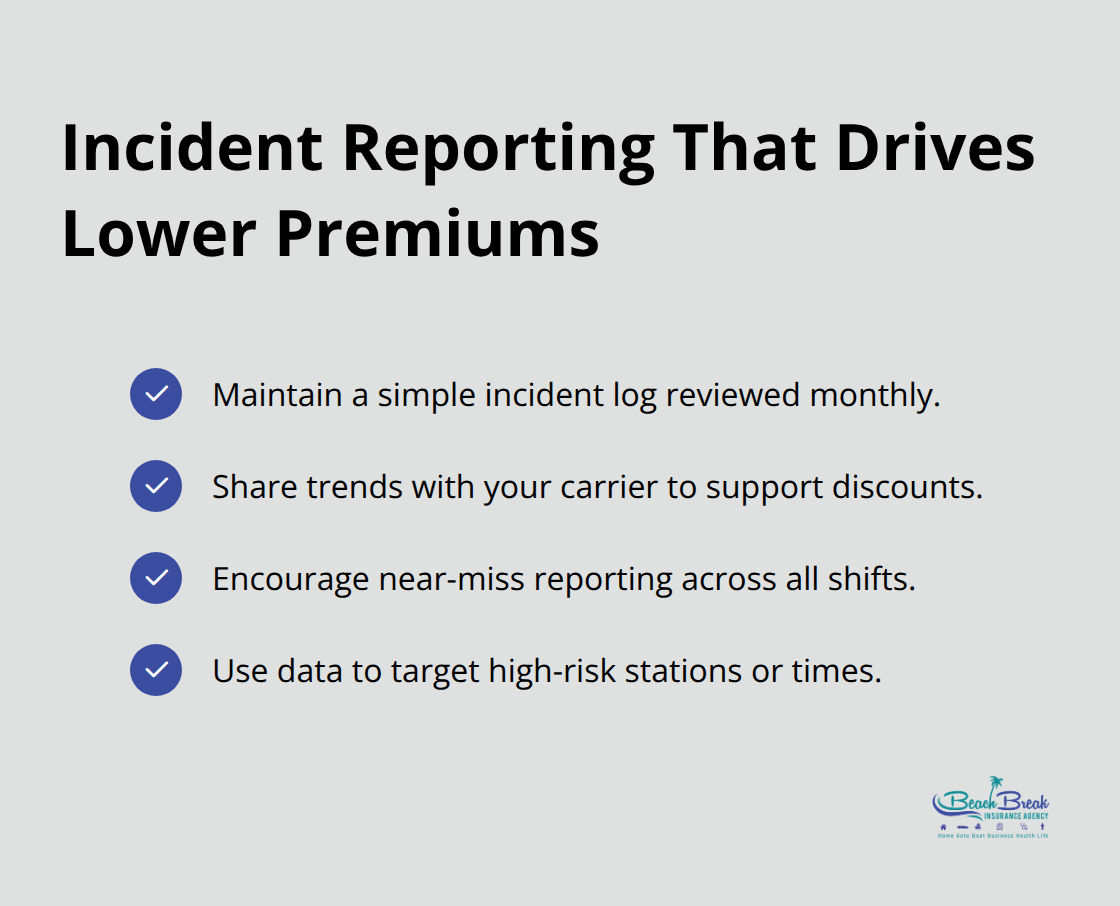
If most cuts happen at a specific prep station, that equipment might have a design flaw or maintenance issue. This data becomes your roadmap for targeted prevention.
When you report this information to your insurance carrier, they see a restaurant owner actively managing risk, which influences their willingness to offer premium discounts or better terms at renewal. Near-miss reporting matters equally because it catches hazards before someone gets hurt. Train your team to report when they almost slipped, nearly cut themselves, or narrowly avoided a burn. These near-misses reveal exactly where your prevention efforts should focus next, and they happen far more frequently than actual injuries, giving you abundant data to work with.
Final Thoughts
Restaurant workers comp protects your team and your business, but only when you treat it as an active priority rather than a checkbox item. Prevention directly reduces your claims, lowers your experience modification rate, and cuts your annual premiums substantially. Start by reviewing your claims history to identify which injuries plague your operation most, then target your prevention efforts specifically at those hazards instead of spreading resources across generic safety initiatives.
California’s workers comp requirements are non-negotiable, and operating without proper coverage exposes you to severe penalties, fines, and personal liability. You need a partner who understands restaurant-specific risks and can help you navigate coverage limits, classification codes, and premium optimization. Beach Break Insurance Agency works with restaurant owners throughout San Diego to compare quotes from multiple top-rated carriers and deliver tailored workers comp coverage that fits your operation.
Contact us to review your current coverage or get a quote for your restaurant today.
The information provided in this blog is for general informational purposes only and does not constitute legal, financial, or insurance advice. Coverage options, terms, and availability may vary. Please consult with a licensed professional for advice specific to your situation.
Artificial intelligence may have been used to generate text and images in some blog articles.


