

Vacation Rental BOP Insurance: Streamlined Coverage for Hosts
Running a vacation rental means managing guest safety, property protection, and income stability all at once. Vacation rental BOP insurance handles these concerns with one streamlined policy instead of juggling multiple coverage types.
At Beach Break Insurance Agency, we’ve seen hosts avoid costly gaps in protection by choosing the right business owner’s policy early. This guide walks you through what coverage you actually need and how to pick a policy that fits your operation.
Why Vacation Rental Hosts Need Real Coverage Now
Guest injuries create immediate financial exposure
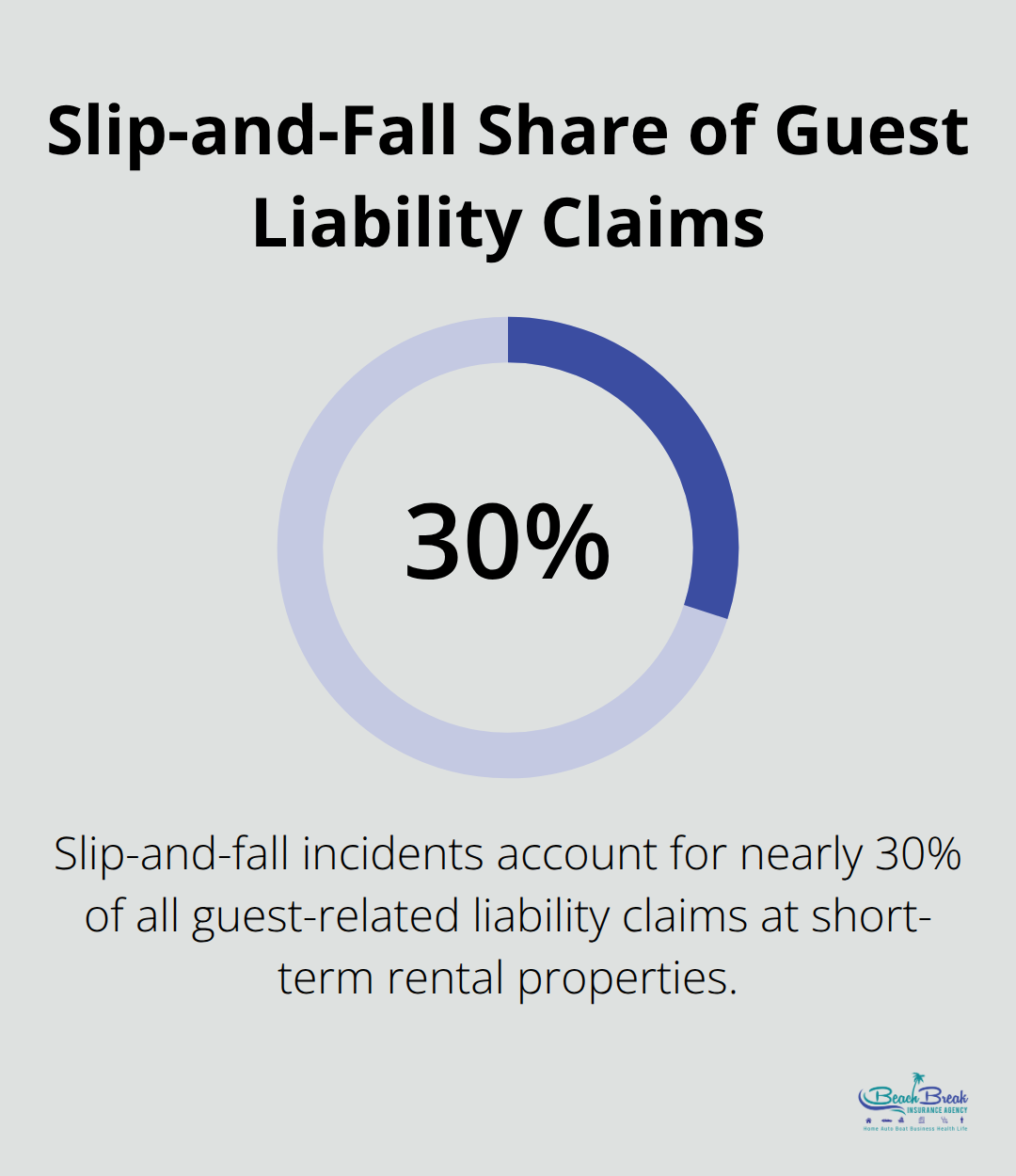
Guest injuries happen more often than most hosts expect. The American Hotel & Lodging Association reports that slip-and-fall incidents account for nearly 30% of all guest-related liability claims at short-term rental properties. A single incident where a guest fractures their leg on your stairs or sustains an injury in a hot tub malfunction can trigger medical bills exceeding $50,000, plus legal fees that stretch beyond $30,000 even if you win the case.
Standard homeowners policies explicitly exclude rental income and guest liability, leaving you personally responsible for these costs. Without proper business owner’s policy coverage, your personal assets become the target when litigation follows.
Property damage claims drain unprotected hosts fast
Your vacation rental property faces constant risk from guest negligence. Broken windows, damaged furniture, stained carpets, and plumbing disasters from misuse occur regularly at rental properties. Property damage, including theft, accounted for 97.3 percent of homeowners insurance claims in 2023. Fire damage, theft, and weather events also create gaps in standard coverage. A comprehensive BOP policy covers these scenarios directly, protecting your physical investment and the equipment inside it. Without this protection, you absorb every repair cost and replacement expense from your own pocket.
Lost income during closures destroys your cash flow
Forced closures hit rental hosts hard financially. When your property requires repairs after fire, flood, or weather damage, you lose rental income during the recovery period. If your property generates $3,000 monthly in rental income, a 60-day closure costs you $6,000 in lost revenue before repairs even begin. Business income coverage within a BOP policy replaces this lost income, keeping your cash flow stable while you handle property restoration.
Legal obligations often demand coverage
Many rental agreements and platform requirements (Airbnb, VRBO, and similar services) mandate that hosts carry business liability insurance. Violating these terms exposes you to account suspension or removal from the platform entirely. Local regulations in some jurisdictions also require proof of commercial coverage before you legally operate a vacation rental. Checking your rental agreement and local ordinances reveals exactly what coverage levels you must maintain. A BOP policy satisfies these obligations while protecting you from the financial realities that standard homeowners policies ignore.
What a Vacation Rental BOP Policy Actually Protects
A vacation rental BOP policy combines three distinct coverage types into one streamlined package, eliminating the gaps that standard homeowners insurance leaves wide open. General liability coverage handles guest injuries and property damage claims that guests initiate. Property coverage protects your building, furnishings, appliances, and equipment from damage or theft. Business income coverage replaces lost rental revenue when your property becomes uninhabitable due to covered damage. Understanding exactly what each component covers prevents you from purchasing redundant coverage or discovering mid-claim that you lack protection.
General liability covers what guests actually sue for
General liability protection responds when a guest sustains an injury at your property and holds you legally responsible. General liability coverage covers medical expenses and legal defense costs. A guest slips on wet tile in your bathroom, suffers a fall from a defective railing, or experiences food poisoning from improperly stored items-all trigger general liability claims. Most BOP policies start with liability limits between $300,000 and $1,000,000, though your actual exposure depends on your property size and guest capacity. If your rental sleeps eight guests instead of four, you face proportionally higher injury risk and should consider limits at the higher end. General liability also covers damage your guests cause to neighboring properties, such as a fire that spreads to an adjacent building. This protection separates your personal assets from business liability, meaning a judgment against your rental business doesn’t automatically attach to your primary residence or savings accounts.
Property coverage handles damage from guests and natural events
Property damage coverage within your BOP reimburses you for physical damage to your building and its contents. Guest negligence causes the majority of property claims at vacation rentals-broken windows from careless handling, damaged furniture from improper use, stained carpets from spilled drinks, and plumbing disasters from clogged drains all fall under this coverage. Fire, theft, and weather events like hail or wind damage also trigger property claims. Your coverage limit should reflect your actual property value plus furnishings and equipment inside it. An undervalued policy leaves you exposed if a major loss occurs. Most hosts calculate this by listing every item in their rental (from kitchen appliances to bedroom furniture to outdoor equipment), then add 15% for items they overlooked. Deductibles typically range from $500 to $2,500 per claim, so selecting a higher deductible lowers your premium but increases your out-of-pocket expense when damage occurs.
Business income coverage replaces revenue during recovery periods
Business income coverage activates when a covered loss forces your property to close temporarily. If fire, flood, or severe weather damage makes your rental uninhabitable, this coverage reimburses you for the rental income you would have earned during the repair and restoration period. Most policies cover this lost income for a defined period, commonly 12 months, though you should verify this timeframe with your policy documents. The coverage amount is typically based on your average monthly rental income, so accurate income documentation matters significantly when you file a claim. If your property generated $4,000 monthly in rental revenue before a fire forced a 90-day closure, business income coverage replaces that $12,000 in lost revenue, allowing you to manage your mortgage and maintenance expenses without draining personal savings. This protection proves especially valuable for hosts in fire-prone regions or flood zones where extended closures become realistic scenarios rather than worst-case outliers.
Coverage limits and deductibles shape your actual protection
The limits and deductibles you select directly impact both your premium costs and your financial exposure when claims occur. Higher liability limits cost more but protect you against larger judgments, while higher deductibles reduce your premium but require you to pay more out-of-pocket when damage happens. Your property value, guest volume, and local risk factors should all influence these decisions. Hosts operating in high-fire zones or areas prone to flooding need different coverage strategies than those in stable climates. Your rental agreement and platform requirements may also specify minimum coverage amounts you must maintain. Comparing multiple quotes from different carriers reveals how these variables affect your total cost, helping you find the right balance between affordability and adequate protection for your specific situation.
How to Choose the Right BOP Policy for Your Rental
Calculate your property value and guest capacity first
Start by listing every item in your rental-kitchen appliances, bedroom furniture, outdoor equipment, televisions, bedding, dishes, and decorative pieces-then add 15% for items you overlooked. This total becomes your property coverage baseline. Your typical guest count directly determines the liability limits you need, since injury probability increases with occupancy. A four-person beach cottage faces lower liability exposure than a ten-bedroom vacation home hosting multiple families simultaneously. Your rental agreement and platform requirements specify minimum coverage amounts you must maintain, so verify these numbers before comparing quotes. Matching your coverage limits to your actual operations protects you far better than accepting generic policy defaults that leave some hosts overinsured and others dangerously exposed.
Identify exclusions and necessary endorsements for your situation
Most standard BOP policies exclude damage from poor maintenance, guest negligence you could have prevented with proper upkeep, and business interruption claims that allow you to cover fixed expenses while your property is closed for repairs. If your property sits in a high-fire zone, you need specific fire damage coverage and may need to add it through endorsements since standard policies sometimes limit fire coverage. Flood damage requires separate flood insurance in most cases, so hosts in flood-prone areas must purchase this independently. Review your policy documents carefully to understand what protection you actually receive and what gaps remain.
Compare deductibles across multiple carriers
Deductibles typically range from $500 to $2,500 per claim-choosing $1,000 instead of $500 might reduce your annual premium by 10-15%, but you absorb that extra $500 out-of-pocket when damage occurs. Your risk tolerance and cash reserves should influence this decision. Hosts with substantial emergency funds can afford higher deductibles and lower premiums, while those with tighter cash flow benefit from lower deductibles despite higher annual costs.
Evaluate quotes from multiple carriers
Compare three to five quotes from different carriers to see how coverage limits, deductibles, and endorsements affect your total cost. The cheapest quote often excludes important protections your situation requires, while the most expensive quote may include unnecessary coverage you’ll never use. Your actual need sits somewhere between these extremes, determined by your property specifics and risk tolerance. As an independent San Diego-based agency, we quickly compare quotes from multiple top-rated carriers to help you find tailored coverage that matches your rental operation without wasting money on unnecessary add-ons.
Final Thoughts
Vacation rental BOP insurance eliminates the guesswork from protecting your business. You now understand why standard homeowners policies fail vacation rental hosts, what coverage actually matters, and how to compare policies that fit your specific operation. The financial exposure from guest injuries, property damage, and forced closures is real and substantial-protecting yourself early prevents catastrophic losses that drain personal savings and destroy your rental income.
Gather your property details, verify your platform requirements and rental agreement obligations, then request quotes from multiple carriers. This comparison takes a few hours but reveals significant premium differences based on your coverage choices. Higher liability limits cost more but protect you against larger judgments, while higher deductibles lower your premium but increase your out-of-pocket expense when claims occur.
Beach Break Insurance Agency compares quotes from multiple top-rated carriers to deliver tailored coverage that matches your rental operation without wasting money on unnecessary add-ons. As an independent San Diego-based agency, we help vacation rental hosts access solutions for high-fire areas and keep policies aligned with changing needs. Contact us today to protect your investment and gain peace of mind knowing your business is covered when unexpected events occur.
The information provided in this blog is for general informational purposes only and does not constitute legal, financial, or insurance advice. Coverage options, terms, and availability may vary. Please consult with a licensed professional for advice specific to your situation.
Artificial intelligence may have been used to generate text and images in some blog articles.


