

Home Wildfire Insurance Quotes: Quick Comparisons for Coastal Homes
Coastal homeowners face wildfire risks that standard insurance often doesn’t cover. Getting accurate home wildfire insurance quotes is the first step toward real protection.
At Beach Break Insurance Agency, we help property owners understand what they’re actually covered for-and what gaps exist in their policies. The right comparison can save you thousands while keeping your coastal home properly protected.
Why Your Coastal Home Needs Different Wildfire Coverage
Standard Policies Leave Coastal Homes Exposed
Coastal properties sit in a uniquely vulnerable position. Wildfires in California burned over 1.3 million acres in 2023 alone, and coastal communities increasingly face exposure to wind-driven fires that push inland from nearby wildland areas. Standard homeowners policies were never designed to handle this specific risk. Most traditional policies either exclude wildfire damage entirely or cap coverage so low that rebuilding becomes impossible after a major fire.
Many coastal homeowners discover massive gaps between what they thought was covered and what their standard policy actually pays. The difference can mean the gap between a full rebuild and a partial loss recovery that leaves you responsible for tens of thousands in out-of-pocket costs.
Why Coverage Limits Matter in High-Risk Areas
Standard policies often fail coastal homeowners because insurers priced them for lower-risk regions. When a major fire strikes, the coverage limits simply don’t stretch far enough to cover reconstruction costs in today’s market. Coastal property values have climbed significantly, yet many homeowners never updated their coverage limits to match. This mismatch creates a dangerous situation where you think you’re protected but actually face substantial financial exposure.
The California FAIR Plan: Your Safety Net
The California FAIR Plan exists precisely because regular insurers have largely abandoned high-risk coastal and wildfire-prone areas. This state-run insurer of last resort covers your home and personal property, but comes with higher premiums and lower coverage limits than you’d get through a private carrier. FAIR Plan policies also don’t cover loss of use or additional living expenses, which matters significantly if you need temporary housing after evacuation.
If you live within five miles of a fire zone or have a history of claims, you’ll likely find standard quotes disappearing fast. That’s when specialized wildfire coverage becomes practically necessary.
Finding Better Alternatives to FAIR Plan Rates
Carriers that specialize in coastal and wildfire-prone properties understand fire dynamics and can offer competitive rates on policies specifically designed for your situation, often at better terms than FAIR Plan alternatives if your home qualifies. An independent agent can access multiple carriers at once, comparing what each one offers for your specific property and risk profile. This approach (comparing multiple quotes simultaneously) typically uncovers options that standard online searches miss entirely.
The carriers available to you depend on your home’s exact location, construction type, and claims history. Getting accurate quotes requires detailed information about your property-which is exactly what the next section covers.
Comparing Wildfire Insurance Quotes That Actually Fit Your Home
Gather Complete Property Information First
Coastal homeowners often request quotes without providing complete property information, which means the quotes they receive don’t reflect their actual risk profile. Insurers need specifics: the exact distance from your home to the nearest wildland interface, your roof material and age, whether you’ve installed ember-resistant vents, the square footage of your home, construction year, and your claims history from the past five years. Missing any of these details means insurers either inflate their quotes to cover unknown risk or decline to quote you altogether.
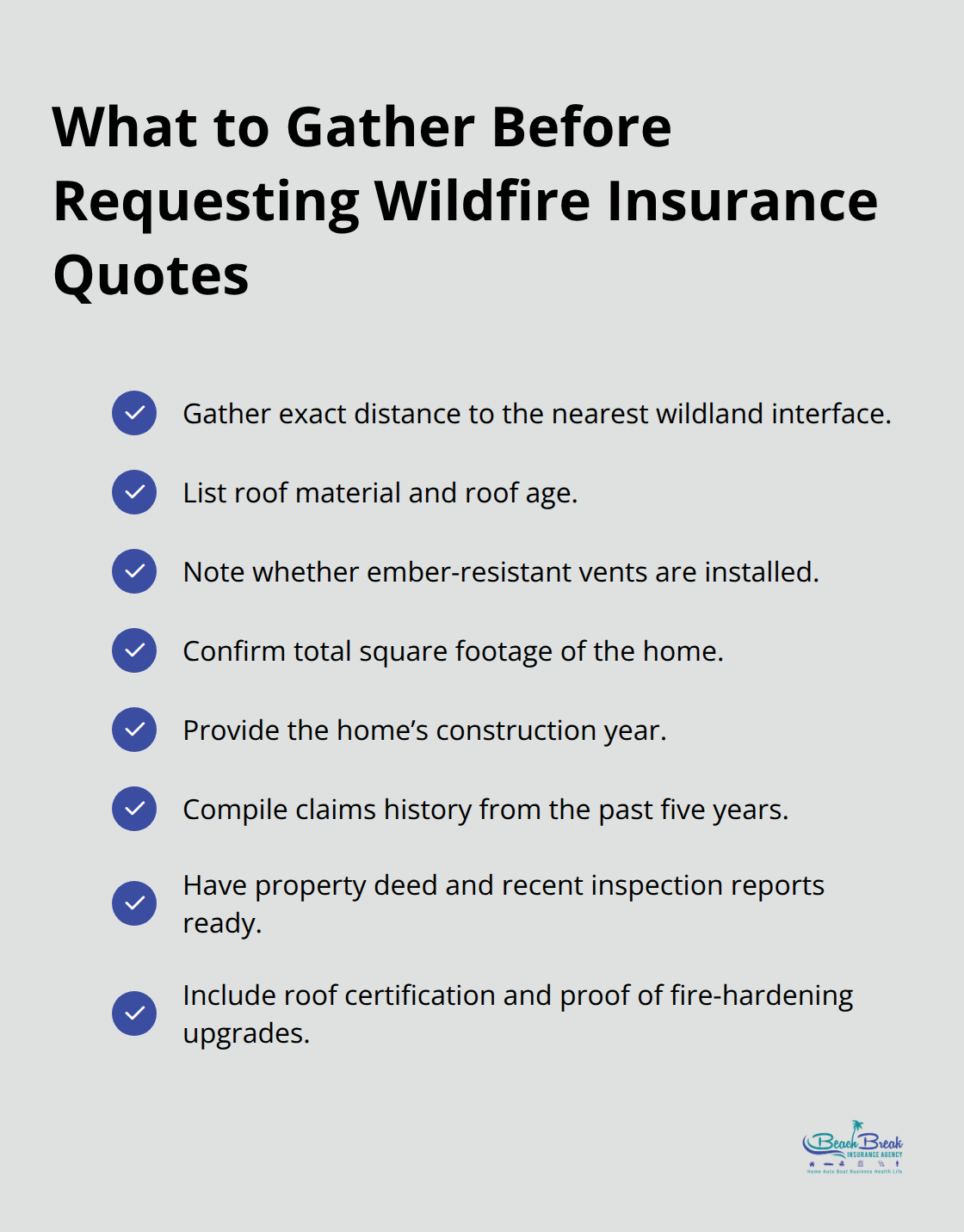
Start by collecting your home documentation before contacting carriers. Have your property deed, recent home inspection reports, and roof certification available. If you’ve made fire-hardening improvements like installing Class A-rated roofing or clearing defensible space, document those too-they directly lower your premiums.
Understand Coverage Limits and Deductibles
Coverage limits and deductibles create the biggest confusion when comparing quotes. A $500,000 dwelling limit sounds adequate until you price replacement costs in today’s market, where coastal home reconstruction averages $400 to $500 per square foot according to RSMeans data. A 2,500-square-foot home would cost roughly $1 million to rebuild, yet many coastal homeowners carry $600,000 in coverage.
Deductibles also vary dramatically across carriers, ranging from 1% to 5% of your home’s insured value. On a $1 million home, that’s the difference between a $10,000 and $50,000 out-of-pocket cost when you file a claim. Request quotes with identical coverage limits and deductibles so you’re comparing apples to apples.
Evaluate Loss of Use and Additional Coverage
Loss of use coverage pays for temporary housing and living expenses if evacuation becomes necessary. Most FAIR Plan policies exclude this entirely, which matters significantly if a wildfire forces you from your home for weeks or months. This protection can mean the difference between manageable disruption and financial strain during recovery.
When reviewing multiple carriers side-by-side, create a simple spreadsheet listing the premium, deductible, dwelling limit, personal property coverage, and loss of use provisions for each quote. This visual comparison makes it obvious which carriers offer the best value for your specific situation.
Access Multiple Quotes Without the Runaround
An independent agent can access multiple carriers simultaneously and present you with these comparisons without the back-and-forth email chains that waste weeks of your time. At Beach Break Insurance Agency, we quickly compare quotes from multiple top-rated carriers to help you find tailored coverage that fits your coastal property. This approach uncovers options that standard online searches miss entirely, and the carriers available to you depend on your home’s exact location, construction type, and claims history.
Factors That Impact Your Wildfire Insurance Rate
Location Determines Your Base Premium
Your wildfire insurance rate depends on factors that directly predict whether your home will burn and how much it will cost to rebuild. Insurers aren’t guessing here-they’re using decades of fire data to calculate risk. Your location matters most.
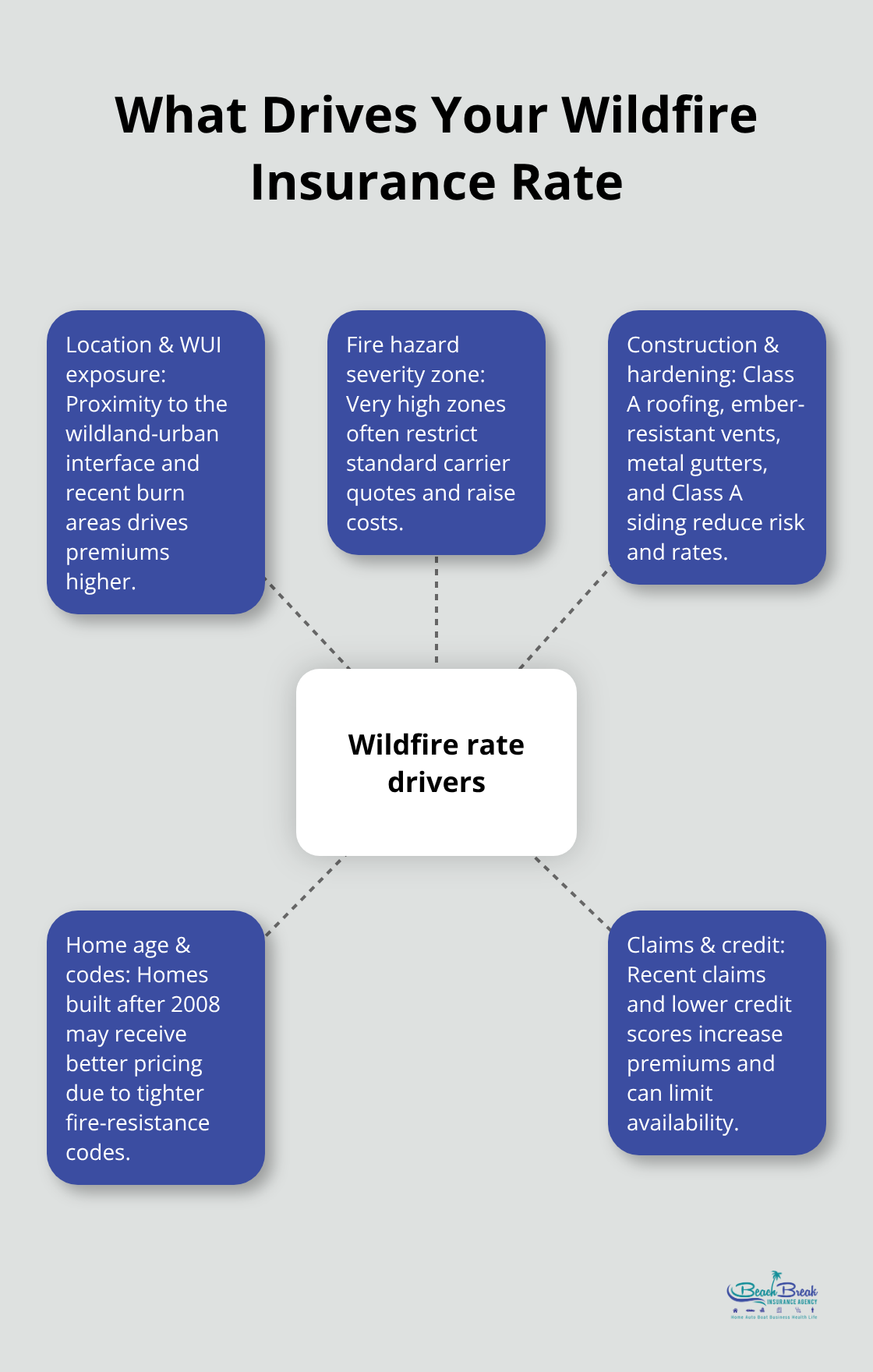
Homes in the wildland-urban interface pay substantially higher premiums than homes farther away. The specific fire hazard severity zone your property sits in determines whether standard carriers will quote you at all. If you’re in a very high fire hazard severity zone, you’ll face limited options and higher costs across the board. California’s Department of Forestry and Fire Protection maps these zones publicly, so you can check your exact zone before requesting quotes. Proximity to previous fire burn areas also influences rates-homes in communities that burned within the last decade face steeper premiums because insurers view them as higher risk for future fires.
Construction Materials Lower or Raise Your Cost
Your construction materials directly impact your premium because they determine whether your home survives or burns. Class A-rated roofing (like asphalt shingles, metal, or concrete tiles) costs less to insure than wood shake roofs because fires spread slower across Class A materials. Ember-resistant vents, metal gutters, and Class A siding materials all lower your rate because they prevent embers from igniting your home during a fire. If you’ve installed these hardening features, get documentation from the contractor and provide it when requesting quotes-some carriers offer discounts up to 15% for fire-resistant improvements. Homes built after 2008 often qualify for better rates because building codes tightened significantly that year, requiring better fire resistance standards.
Claims History and Credit Score Affect Your Rate
Your claims history and credit score round out the calculation. A single fire claim in the past five years signals future risk to insurers and typically increases your premium by 25% to 40%. Multiple claims can make you uninsurable through standard carriers.
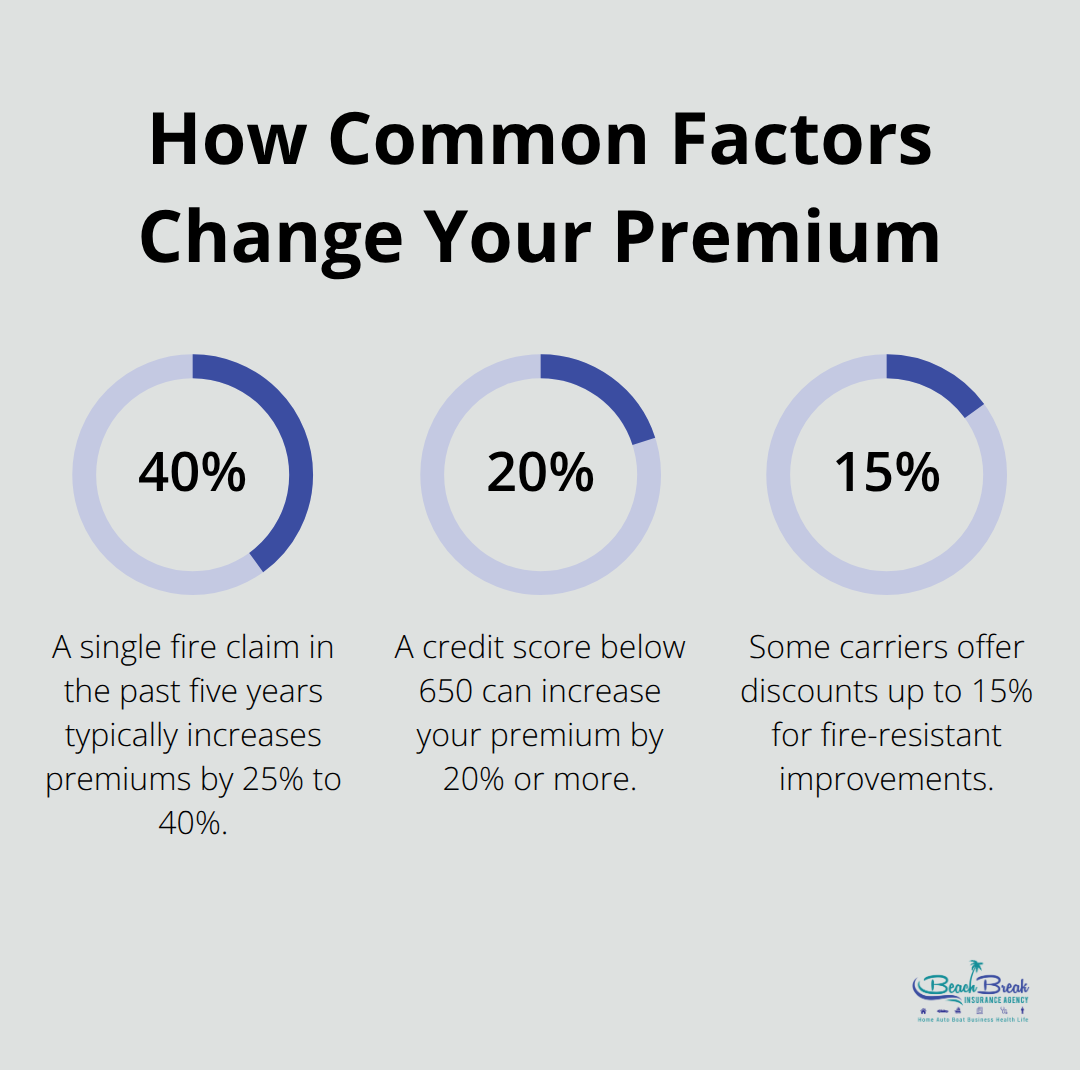
Credit score affects rates because insurers view payment history as predictive of risk behavior-a score below 650 can increase your premium by 20% or more.
Final Thoughts
Protecting your coastal home from wildfire risk requires action beyond hoping your standard policy covers everything. Start by collecting your property documentation and checking your fire hazard severity zone through California’s Department of Forestry and Fire Protection, then request home wildfire insurance quotes from multiple carriers using identical coverage limits and deductibles. If you’ve made fire-hardening improvements to your roof or vents, have that documentation ready because those upgrades directly lower your costs.
The biggest mistake coastal homeowners make is settling for whatever quote arrives first or defaulting to the California FAIR Plan without exploring alternatives. Specialized carriers understand coastal wildfire risk and often offer better rates and coverage than FAIR Plan policies if your home qualifies. An independent agent can access multiple carriers simultaneously and present you with side-by-side comparisons in days instead of weeks of back-and-forth emails.
Contact Beach Break Insurance Agency to start comparing home wildfire insurance quotes for your coastal property. We understand San Diego’s specific fire dynamics and can access solutions like the California FAIR Plan for high-fire areas when standard options fall short. The time you invest now prevents financial devastation later.
The information provided in this blog is for general informational purposes only and does not constitute legal, financial, or insurance advice. Coverage options, terms, and availability may vary. Please consult with a licensed professional for advice specific to your situation.
Artificial intelligence may have been used to generate text and images in some blog articles.


