
San Diego Workers Compensation: Your Local Guide
Running a business in San Diego means navigating California’s workers compensation requirements. These rules protect your employees and your company, but they’re complex and often misunderstood.
At Beach Break Insurance Agency, we’ve helped local business owners cut through the confusion. This guide covers what you need to know about San Diego workers compensation, how to handle claims, and practical ways to reduce costs.
What California’s Workers Compensation System Actually Covers
Coverage That Protects Your Employees and Business
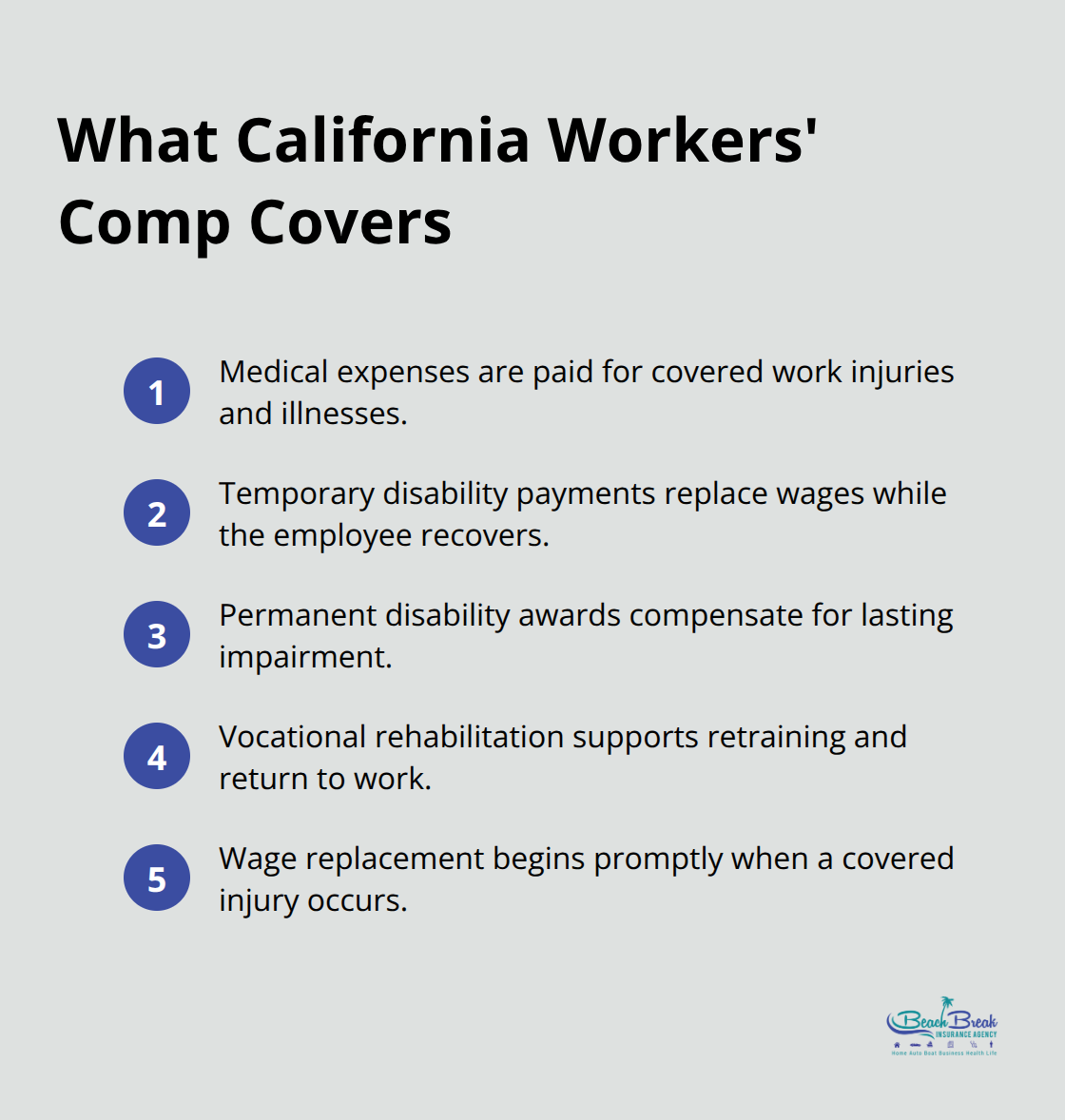
California requires almost every business with employees to carry workers compensation insurance, and the state’s rules are stricter than most states. Unlike many states, California’s system is a no-fault program, meaning your employees receive benefits regardless of who caused the injury. Medical expenses, temporary disability payments, permanent disability awards, and vocational rehabilitation all fall under coverage. If an employee suffers a workplace injury or occupational disease, workers comp pays their medical bills up front and provides wage replacement while they recover.
According to the California Department of Industrial Relations, the average workers compensation claim costs employers between $40,000 and $100,000 when accounting for medical care, lost wages, and administrative expenses. San Diego businesses face particular risks because the region’s industries span construction, hospitality, healthcare, and manufacturing, each with different injury rates and claim frequencies.
Reporting Requirements That Carry Real Penalties
California’s regulations demand that you report workplace injuries within specific timeframes or face serious penalties. Employers must report serious injuries to Cal/OSHA within eight hours, and workers compensation claims must be reported to your insurer immediately. The state mandates coverage for employees working 30 or more days per year, which catches many San Diego business owners off guard since part-time and seasonal workers count toward this threshold.
Failure to carry required coverage results in fines up to $10,000 per employee per year, plus potential criminal liability if an uninsured worker gets seriously injured. California’s Division of Workers Compensation enforces these rules aggressively, and San Diego County has seen increased audit activity over the past three years.
Getting Your Payroll Numbers Right
Your coverage must match your actual payroll, not what you hope to pay, since insurers audit payroll records and assess penalties for underreporting. Many local business owners underestimate their exposure because they assume their industry doesn’t need workers comp or they miscalculate their payroll. These mistakes cost money fast when audits happen.
Understanding what your business owes under California law sets the foundation for handling claims correctly.
What Qualifies as a Workplace Injury and How to Report It
Identifying Injuries That Actually Qualify
Not every workplace incident triggers a workers compensation claim, and San Diego business owners often waste time and money reporting injuries that don’t qualify. California’s system covers injuries arising out of and occurring in the course of employment, which sounds straightforward but creates gray areas in practice. A construction worker who falls off scaffolding clearly qualifies. An office employee who injures their wrist while typing might not, depending on whether the injury stems from a pre-existing condition or actual workplace conditions.
Strains and sprains account for a significant portion of workers compensation claims statewide, followed by cuts and lacerations and fractures. San Diego’s construction and hospitality sectors see higher rates of serious injuries than the state average, with construction accounting for a substantial share of all claims despite representing only a portion of the workforce.
Occupational Diseases and Documentation Requirements
Occupational diseases complicate matters further-conditions like repetitive strain injuries, heat illness, and respiratory problems from workplace exposure all qualify, but they require medical documentation linking the condition directly to job duties. Medical records must establish causation, meaning the doctor needs to document that the injury directly resulted from workplace exposure, not personal factors.
Notifying Your Insurer Immediately
Your first responsibility when an injury occurs is notifying your workers compensation insurer within 24 hours, not waiting for the employee to file a claim. Many San Diego businesses mistakenly assume the employee must initiate the process, which creates unnecessary delays and documentation gaps. Cal/OSHA requires serious injuries to be reported within eight hours, and failure to do so results in fines.
Building a Strong Claim Through Documentation
Documentation determines whether a claim succeeds or fails, and weak paperwork costs businesses tens of thousands in denied or disputed claims. The moment an injury happens, the employee must complete a workers compensation claim form, your company must document the incident with photographs and witness statements, and medical providers must submit initial reports within five days.
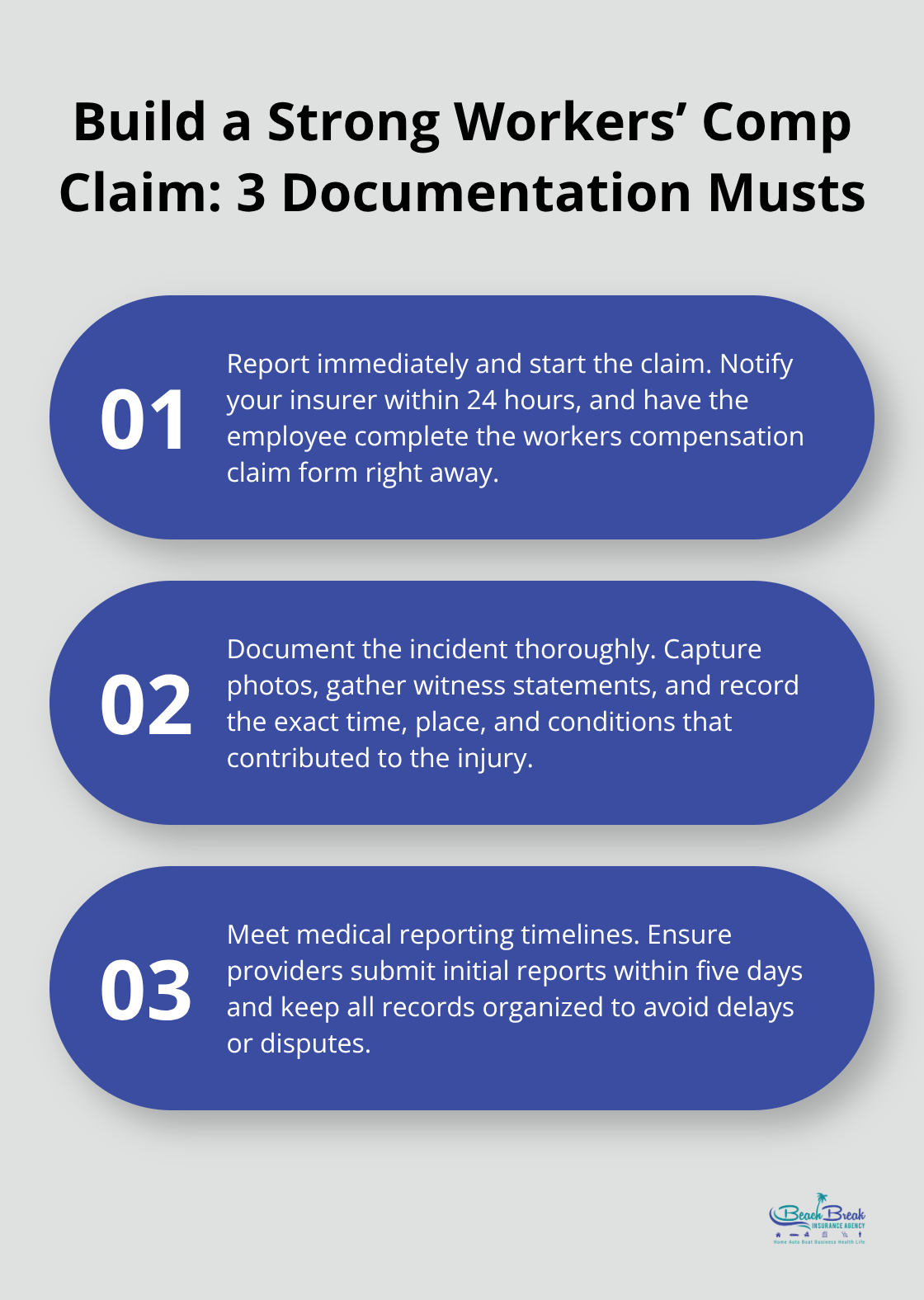
Keep detailed records of where and when the injury occurred, what the employee was doing at that moment, and which equipment or conditions contributed to the incident. San Diego businesses often lose claims because supervisors skip the incident report or employees delay seeking medical attention, creating questions about whether the injury actually happened at work. Insurance companies scrutinize claims where documentation is incomplete or arrives late, and they’ll request additional information that further delays benefits.
Photographs of the accident scene, maintenance records proving equipment was faulty, and witness contact information strengthen claims significantly. Maintain incident reports separate from personnel files to protect them from discovery in lawsuits, since these documents can be used against you if litigation develops. Your workers compensation insurer provides claim forms and instructions, but many small business owners find the process confusing without guidance on what evidence matters most.
Getting the reporting and documentation right prevents costly delays and denials-but even with perfect paperwork, knowing how to actually file the claim correctly separates businesses that recover quickly from those that face months of back-and-forth with insurers.
How to Cut Workers Compensation Costs Without Sacrificing Safety
Safety Programs Deliver Measurable Savings
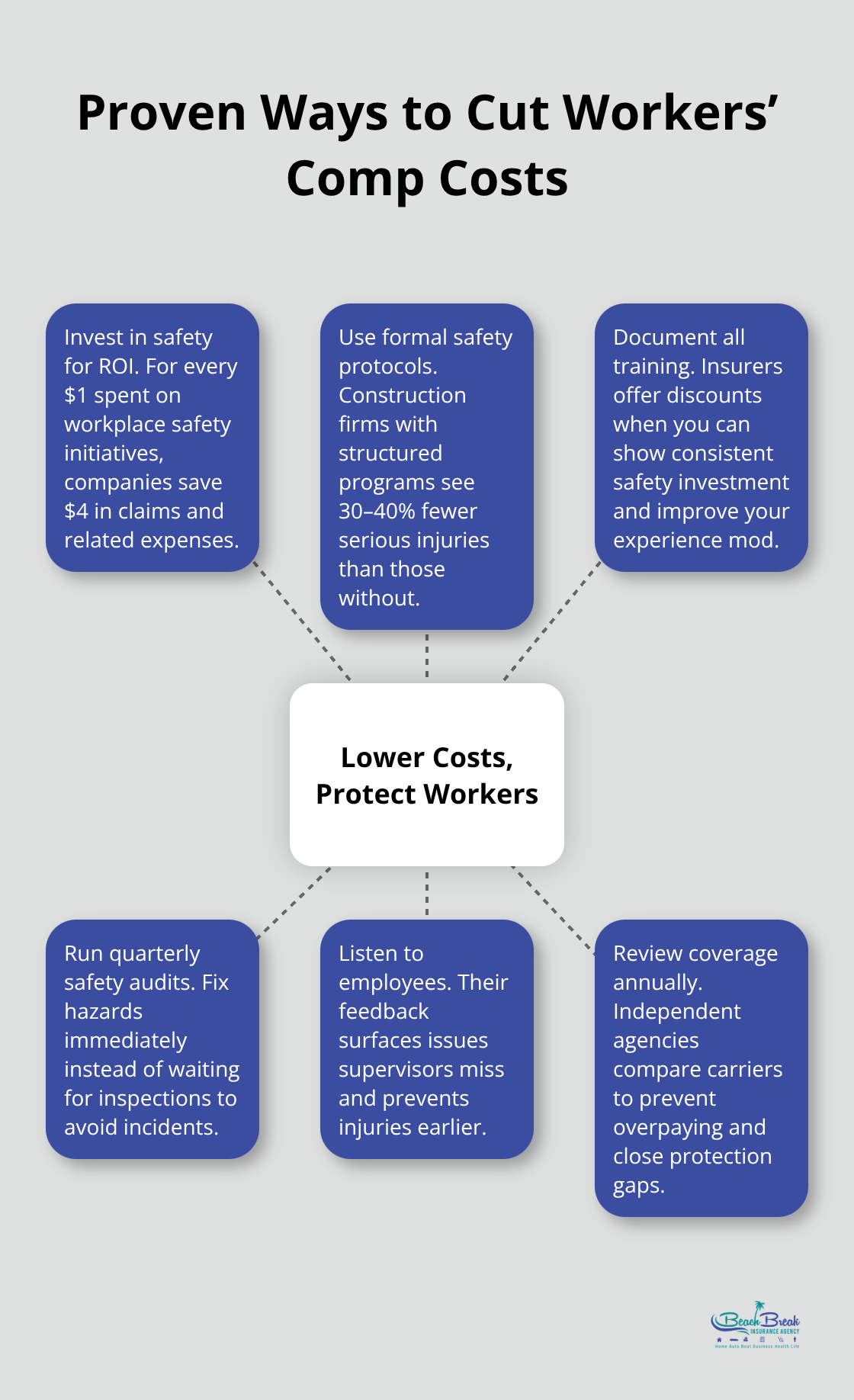
Safety programs reduce your workers compensation costs directly, and San Diego businesses that implement them see measurable savings. The National Safety Council reports that for every dollar spent on workplace safety initiatives, companies save four dollars in workers compensation claims and related expenses. Construction companies in San Diego that use formal safety protocols experience 30 to 40 percent fewer serious injuries than competitors operating without structured programs.
Your safety program does not need to be elaborate. Focus on the hazards specific to your industry, train employees on preventing those hazards, and hold supervisors accountable for enforcement. If you operate a restaurant, your program targets slip-and-fall prevention, proper lifting techniques, and burn prevention. A manufacturing facility prioritizes lockout-tagout procedures, machine guarding, and personal protective equipment.
Documentation Unlocks Premium Discounts
Document every training session with dates and attendee names, since insurers reduce premiums for businesses that demonstrate consistent safety investment. Many San Diego employers skip this documentation step, losing premium discounts they have already earned. Your workers compensation insurer offers experience modification rates based on your claims history, meaning a business with fewer claims pays significantly lower premiums than one with frequent injuries.
California’s system calculates these rates annually, so a safety investment this year reduces your premium next year. Conduct quarterly safety audits of your facility and address hazards immediately rather than waiting for inspections. Solicit feedback from employees about conditions that concern them-employees spot problems supervisors miss, and addressing their concerns prevents injuries before they happen.
Regular Coverage Reviews Prevent Overpaying and Underinsuring
Review your coverage at least annually because your business changes. Adding employees, shifting to higher-risk work, or expanding into new areas all require coverage adjustments. Many San Diego business owners keep the same policy for years without reviewing whether it matches their current operations, paying for coverage they do not need while leaving gaps elsewhere.
An independent agency compares quotes from multiple carriers to identify where you overpay and where your coverage falls short, keeping your premium competitive while protection stays complete.
Final Thoughts
San Diego’s workers compensation landscape demands more than generic insurance solutions. Your business operates in a region with distinct industry risks, from construction sites to hospitality venues to manufacturing facilities, each facing different injury patterns and claim frequencies. Local expertise matters because an agency familiar with San Diego workers compensation understands which carriers offer the best rates for your industry, how to structure coverage that actually protects your operation, and where most businesses leave money on the table through poor planning.
The steps you take now directly impact your bottom line. Safety programs reduce claims and lower premiums. Documentation protects you during audits and disputes. Annual coverage reviews prevent overpaying for protection you don’t need while catching gaps that could devastate your business. Getting San Diego workers compensation right requires attention to detail and knowledge of California’s strict regulations, but the payoff is substantial.
We at Beach Break Insurance Agency work with San Diego business owners to compare quotes from multiple top-rated carriers and deliver coverage tailored to your actual needs. Contact Beach Break Insurance Agency to review your current workers compensation coverage and see exactly where adjustments make sense for your operation.
The information provided in this blog is for general informational purposes only and does not constitute legal, financial, or insurance advice. Coverage options, terms, and availability may vary. Please consult with a licensed professional for advice specific to your situation.
Artificial intelligence may have been used to generate text and images in some blog articles.


