

Medical Only Workers Compensation: What It Means for Employers
Medical only workers compensation covers employee medical expenses without wage replacement benefits. Many employers overlook this option, missing out on significant cost savings and operational simplicity.
At Beach Break Insurance Agency, we’ve seen firsthand how the right coverage structure transforms how small businesses manage risk. This guide breaks down what medical only coverage actually means and whether it fits your operation.
What Medical Only Coverage Actually Covers
Medical only workers compensation pays for employee medical treatment related to work injuries but excludes wage replacement benefits like temporary disability or lost wages. If an employee suffers a workplace injury, their medical bills get covered-doctor visits, surgery, physical therapy, hospital stays-but they don’t receive income support while recovering. The coverage applies only to medical expenses, making it fundamentally different from traditional workers compensation, which bundles medical costs with wage replacement and permanent disability benefits.
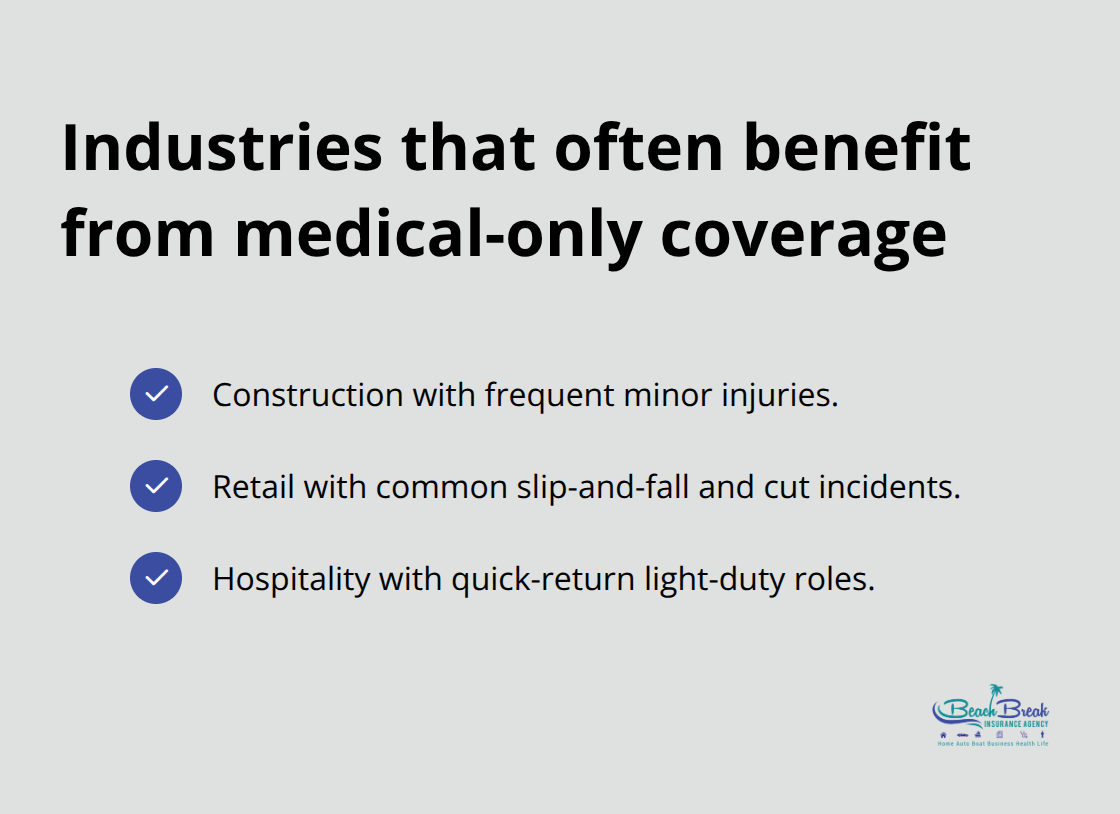
Most states allow employers to carry medical only coverage, though requirements vary significantly by location. California permits medical only policies through state-approved carriers, while some states require employers to maintain full workers compensation if they have any coverage at all. Medical only claims represent a significant portion of all workers compensation claims nationally, though the actual percentage depends heavily on industry type and state regulations. Construction, retail, and hospitality businesses frequently use medical only coverage because these industries experience higher volumes of minor injuries that resolve quickly without extended wage loss.
How Your State Shapes Your Coverage Options
Your state determines whether medical only coverage is even available and under what conditions. Some states classify medical only coverage as a legitimate alternative to full workers compensation, while others treat it as incomplete coverage that fails to meet statutory requirements. Texas allows employers to opt out of workers compensation entirely or maintain medical only plans, giving business owners significant flexibility. Florida permits medical only coverage but with strict limitations on which employers qualify. New York generally requires full workers compensation coverage and doesn’t recognize medical only as sufficient.
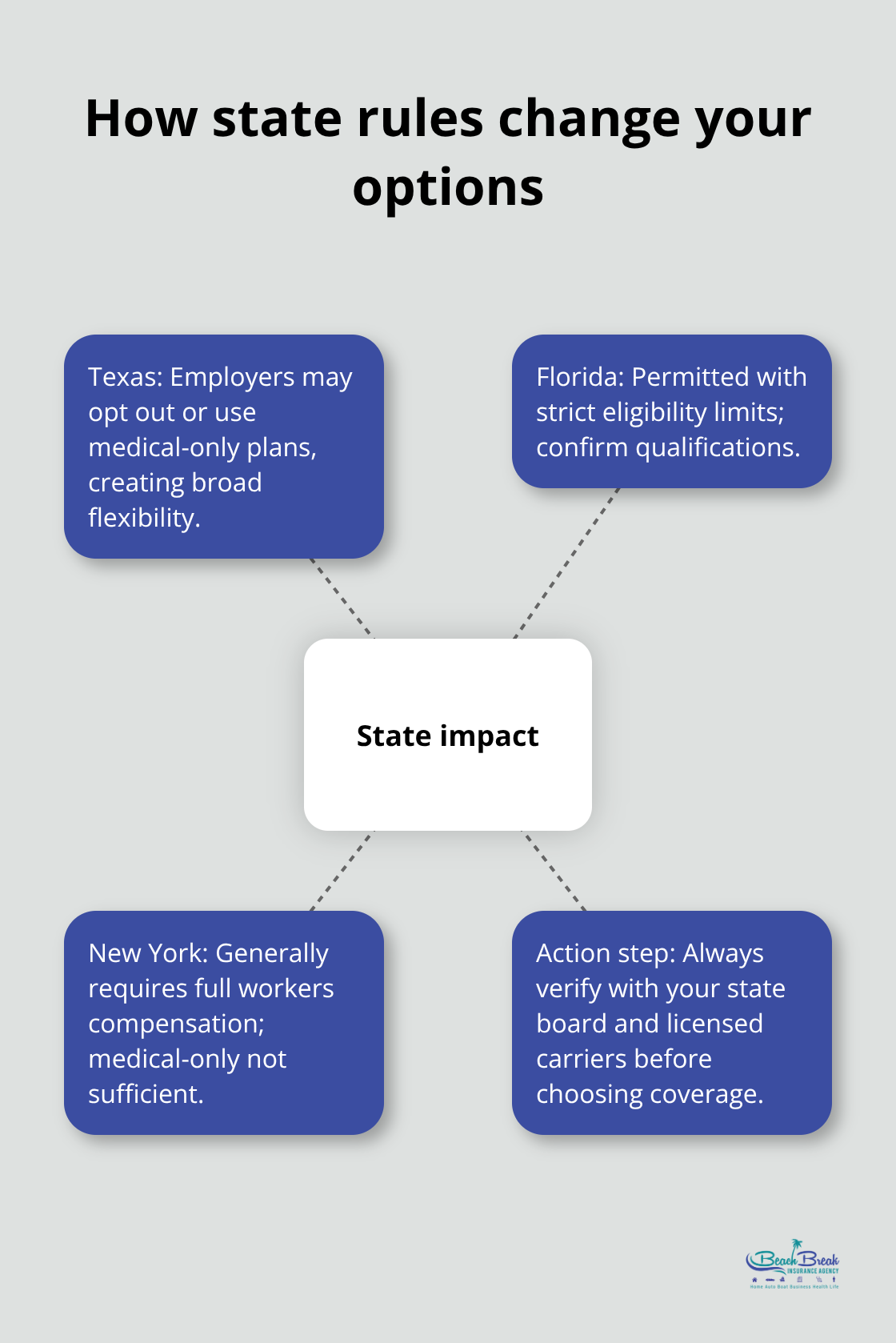
Contact your state workers compensation board requirements directly before selecting medical only coverage-don’t rely on assumptions or what you hear from other business owners in different states. The rules changed in several states during 2024 and 2025, so outdated information circulates frequently. An independent insurance agent who works with carriers licensed in your specific state can identify what coverage options actually comply with local requirements, helping you avoid costly mistakes that violations create (substantial penalties and coverage gaps that leave your business exposed).
Why Industry Type Matters for Medical Only Decisions
Different industries experience different injury patterns, which affects whether medical only coverage makes practical sense for your operation. High-frequency, low-severity injury industries benefit most from medical only policies because employees typically return to work without extended income replacement needs. Low-frequency, high-severity injury industries face greater risk with medical only coverage since serious injuries often result in prolonged wage loss that medical-only plans don’t address. Your industry’s claims history and typical injury severity should heavily influence your coverage decision, not just cost considerations alone.
Why Medical Only Coverage Costs Significantly Less
Premium Savings That Add Up Fast
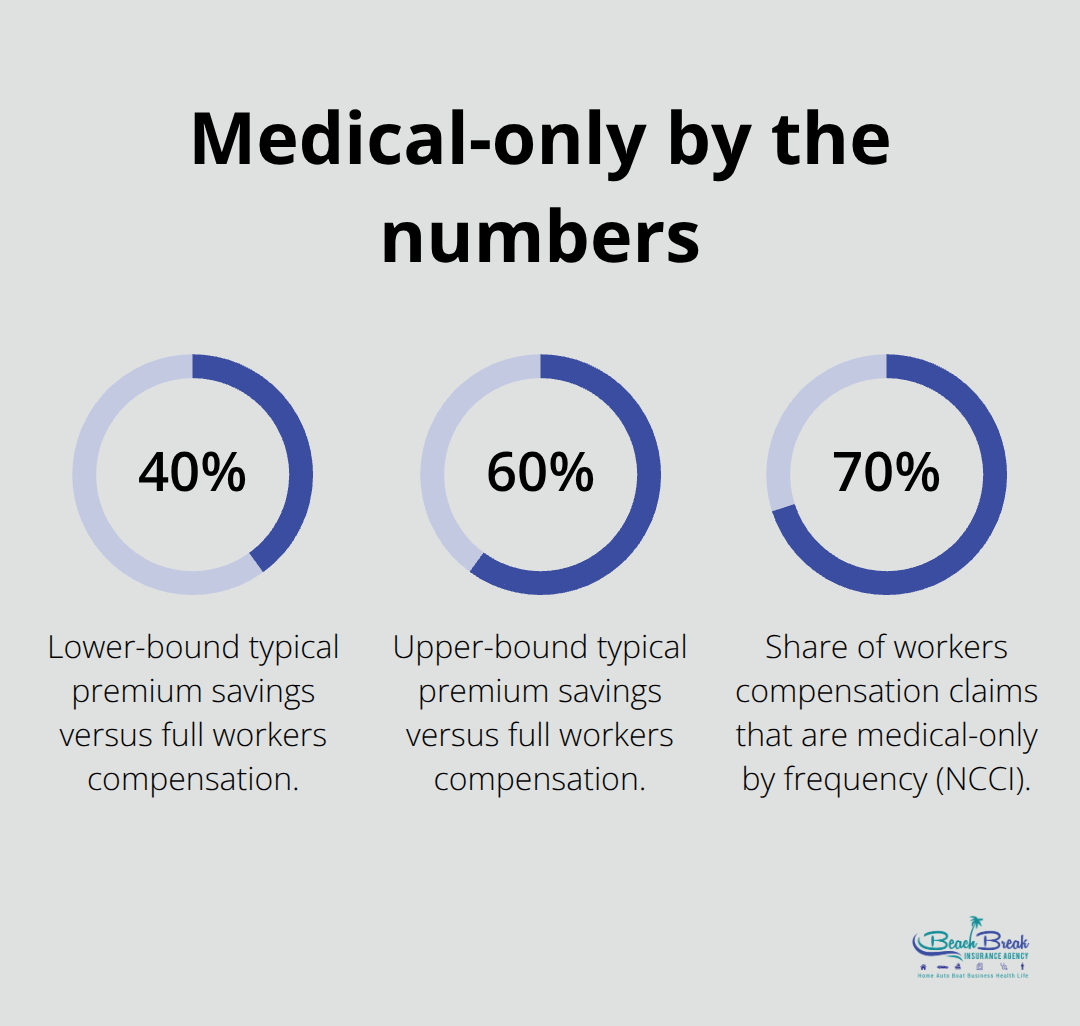
Medical only workers compensation premiums run 40-60% lower than full workers compensation policies because insurers exclude wage replacement and permanent disability liability from the coverage. The National Council on Compensation Insurance reports that medical-only claims represent roughly 70% of all workers compensation claims by frequency, yet they consume far fewer premium dollars because they lack the ongoing wage obligations that drive costs upward. A small construction firm with five employees paying $8,000 annually for full workers compensation might pay $3,200-$4,800 for medical only coverage instead, translating to real money that stays in the business for payroll, equipment, or expansion.
This cost advantage compounds over multiple years-a business saving $4,000 annually accumulates $20,000 in five years that could fund other operational needs.
How Medical Only Claims Close Faster
Medical only coverage eliminates administrative complexity that full workers compensation creates. Your business stops managing temporary disability paperwork, wage replacement calculations, and permanent partial disability determinations-tasks that consume HR time and create compliance risks. The claims process shrinks dramatically because medical only claims typically close within weeks rather than months or years. An injury that requires surgery and six weeks of physical therapy generates one medical bill, not ongoing wage replacement paperwork.
Operational Efficiency for Small Teams
Insurers process medical only claims faster, reducing the back-and-forth communication your team handles. Small businesses with limited HR resources find this operational simplification valuable because it frees staff to focus on core business functions rather than workers compensation administration. This efficiency gain matters most for businesses experiencing 5-15 claims annually, where the administrative burden becomes noticeable but not yet justifying dedicated compliance personnel. The time your team saves on claims management translates directly into productivity gains elsewhere in your operation.
Evaluating Whether Medical Only Fits Your Risk Profile
The real question isn’t whether medical only coverage saves money-it does-but whether those savings make sense for your specific injury patterns and employee base. Businesses with predictable, minor-injury claims benefit most from medical only policies, while operations facing higher injury severity need to weigh cost savings against potential wage replacement gaps. Your industry type, claims history, and state regulations all factor into whether medical only coverage actually protects your business adequately or leaves you exposed to financial risk that savings don’t justify.
Common Misconceptions About Medical Only Coverage
Employer Liability Protection Remains Separate
Medical only coverage does not shield employers from liability claims arising from workplace injuries, a distinction that many business owners misunderstand. If an employee sues for negligence, unsafe working conditions, or violations of occupational safety standards, medical only workers compensation provides zero defense. Your general liability insurance and employment practices liability coverage handle those claims separately, not your workers compensation policy. Medical only coverage simply pays medical bills for work-related injuries; it does not protect against allegations that your business caused the injury through carelessness or intentional misconduct. You still need proper liability insurance, safety protocols, and compliance with OSHA regulations regardless of your workers compensation structure.
Employee Rights Vary by State
Employees under medical only plans retain their right to sue employers for workplace injuries in most states, which contradicts another widespread misconception. Workers compensation laws typically provide what’s called an exclusive remedy arrangement, meaning employees accept medical benefits in exchange for waiving the right to sue for negligence. However, medical only coverage sometimes operates differently depending on your state’s statutory framework. In states where medical only plans are permitted as an alternative to full workers compensation, employees may retain greater legal rights than they would under traditional coverage. Texas employers who opt out of workers compensation entirely, for example, must understand that employees can pursue direct lawsuits without the protection that workers compensation immunity provides. Your state’s specific statutes determine whether medical only coverage grants you the same negligence immunity that full workers compensation offers. Consult your state workers compensation board or an insurance professional who understands local law before assuming medical only coverage protects you from employee litigation.
When Medical Only Coverage Falls Short
Medical only coverage proves insufficient when your workforce faces injury patterns involving extended recovery periods or permanent disability. A manufacturing facility where employees operate heavy machinery faces genuine risk that a serious accident results in months of wage loss and permanent impairment-situations medical only coverage does not address. The injured employee’s medical expenses get covered, but their family faces financial hardship during recovery because no income replacement exists. This creates employee resentment, retention problems, and potential claims that your coverage gap caused additional harm. Businesses operating in industries with historically higher injury severity (logging, roofing, heavy construction, commercial fishing) should seriously question whether medical only coverage adequately protects both their operation and their workforce. The cost savings from medical only policies can evaporate quickly when a single serious injury creates uninsured wage replacement liability that your business must cover directly. Evaluate your actual claims history and injury severity data rather than industry averages before committing to medical only coverage.
Final Thoughts
Medical only workers compensation works best for businesses with predictable, minor-injury patterns and tight budgets. The 40-60% premium savings matter, but only if your actual claims history supports this coverage type. Serious injuries that sideline employees for weeks create wage replacement gaps that medical only policies don’t address, potentially costing your business far more than you save on premiums.
Start by reviewing your workers compensation claims from the past three years to identify injury frequency, recovery times, and whether employees typically returned to work within days or faced extended absences. Compare this pattern against your state’s specific requirements for medical only coverage, since some states permit it freely while others restrict it significantly or require full workers compensation instead. Contact carriers licensed in your state and request quotes for both medical only and full workers compensation coverage to calculate your actual premium difference (the savings might surprise you, or they might prove modest enough that full coverage’s wage replacement protection justifies the extra cost).
An insurance professional who understands your state’s workers compensation laws prevents costly mistakes that violations create. At Beach Break Insurance Agency, we compare quotes from multiple top-rated carriers to deliver tailored coverage that matches your actual risk profile, helping San Diego businesses and beyond identify whether medical only coverage makes financial sense or whether full workers compensation better protects both your operation and your employees. The right coverage decision depends on your claims history, industry type, and state regulations, not general assumptions about what other businesses choose.
The information provided in this blog is for general informational purposes only and does not constitute legal, financial, or insurance advice. Coverage options, terms, and availability may vary. Please consult with a licensed professional for advice specific to your situation.
Artificial intelligence may have been used to generate text and images in some blog articles.


